Showing posts with label Idols. Show all posts

Tuesday, February 7, 2012

Christianity And.....

I keep thinking of this phrase which C.S. Lewis uses in his book, The Screwtape Letters: With Screwtape Proposes a Toast, "Christianity And." Here's what he says through the character, Screwtape.
MY DEAR WORMWOOD,
The real trouble about the set your patient is living in is that it is merely Christian. They all have individual interests, of course, but the bond remains mere Christianity. What we want, if men become Christians at all, is to keep them in the state of mind I call "Christianity And". You know—Christianity and the Crisis, Christianity and the New Psychology, Christianity and the New Order, Christianity and Faith Healing, Christianity and Psychical Research, Christianity and Vegetarianism, Christianity and Spelling Reform. If they must be Christians let them at least be Christians with a difference. Substitute for the faith itself some Fashion with a Christian colouring. Work on their horror of the Same Old Thing.
The one "Christianity And" which I would add to the list these days is Christianity and the Masculine.
Jesus blesses the children.
In case you've missed it, the latest statement about Christianity and masculinity comes from John Piper. You can find what he's said here. Of course, this is only the latest in the robust trend, coming largely out of the new Calvinist movement. Some others who have spoken in similar terms are Mark Driscoll and Al Mohler, but there are many others also. There are many great points others are making about how myopic a view this perspective is in light of what scripture has to say. Some, like, Scot McKnight, Krish Kandiah, and many others whom Rachel Held Evans has led out onto the battlefield, so to speak, have opposed this perspective with well informed arguments and I believe a much better understanding of scripture and what the Gospel truly is.

I keep wondering how can such a view be held by men who have studied Greek and presumably history, culture, and hermeneutics.  What I believe this view boils down to is idolatry, and I think, as I've said before, idolatry is the basis of all sin. Quite simply, this god of masculinity is more manageable. He has set up systems of authority which are arbitrary and based on legalism. It gives some power and withholds it from others. Such an arbitrary God is not one to be wrestled or reasoned with, nor is he reflected in Jesus, in whom I see a God who turns our ideas of power and authority upside down. Who empties himself and calls on each of us to do the same.

When we want "Christianity And", we no longer accept Jesus as sufficient. How we cling to our idols.

Wednesday, August 18, 2010

What's Eating You?

Jesus says,
I have come that you may have life, and that you may have it more abundantly.
And,
Take and eat, this is my body which is given for you.
I was thinking of this the other day, of how all the gods, demons, and idols of this world do not give life, but take it. They feed on us, whether the gods Molech, Baal, the Aztec god, Tezcatlipoca, the Greek/Roman system of gods, the gods of Hindu or ancestral spirits in Africa. All require sacrifice, some even human sacrifice to please and feed them. 

C.S. Lewis' character Screwtape expresses this well in The Screwtape Letters
To us a human is primarily food; our aim is the absorption of its will into ours, the increase of our own area of selfhood at its expense.
As does the apostle, Peter,
Be sober, be vigilant; because your adversary the devil walks about like a roaring lion, seeking whom he may devour.
These are simply the obvious gods, but the idols of this world are even more subtle than this. We in the west, people of technology and materialism have our own idols. We, ironically, are called consumers, yet we work to make money to buy things that eat at our time and energy, and what is this life but our time and energy?  We kill time watching television or surfing the internet. We buy too much and the wrong kind of food so that our health deteriorates at a faster pace than normal. Temporarily we feel powerful, then at times wonder why our lives feel out of control, why our relationships seem shallow and where our time has gone.

Then we come to Jesus' words,
If anyone would come after me, he must deny himself and take up his cross daily and follow me. For whoever wants to save his life will lose it, but whoever loses his life for me will save it.
On it's face, doesn't this seem contradictory?  Jesus wants to give us life, yet he requires we lose it.  If God and the demons require sacrifice, then what's the difference?

One thing we must consider is the nature of sacrifice.  God commanded Israel to sacrifice, not because he needed anything or required cajoling in return for some favour.  God required sacrifice for the life of mankind, to show the grievousness of sin and to prepare the way for Jesus' sacrifice which was for all sins for all time.  The fact is, is that we all sacrifice, we all live to something, but it is in living to God, which Jesus has shown, that we are to truly and fully live.

What is the purpose of sacrifice?  It is love.  Love by nature is sacrificial, but when we separate love of God and people from the sacrifice then it is all for naught.
 
The apostle Paul says,
 If I give away all I have, and if I deliver up my body to be burned,  but have not love, I gain nothing.
We may have life, and have it abundantly, yet how much I sacrifice to the idols of this age.

Kyrie eleison.

Friday, April 23, 2010

Christianity And Culture: Living In The Image Of God Part 2

As we think about how to evaluate and understand culture, let's take a closer look at idolatry.


There is no neutral ground in the universe: every square inch, every split second, is claimed by God and counterclaimed by Satan.   C.S. Lewis


I would suggest that this first consequence of the fall, being inclined toward idolatry, is the greatest of the consequences, and is the root of all other consequences.

Evil consists not in being created but in the rebellious idolatry by which humans worship and honor elements of the natural world rather than the God who made them. The result is that the cosmos is out of joint. Instead of humans being God’s vice-regents over creation, they ignore the creator and try to worship something less demanding, something that will give them a short-term fix of power or pleasure. N.T. Wright

Idolatry-

1. Is anything that is put in place of God - We use idols to avoid God and his holiness.


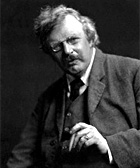
For when we cease to worship God, we do not worship nothing, we worship anything. G.K. Chesterton


2. Comes in pairs - Dominion and trust are replaced with domination and overdependence. The nearby god results from the need of dominion corrupted into domination and the faraway god results from the need for trust corrupted into overdependence. Jeremiah 23:23-24
Examples of nearby gods are technique, expertise, money, health, and law/legalism.
Examples of faraway gods are chance, fate, self-esteem, financial security, and our own idea of God.

3. Deceives - Enslaves and overpowers us. Tolkien’s literary portrayal of Smeagol being transformed into Gollum is an excellent image of what happens to us when we turn to idols. He can no longer say “I” and can only say,“we”. It is the psychology of damnation. Whatever we worship, we become. 

 Psalm 115:4-8
4 Their idols are silver and gold,
the work of human hands.
5 They have mouths, but do not speak;
eyes, but do not see.
6 They have ears, but do not hear;
noses, but do not smell.
7 They have hands, but do not feel;
feet, but do not walk;
and they do not make a sound in their throat.
8 Those who make them become like them;
so do all who trust in them.


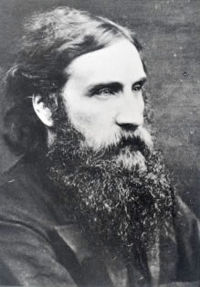
A man is in bondage to whatever he cannot part with that is less than himself.  George MacDonald


4. Fails us,  which we see happen to Baal's prophets in I Kings 18:20-29.
20 So Ahab sent to all the people of Israel and gathered the prophets together at Mount Carmel. 21 And Elijah came near to all the people and said, “How long will you go limping between two different opinions? If the Lord is God, follow him; but if Baal, then follow him.” And the people did not answer him a word. 22 Then Elijah said to the people, “I, even I only, am left a prophet of the Lord, but Baal's prophets are 450 men. 23 Let two bulls be given to us, and let them choose one bull for themselves and cut it in pieces and lay it on the wood, but put no fire to it. And I will prepare the other bull and lay it on the wood and put no fire to it. 24 And you call upon the name of your god, and I will call upon the name of the Lord, and the God who answers by fire, he is God.” And all the people answered, “It is well spoken.” 25 Then Elijah said to the prophets of Baal, “Choose for yourselves one bull and prepare it first, for you are many, and call upon the name of your god, but put no fire to it.” 26 And they took the bull that was given them, and they prepared it and called upon the name of Baal from morning until noon, saying, “O Baal, answer us!” But there was no voice, and no one answered. And they limped around the altar that they had made. 27 And at noon Elijah mocked them, saying, “Cry aloud, for he is a god. Either he is musing, or he is relieving himself, or he is on a journey, or perhaps he is asleep and must be awakened.” 28 And they cried aloud and cut themselves after their custom with swords and lances, until the blood gushed out upon them. 29 And as midday passed, they raved on until the time of the offering of the oblation, but there was no voice. No one answered; no one paid attention.
You can’t get second things by putting them first; you get the second things only by putting first things first.  C.S. Lewis, First Things, in God in the Dock
The scriptures teach that idolatry is taken into the heart by the learned (Ezekiel 14:1-5), associated with sexual immorality and covetousness (Ephesians 5:5), associated with sexual immorality , impurity, passion, evil desire, and covetousness. (Colossians 3:5), and participation with demons (I Corinthians 10:14-33).

In the temptations of Jesus  in Matthew 4:1-11, the first temptation is to put trust in the nearby god of physical security, the second temptation is to put trust in a god of a different character than Yahweh and the third temptation is to put trust in the nearby god of personal dominion/domination.  All the temptations are to go about attaining the Kingdom without the cross, and giving in to them would be idolatrous.  (See my earlier post, Stones To Bread, for more thoughts on Christ's temptations.)

Sacrifice as much as you please, cajole and flatter as you please, beat your disobedient idol with a big stick if you please-the thing still won't give you what you want. In consequence, all idolatrous cultures tend to get nastier and nastier. If a small bribe doesn't succeed, they offer more. The idol will not respond to a dance of virgins with flowers? Very well, let's try a dance of warriors mutilating themselves with knives. You have cut off a lock of your hair and laid it before the idol, yet life is still dark? Try cutting your first-born's throat and offering him. Nor does the idol's continued silence teach you better sense, if you're a natural-born idolater. For if Mumbo-Jumbo is so bard to please, what a very great Mumbo-Jumbo he must be !
Joy Davidman from Smoke on the Mountain.

What kind of idols does our society worship?  What sacrifices do these idols demand?  What kind of culture does this create?

Monday, July 20, 2009

Icons and Idols

In today's Wall Street Journal, Joe Queenan writes on the journalistic watering down of the word "icon".

This is actually something that has bothered me for a while. The word icon comes from the Greek, eikon. It refers to something that is an image or representation of something that is more real or greater than itself. The Bible uses this word to describe humans, being made in the image of God and of Christ being the perfect image of God, the perfect icon. In the biblical sense each human is an icon, though flawed to various degrees, all could be spoken of in terms of being an icon of the living God.

Works of religious art, images on a coin or even images on a computer screen can be properly called an icon because they point to something greater and more real.

This isn't how journalists and commentators use the word when describing celebrities, however. What happens when we start using this word for popular people in culture? When we say that Michael Jackson was an icon, what are we saying? What does he represent, and is what he represents worth imitating or looking toward? It abuses the word so badly that it no longer contains its proper meaning. Perhaps the creators of American Idol have a more proper terminology for celebrities of this kind. According to The Free Dictionary, the term idol means:

1.a. An image used as an object of worship.
b. A false god.
2. One that is adored, often blindly or excessively.
3. Something visible but without substance.

Is this not a more proper term for the role of many celebrities?