I'm pretty sure we can all agree with this.

A friend posted this on Facebook.

You have to learn from each stage, and yet you can’t completely throw out previous stages, as most people unfortunately do. In fact, a fully mature person appropriately draws upon all earlier stages. “Transcend and include” is Ken Wilber’s clever aphorism here. Most people immensely overreact against their earlier stages of development, and earlier stages of history, instead of still honoring them and making use of them (e.g. liberal, educated Christians who would be humiliated to join in an enthusiastic “Jesus song” with their Evangelical brothers and sisters even though they would intellectually claim to believe in Jesus, or adults who can no longer play, or rational people who completely dismiss the good of the non-rational).The journey is continuing. In fact, my Sunday school class will be reading Scot McKnight's book, The Blue Parakeet, and a theological reading group I'm part of will be reading Peter Enn's new book, The Bible Tells Me So. It will be interesting to see where this may lead, especially now that I'm no longer afraid, (at least not much), because my faith is in the one faithful one, and not my own understanding of him.
If a man says of what is that it is, or what is not that it is not, he speaks the truth. But if he says of what is not that it is, or of what is that it is not, he does not speak the truth. -AristotleIn essence, truth corresponds to reality. That is at least what the ancients believed and it is the best definition I have found to describe this transcendental. With so simple an explanation, why then is truth so difficult to reach? Why do we seem to stumble over it, bypass it, ignore it, or find a substitute for it?
(Those) who pay no attention to a poll unless they know what questions were asked and why.Isn't that a great quote? The same sort of inquiries are needed every time we read of some scientific study.
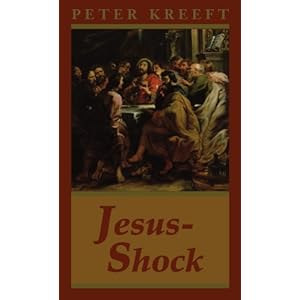
 , though he leaves out the most Roman Catholic elements of the book, he engages the ideas that both Evangelical Protestants and Roman Catholics can agree upon, namely, that meeting Jesus will change you and your world. He is not neutral, he is not safe, but he is good, true and beautiful.

In Genesis 1: 1, 21, 27, the Hebrew word bara is used for create. It means to create something totally new, something which does not flow out of what came before and is only attributable to God. Bara is used three times in reference to man, underscoring his uniqueness.1:1 In the beginning, God created the heavens and the earth. 2 The earth was without form and void, and darkness was over the face of the deep. And the Spirit of God was hovering over the face of the waters.3 And God said, “Let there be light,” and there was light. 4 And God saw that the light was good. And God separated the light from the darkness. 5 God called the light Day, and the darkness he called Night. And there was evening and there was morning, the first day.6 And God said, “Let there be an expanse in the midst of the waters, and let it separate the waters from the waters.” 7 And God made the expanse and separated the waters that were under the expanse from the waters that were above the expanse. And it was so. 8 And God called the expanse Heaven. And there was evening and there was morning, the second day.9 And God said, “Let the waters under the heavens be gathered together into one place, and let the dry land appear.” And it was so. 10 God called the dry land Earth, and the waters that were gathered together he called Seas. And God saw that it was good.11 And God said, “Let the earth sprout vegetation, plants yielding seed, and fruit trees bearing fruit in which is their seed, each according to its kind, on the earth.” And it was so. 12 The earth brought forth vegetation, plants yielding seed according to their own kinds, and trees bearing fruit in which is their seed, each according to its kind. And God saw that it was good. 13 And there was evening and there was morning, the third day.14 And God said, “Let there be lights in the expanse of the heavens to separate the day from the night. And let them be for signs and for seasons, and for days and years, 15 and let them be lights in the expanse of the heavens to give light upon the earth.” And it was so. 16 And God made the two great lights—the greater light to rule the day and the lesser light to rule the night—and the stars. 17 And God set them in the expanse of the heavens to give light on the earth, 18 to rule over the day and over the night, and to separate the light from the darkness. And God saw that it was good. 19 And there was evening and there was morning, the fourth day.20 And God said, “Let the waters swarm with swarms of living creatures, and let birds fly above the earth across the expanse of the heavens.” 21 So God created the great sea creatures and every living creature that moves, with which the waters swarm, according to their kinds, and every winged bird according to its kind. And God saw that it was good. 22 And God blessed them, saying, “Be fruitful and multiply and fill the waters in the seas, and let birds multiply on the earth.” 23 And there was evening and there was morning, the fifth day.24 And God said, “Let the earth bring forth living creatures according to their kinds—livestock and creeping things and beasts of the earth according to their kinds.” And it was so. 25 And God made the beasts of the earth according to their kinds and the livestock according to their kinds, and everything that creeps on the ground according to its kind. And God saw that it was good.26 Then God said, “Let us make man in our image, after our likeness. And let them have dominion over the fish of the sea and over the birds of the heavens and over the livestock and over all the earth and over every creeping thing that creeps on the earth.”27 So God created man in his own image,
in the image of God he created him;
male and female he created them.28 And God blessed them. And God said to them, “Be fruitful and multiply and fill the earth and subdue it and have dominion over the fish of the sea and over the birds of the heavens and over every living thing that moves on the earth.” 29 And God said, “Behold, I have given you every plant yielding seed that is on the face of all the earth, and every tree with seed in its fruit. You shall have them for food. 30 And to every beast of the earth and to every bird of the heavens and to everything that creeps on the earth, everything that has the breath of life, I have given every green plant for food.” And it was so. 31 And God saw everything that he had made, and behold, it was very good. And there was evening and there was morning, the sixth day.
21 For although they knew God, they did not honor him as God or give thanks to him, but they became futile in their thinking, and their foolish hearts were darkened. 22 Claiming to be wise, they became fools, 23 and exchanged the glory of the immortal God for images resembling mortal man and birds and animals and creeping things.24 Therefore God gave them up in the lusts of their hearts to impurity, to the dishonoring of their bodies among themselves, 25 because they exchanged the truth about God for a lie and worshiped and served the creature rather than the Creator, who is blessed forever! Amen.
 , by Dick Keyes. It helps to explain the true extent of not living in the image of God.
Sin is not only violating moral rules. It is described by the apostle Paul as falling “short of the glory of God” (Romans 3:23). Note that he does not say falling short of the “law” of God but of the “glory” of God–that is, short of the excellence of God in every area of his existence. It is certainly moral failure, but God’s moral excellence does not exhaust his nature. The seriousness of our sin is that we use our God-imaging capabilities to think, say and do things that oppose, defy and misrepresent God himself. As we misrepresent God’s image, we also misrepresent the selves we were created to be.In Christ, however, the image is restored. Christ emptied himself, kenosis, to make us like him.
5 Have this mind among yourselves, which is yours in Christ Jesus, 6 who, though he was in the form of God, did not count equality with God a thing to be grasped, 7 but made himself nothing, taking the form of a servant, being born in the likeness of men. 8 And being found in human form, he humbled himself by becoming obedient to the point of death, even death on a cross. 9 Therefore God has highly exalted him and bestowed on him the name that is above every name, 10 so that at the name of Jesus every knee should bow, in heaven and on earth and under the earth, 11 and every tongue confess that Jesus Christ is Lord, to the glory of God the Father.See also, Romans 8:3-4
See also, II Corinthians 4:3-615 He is the image of the invisible God, the firstborn of all creation. 16 For by him all things were created, in heaven and on earth, visible and invisible, whether thrones or dominions or rulers or authorities—all things were created through him and for him. 17 And he is before all things, and in him all things hold together. 18 And he is the head of the body, the church. He is the beginning, the firstborn from the dead, that in everything he might be preeminent. 19 For in him all the fullness of God was pleased to dwell, 20 and through him to reconcile to himself all things, whether on earth or in heaven, making peace by the blood of his cross.21 And you, who once were alienated and hostile in mind, doing evil deeds, 22 he has now reconciled in his body of flesh by his death, in order to present you holy and blameless and above reproach before him, 23 if indeed you continue in the faith, stable and steadfast, not shifting from the hope of the gospel that you heard, which has been proclaimed in all creation under heaven, and of which I, Paul, became a minister.
12So then, brothers, we are debtors, not to the flesh, to live according to the flesh. 13For if you live according to the flesh you will die, but if by the Spirit you put to death the deeds of the body, you will live. 14For all who are led by the Spirit of God are sons of God. 15For you did not receive the spirit of slavery to fall back into fear, but you have received the Spirit of adoption as sons, by whom we cry, "Abba! Father!" 16 The Spirit himself bears witness with our spirit that we are children of God, 17and if children, then heirs—heirs of God and fellow heirs with Christ, provided we suffer with him in order that we may also be glorified with him.
18For I consider that the sufferings of this present time are not worth comparing with the glory that is to be revealed to us. 19For the creation waits with eager longing for the revealing of the sons of God. 20For the creation was subjected to futility, not willingly, but because of him who subjected it, in hope 21that the creation itself will be set free from its bondage to corruption and obtain the freedom of the glory of the children of God. 22For we know that the whole creation has been groaning together in the pains of childbirth until now. 23And not only the creation, but we ourselves, who have the firstfruits of the Spirit, groan inwardly as we wait eagerly for adoption as sons, the redemption of our bodies. 24For in this hope we were saved. Now hope that is seen is not hope. For who hopes for what he sees? 25But if we hope for what we do not see, we wait for it with patience. 26Likewise the Spirit helps us in our weakness. For we do not know what to pray for as we ought, but the Spirit himself intercedes for us with groanings too deep for words. 27And he who searches hearts knows what is the mind of the Spirit, because the Spirit intercedes for the saints according to the will of God. 28And we know that for those who love God all things work together for good, for those who are called according to his purpose. 29For those whom he foreknew he also predestined to be conformed to the image of his Son, in order that he might be the firstborn among many brothers. 30And those whom he predestined he also called, and those whom he called he also justified, and those whom he justified he also glorified.
Now what Tolkien and Dyson showed me was this: that if I met the idea of sacrifice in a Pagan story I didn't mind it at all: again, if I met the idea of a god sacrificing himself to himself...I liked it very much and was strangely moved by it: again, that the idea of a dying and reviving god (Balder, Adonis, Bacchus)similarly moved me provided I met it anywhere except in the Gospels. The reason was that in Pagan stories I was prepared to feel the myth as profound and suggestive of meanings beyond my grasp even tho' I could not say in cold prose "what it meant".One of the difficulties or stumbling blocks in modern day Christianity is that we have failed to see God's story as true myth. We have been so "enlightened" that we look only for facts or laws and lose the sense of awe and deeper meaning. What seems to be left is either a shallow belief now being coined as 'Moralistic Therapeutic Deism", or else a system of rules to be followed in order to obtain God's approval. With MTD, God becomes our buddy and sidekick and with a rules system God ironically becomes someone we can manipulate with our behaviour.
Now the story of Christ is simply a true myth: a myth working on us the same way as the others, but with this tremendous difference that it really happened: and one must be content to accept it in the same way, remembering that it is God’s myth where the others are men’s myths: i.e., the Pagan stories are God expressing Himself through the minds of poets, using such images as He found there, while Christianity is God expressing Himself through what we call "real things".
We do not want merely to see beauty, though, God knows, even that is bounty enough. We want something else which can hardly be put into words — to be united with the beauty we see, to pass into it, to receive it into ourselves, to bathe in it, to become part of it. That is why we have peopled air and earth and water with gods and goddesses and nymphs and elves — that, though we cannot, yet these projections can, enjoy in themselves that beauty, grace, and power of which Nature is the image. That is why the poets tell us such lovely falsehoods. They talk as if the west wind could really sweep into a human soul; but it can't. They tell us that "beauty born of murmuring sound" will pass into human face; but it won't. Or not yet.If we do not have this sense, maybe we should go back to the scriptures and read them afresh, anticipating and looking for the God who surprises, who creates and who has written us into the greatest story.
For if we take the imagery of Scripture seriously, if we believe that God will one day give us the Morning Star and cause us to put on the splendour of the sun, then we may surmise that both the ancient myths and the modern poetry, so false as history, may be very near the truth as prophecy. At present we are on the outside of the world, the wrong side of the door. We discern the freshness and purity of morning, but they do not make us fresh and pure. We cannot mingle with the splendours we see. But all the leaves of the New Testament are rustling with the rumour that it will not always be so. Some day, God willing, we shall get in.
 in the early ninety's. Ironically, his most recent book is titled, A Bound Man: Why We Are Excited About Obama and Why He Can't Win.

There is something that unites magic and applied science (technology) while separating both from the "wisdom" of earlier ages. For the ancients, the cardinal problem of human life had been how to conform the human soul to objective reality; and the means were knowledge, self-discipline, and virtue. For magic and applied science alike the cardinal problem is how to conform reality to the wishes of the soul; and the solution is a technique.

Then I learned that “talking points” issued by Notre Dame in response to widespread criticism of its decision included two statements implying that my acceptance speech would somehow balance the event:Why does an institution whose foundation is based on faith need to "balance" the speakers at the commencement? Shouldn't all the speakers uphold the fundamental values and faith of the school?
• “President Obama won’t be doing all the talking. Mary Ann Glendon, the former U.S. ambassador to the Vatican, will be speaking as the recipient of the Laetare Medal.”
• “We think having the president come to Notre Dame, see our graduates, meet our leaders, and hear a talk from Mary Ann Glendon is a good thing for the president and for the causes we care about.”
A commencement, however, is supposed to be a joyous day for the graduates and their families. It is not the right place, nor is a brief acceptance speech the right vehicle, for engagement with the very serious problems raised by Notre Dame’s decision—in disregard of the settled position of the U.S. bishops—to honor a prominent and uncompromising opponent of the Church’s position on issues involving fundamental principles of justice.
2:55 pm - The really good possible worlds all involve divine incarnation and atonement and so all the best worlds have sin and suffering - an old view that many Christian philosophers resist today. He even mentions that outrageous (to the naturalist) idea that the demons are part of the errors in human development. Dennett is clearly stunned and amused. He probably thinks Plantinga's claims are insane or at least silly. Plantinga's orthodoxy is completely unabashed. It is commendable that he is wholly without embarrassment, something rare for a modern Christian. Perhaps it signals an attitude to come.
All these works are beautiful, though never merely subjectively. For in every case they reveal the objective pattern of unity, complexity, and richness, which collectively evoke longing. Differently for each of us, they stir an ache in our hearts. The longing for what? For starters, the longing for joy, for order, and for more beauty.
At present we are on the outside of the world, the wrong side of the door. We discern the freshness and purity of morning, but they do not make us fresh and pure. We cannot mingle with the splendours we see. But all the leaves of the New Testament are rustling with the rumour that it will not always be so. Some day, God willing, we shall get in. When human souls have become as perfect in voluntary obedience as the inanimate creation is in its lifeless obedience, then they will put on its glory, or rather that greater glory of which Nature is only the first sketch.....

