Saturday, January 12, 2013

From Whence Comes Your Authority?

Sometime last year I read an article by Mark Galli. Now, I read a lot of articles, some I remember, but most I might take in a bit of information, then they are mostly forgetten. Not so with Galli's article. The article had to do with authority. This is a topic that comes up a lot in society. There are arguments over who or what has authority in government, the church, private and public organizations, business, and even the family. These arguments are really over who has power, and that's why this particular article was so memorable for me, because he says, and I think rightly so, that one's authority comes from love. He says:
So, the temptations to ground our authority in anything but love will be with us always. But sooner or later, God's good grace will knock us up the side of the head. We'll discover that disconcerting but liberating news that we have no power to ground our authority in the first place. It is something grounded in us, and grounded by another. And that other grounds it in love—more particularly, his love for us. In the same way that we are called to listen to Jesus because the Father loves him, so people in our charge are called to listen to us only because the Father loves us.
I think of this in relation to two stories. One, a story by a French author written in the mid 19th century, Victor Hugo, and the other told by Jesus.

The first is Les Miserables. My husband and I took in the movie version of Les Miserable tonight, and I couldn't help feeling for both characters, Jean Valjean and Javert, and they reminded me of the second story, told by Jesus of The Father and Two Sons. Valjean fell from grace, not terribly far by our societies standards, yet he fell. He stole a loaf of bread. He of course reminds me of the younger son in Jesus' story, who actually fell a lot further than Valjean. And, of course Javert reminds me of the elder brother, insisting that law and standards be maintained. They aren't perfect representations of the other, but there are enough similarities, that I can't help but wonder if somewhere in the back of Hugo's mind Jesus's parable bled through.

The second story, told by Jesus is often referred to as The Prodigal Son, but really the story is about the father, or Father, and I think the same is true for Les Miserables. The father loves the wayward son so much that he rejects laws and traditions in order to restore him, and in this story, we have the hope that this son in receiving this gift of grace will live worthily of it, because he can be confident of his father's love. The father loves the first son as well, and has bestowed on him every grace he has needed, including himself, yet the first son doesn't understand this. He expects his father to care for him because he has followed the rules and traditions. He hasn't understood that it is simply the father's love that keeps him in his father's care.

The same can be said of Valjean and Javert. Valjean, shown the Father's grace through a priest, accepts that love, gives up his righteous anger, and blesses those with whom he has contact. This isn't without cost to him, as love always sacrifices, yet he grows in heart and courage as he aids those who need him. He is empowered by the Father's love.

Javert is just as confused as the elder brother. How can one live if the rules don't count? What happens if the ledger doesn't add up? In the same way the elder brother can't understand that he is accepted and empowered, not by keeping the rules, but because his father loves him. In the end, not being able to accept the Father's grace and love leads to Javert's destruction.

Of course both stories and both men are about us. Do we treat others with the authority which love gives, or do we want everything to add up and to be square? Are we able to proceed confidently and lovingly because we are so confident in the Father's love for us? If we aren't, then we will seek power over others instead of aiding and loving them as they so need. It is through the authority of love which we work to see the Kingdom expanded. All the rest is straw.

Update:  My apologies for having earlier mispelled Javert. 

Thursday, January 3, 2013

Happy Birthday, Tollers

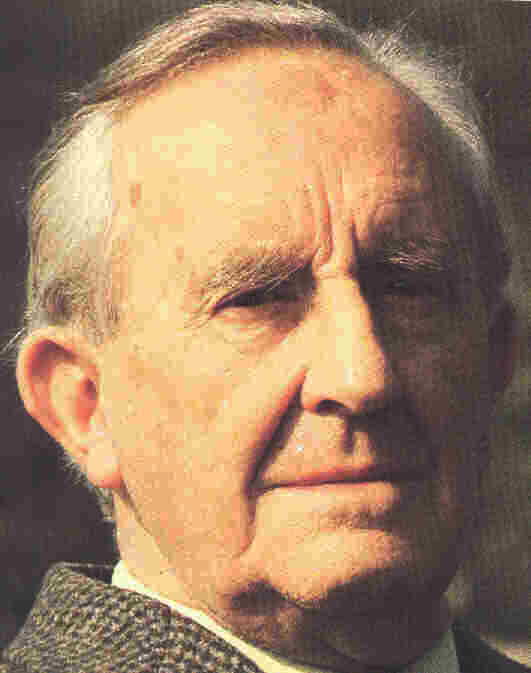
Tolkien would have been 121 years old today. Here is a recording of him reading from The Hobbit. This was the scene that my daughters most enjoyed in the movie.

Sunday, December 23, 2012

Magnificat, The Song Of Mary


My soul doth magnify the Lord : and my spirit hath rejoiced in God my Saviour.
For he hath regarded : the lowliness of his handmaiden.
For behold, from henceforth : all generations shall call me blessed.
For he that is mighty hath magnified me : and holy is his Name.
And his mercy is on them that fear him : throughout all generations.
He hath shewed strength with his arm : he hath scattered the proud in the imagination of their hearts.
He hath put down the mighty from their seat : and hath exalted the humble and meek.
He hath filled the hungry with good things : and the rich he hath sent empty away.
He remembering his mercy hath holpen his servant Israel : as he promised to our forefathers, Abraham and his seed for ever.

Thursday, November 22, 2012

Happy Thanksgiving 2012

When things are difficult, financially, physically or spiritually, it can seem quite difficult to be thankful. How many in our society deal with this is to seek more and better. How wise it is that we have a day in which we do not look for what may come, but for what has been, and be grateful.

It is hard to be thankful on a special day if the rest of our lives are not immersed in gratitude. It has become a bit of a lost virtue, but one we can reclaim. There has been a bit of a movement on Facebook to list one thing one is grateful for each day in November. I have not participated, but appreciate the sentiment behind it. Even if no one else knows, and maybe especially if no one else knows, we can practice this lost virtue of thankfulness starting in the small things in our lives. When my eldest daughter was still a toddler, she'd wake up each day and together we'd say, "Thank you God for waking us up this morning.". We stopped the practice together as she got older and our morning habits changed, but perhaps it would be a good thing to begin again, on our own - being thankful for the gift of another day.

A blessed Thanksgiving to you all!


Saturday, October 27, 2012

Missing Camille

I've missed Camille Paglia's work the past couple years since she stopped writing for Salon. Turns out, she's been writing a book call Glittering Images: A Journey Through Art From Ancient Egypt to Star Wars. 

There's something refreshing about a person who is thoughtful and bold, who does not worry about what is politically correct, and that's what she does. While often not agreeing with her, I enjoy reading her work for this very reason. Listening to someone with whom you don't agree, but who expresses themselves in reasoned, honest ways, keeps one from becoming insular, but also allows one to find common ground. If we always treat those with whom we disagree as "other", then I think we let ourselves become bent out of shape and we lose the ability to relate to our fellow humans. If we claim that we are created in the image of God, then we must not allow this to happen.

Here is link of Camille being interviewed by Glenn Reynolds. They cover art in the U.S., particularly our unique relationship with art, and a bit of politics. At around 15 minutes, it's a fun listen. She also recently wrote an article in the Wall Street Journal titled, How Capitalism Can Save Art.

Saturday, October 6, 2012

How To Be Oneself

Below is a link to a great sermon given by N.T. Wright. It's title refers to Christian character, but really, at it's heart it is about how to be truly human. Sorry for the link, the poster is not allowing embedding. Take 45 minutes to listen. I don't think you'll regret it.
Why Christian Character Matters

Monday, September 3, 2012

Fat Head Is On YouTube

Here's a great comedy documentary which mixes science, diet and libertarian thought. Tom Naughton produced this jewel a couple of years back and it led me to research much of what's been learned in the world of nutrition, and to be on the look out for propaganda in the way of so called research funded by big pharma and big ag.


Tuesday, August 7, 2012

Why Cut Carbohydrates

There's been quite a bit in the U.S. written on why and how we get fat. Just go to any bookstore and there will be a whole section on diets, usually found nearby, but separated from the cookbook section. Below is a chart that I think is helpful in explaining the how and why our bodies get fat. Click this link if the chart is too small for you to read as I wasn't able to make this one any larger.

If you know someone who blames their weight gain on a hormone imbalance and you've been inclined to doubt them, then doubt no more. We don't often think of insulin as a hormone, but that is exactly what it is, and it turns out that it is the key to most weight gain.


Sunday, August 5, 2012

Litany To The Holy Spirit

was the song for the offertory at St. Mark's Lutheran Church this morning. What a lovely way to petition the third person of the Trinity.

Here is a nice version of it I found on YouTube.


HIS LITANY, TO THE HOLY SPIRIT

 In the hour of my distress, 
When temptations me oppress, 
And when I my sins confess, 
Sweet Spirit, comfort me! 

When I lie within my bed, 
Sick in heart,and sick in head, 
And with doubts discomforted, 
Sweet Spirit, comfort me! 

When the house doth sigh and weep, 
And the world is drown'd in sleep, 
Yet mine eyes the watch do keep, 
Sweet Spirit, comfort me! 

When the artless doctor sees 
No one hope, but of his fees, 
And his skill runs on the lees, 
Sweet Spirit, comfort me! 

 When his potion and his pill, 
Has, or none, or little skill, 
Meet for nothing but to kill, 
Sweet Spirit, comfort me! 

When the passing-bell doth toll, 
And the furies in a shoal 
Come to fright a parting soul, 
Sweet Spirit, comfort me! 

When the tapers now burn blue, 
And the comforters are few, 
And that number more than true, 
Sweet Spirit, comfort me! 

When the priest his last hath pray'd,
 And I nod to what is said, 
'Cause my speech is now decay'd,
 Sweet Spirit, comfort me! 

When, God knows, I'm tost about 
Either with despair, or doubt; 
Yet, before the glass be out, 
Sweet Spirit, comfort me! 

When the tempter me pursu'th 
With the sins of all my youth, 
And half damns me with untruth, 
Sweet Spirit, comfort me! 

When the flames and hellish cries 
Fright mine ears, and fright mine eyes, 
And all terrors me surprise, 
Sweet Spirit, comfort me! 

When the Judgment is reveal'd, 
And that open'd which was seal'd; 
When to Thee I have appeal'd, 
Sweet Spirit, comfort me! 

Robert Herrick

Thursday, July 19, 2012

Sex And Power

Oh, did that get your attention?

There's been another broohaha in the gender/sex discussions over at TGC. Remember, not long ago John Piper made the argument that God gave Christianity a masculine feel. I wrote about it here. Now, Jared Wilson is quoting Douglas Wilson's book, Fidelity: What it Means to be a One Woman Man, in making the argument that the reason for rape and books like 50 Shades of Gray is because women are not properly submissive and men are not properly authoritative in the bedroom. Really.

Here's the quote.
A final aspect of rape that should be briefly mentioned is perhaps closer to home. Because we have forgotten the biblical concepts of true authority and submission, or more accurately, have rebelled against them, we have created a climate in which caricatures of authority and submission intrude upon our lives with violence.
 When we quarrel with the way the world is, we find that the world has ways of getting back at us. In other words, however we try, the sexual act cannot be made into an egalitarian pleasuring party. A man penetrates, conquers, colonizes, plants. A woman receives, surrenders, accepts. This is of course offensive to all egalitarians, and so our culture has rebelled against the concept of authority and submission in marriage. This means that we have sought to suppress the concepts of authority and submission as they relate to the marriage bed.
But we cannot make gravity disappear just because we dislike it, and in the same way we find that our banished authority and submission comes back to us in pathological forms. This is what lies behind sexual “bondage and submission games,” along with very common rape fantasies. Men dream of being rapists, and women find themselves wistfully reading novels in which someone ravishes the “soon to be made willing” heroine. Those who deny they have any need for water at all will soon find themselves lusting after polluted water, but water nonetheless.
True authority and true submission are therefore an erotic necessity. When authority is honored according to the word of God it serves and protects — and gives enormous pleasure. When it is denied, the result is not “no authority,” but an authority which devours.

Do I need to say that this is not a Christlike way of viewing anyone's relationship? I have to wonder what part of I Corinthians 7:4 is so hard to understand.
The wife gives authority over her body to her husband, and the husband gives authority over his body to his wife.

Seems pretty egalitarian to me. The scriptures describe a husband and wife coming together as becoming one, not of the woman being pursued and conquered by the man, but of mutually agreeing to come together.What we have so much of the time, is a reading of our own culture into scripture, and in TGC's culture the masculine is given power and authority.

This reminds me of the quote widely touted in the 90's, and wrongly attributed to feminist scholar and  anti-pornography activist, Catharine MacKinnon, that "all sex is rape". Of course this was held up to ridicule, but really, is it any different than what is implied here in the quote from Douglas Wilson? If sex is not mutual, or egalitarian, but described as the act of sexually conquering, what can it be other than rape?

Update:

TGC has responded to many, including Scot McKnight, who called for the offending post to be taken down. I hope it was because the author came to an understanding of just how damaging was the thought conveyed. I hadn't called for it to be taken down, because I believe exposure to light is the best disinfectant, but I understand the sentiments of those who did.

Pax

Update II.

Jared's explanation.

Tuesday, July 17, 2012

Leadership

Frank Viola has written a blogpost on leadership in the church. I posted it to my Facebook page, but also want to link to it here. This is what I said about it on my FB page:
I am in great agreement with this post. I think much of what has gone wrong in the church is that we no longer trust the Spirit to lead and instead set up barriers in order to protect what God has promised to sustain. In essence, we desire to control and mechanize what is a living organism, the body of Christ.

Why would we want to do that if we really believed that Jesus gives life and leads and protects? What would the church be like if we functioned as a body, instead of like a business or government?  Jesus stood the world's ideas of leadership and authority on their head. What if we embraced that truth instead of trying to turn them back around?

These thoughts have been bubbling up in my consciousness for a while now, as those of you who read my blog know, at least a decade. Yes, I'm a slow learner. They go against everything our world tells us, don't they? No wonder the church keeps sliding into these models when we as members continue to. Moment by moment I want to live in the upside down world in which Jesus lives. It means giving up control, authority, and self interest. I hope that one day I see Jesus's view of power and authority as the real, intuitive way.

Kyrie Eleison.

Monday, July 9, 2012

Happy 16th Birthday, Emma!

Olivia and Emma at the Currituck Lighthouse, April 2012
We are away from our birthday girl today. She is on a mission in Areciba, Puerto Rico with members from her church youth group. While I am sad to miss this special day with her, I'm very proud and excited for her also. She is certainly growing up, making wise and thoughtful decisions about her life, caring for others, all while keeping a healthy amount of sass!

Much love to you, Emma Hawkins! Can't wait for you to return to us so we can hear of your adventures, holy moments, and to celebrate your 16th birthday in your presence!

Monday, May 28, 2012

A Loving God

Here is a video of an Orthodox priest explaining the difference between a common protestant interpretation of the atonement and the Orthodox view. I'm with the priest on this one. I'm constantly amazed at the love of God, and equally amazed at those who would see him as vindictive and distant. God came to earth to be near us, to love us, to make us his heirs.

I think N.T. Wright is correct,  that we too often want to go from Jesus birth, to his death, to his resurrection and skip over his life. I think sometimes we are too afraid to look at this life because it would so completely turn our notion of who God is on its head. I want my understanding of God to be shaped by Jesus, who is the manifestation of God.


H/T Scot McKnight

Sunday, May 27, 2012

Christmas, Pentecost, And The Goo Goo Dolls

 I was listening to Better Days, by the Goo Goo Dolls yesterday, and thinking through the lyrics. It is a thoughtful song for Christmas and better than many that are popular these days. At first I thought the lines,
And one poor child who saved the world
And there's 10 million more who probably could
If we all just stopped and said a prayer for them.
were just a bit off. Of course the one child is unique, the only begotten Son of God, there couldn't be even one more. The further I thought of this though, the more the significance of Pentecost took hold and what it means for us individually and for the world. At Pentecost, the Holy Spirit transformed those who were once enemies of the Father into his sons and daughters, and he continues to this day.  Yes, that's the born again part, but it means so much more than receiving personal salvation. It means we participate in our Father's life and work. What is more, as we practice kenosis, the emptying of ourselves, the more Jesus' spirit fills us, theosis, and we in essence become little Christs. This is the Kingdom of Heaven, and because of this, more than millions participate in the saving of the world.

What better prayer could we pray this Pentecost, than that each child born will play a part in saving the world, for those who become fellow heirs with Christ, sons and daughters of the Most High, that is our mission.

Better Days

And you ask me what I want this year
And I try to make this kind and clear
Just a chance that maybe we'll find better days
Cause I don't need boxes wrapped in strings
And designer love and empty things
Just a chance that maybe we'll find better days

So take these words
And sing out loud
Cause everyone is forgiven now
Cause tonight's the night the world begins again

I need someplace simple where we could live
And something only you can give
And thats faith and trust and peace while we're alive
And the one poor child who saved this world
And there's 10 million more who probably could
If we all just stopped and said a prayer for them

So take these words
And sing out loud
Cause everyone is forgiven now
Cause tonight's the night the world begins again

I wish everyone was loved tonight
And somehow stop this endless fight
Just a chance that maybe we'll find better days

So take these words
And sing out loud
Cause everyone is forgiven now
Cause tonight's the night the world begins again

Wednesday, May 23, 2012

Revealing Review

Last night I read a review of Ann Voskamp's book, One Thousand Gifts. I have not read the book so I cannot comment on the reviewer's take on the writing style or content, though I have purchased the Kindle version and hope to read it this summer. What caught my attention though, were his theological concerns.

He is critical of the spiritual mysticism which comes through and supports this criticism by listing authors who have influenced Voskamp or whom she quotes. The list is:  Henri Nouwen, Brennan Manning, Teresa of Avila, Brother Lawrence, Annie Dillard, and Dallas Willard. Now this gets interesting to me, because with the exception of Brennan Manning, I have read works by each of these authors, and while I don't agree with everything they write, just as they would not agree with one another, I have learned and been influenced for the good by them. In fact I hope very much that my daughters will one day discover their writings and be drawn closer to Jesus because of them.

St. John of the Cross
Another thing he is critical of is her using sexual metaphors in describing her relationship to God. Now these may not be what I would find most comfortable, but my goodness, has he not read Song of Songs? For over two thousand years, one way the church has interpreted the Song of Songs is as a metaphor for Jesus and the Church. I would suppose the reviewer is not a fan of St. John of the Cross, either.

That Voskamp finds special meaning and experience in a Roman Catholic Cathedral gives the reviewer more cause for concern  because as he says, "... her ecstasies have to happen in a place dedicated to a false gospel of salvation by grace plus works rather than a gospel of salvation by grace alone through faith alone?". He apparently does not know of, or finds insufficient,  this understanding reached between the RCC and the Lutherans. On October 31, 1999 in Augsburg, Germany, these two groups affirmed:
Together we confess: By grace alone, in faith in Christ’s saving work and not because of any merit on our part, we are accepted by God and receive the Holy Spirit, who renews our hearts while equipping and calling us to good works.
Sounds like sola gratia to me.

Now, I'm not trying to beat up on this reviewer, which is why I'm not linking to the review or giving his name. Nor do I think all of his concerns are without some merit. He warns those who may read Voskamp's book to not think that because they do not have the same experiences with God as the author's,  that their relationship is somehow less, and I think this is a good caution.

I receive this review as a lesson, mostly, though, because we interpret everything in this life through a filter influenced by culture, presuppositions, doctrine, experience etc. It is, I think, a wise thing to acknowledge this, and to maintain a bit of humility and generosity in our interpretation of what others say and do. I believe in objective truth - I just have to keep reminding myself that I neither know it all nor have a handle on what I do know.


Friday, May 18, 2012

An Effort For Truth

If a man says of what is that it is, or what is not that it is not, he speaks the truth.  But if he says of what is not that it is, or of what is that it is not, he does not speak the truth.  -Aristotle
In essence, truth corresponds to reality. That is at least what the ancients believed and it is the best definition I have found to describe this transcendental. With so simple an explanation, why then is truth so difficult to reach? Why do we seem to stumble over it, bypass it, ignore it, or find a substitute for it?

In the video below, comedian Tom Naughton, maker of the documentary, Fat Head, presents before an audience the problems with science, scientific studies, and scientific reporting in our culture and gives basic but needful information to help filter out the fact from fiction when it comes to scientific claims in a lighthearted, funny way. Best of all, it presents what questions we should be asking and why. When I first watched this last year, I couldn't help but think of the late Neil Postman's first description of  loving resistance fighters (those who resist reflexively accepting any and all technology with which we are presented) in his book, Technopoly: The Surrender of Culture to Technology. He says loving resistance fighters are: 
(Those) who pay no attention to a poll unless they know what questions were asked and why.
Isn't that a great quote? The same sort of inquiries are needed every time we read of some scientific study.

In our culture it takes a lot of effort to discover the truth. The media, whether through journalism, talk shows, reality t.v., etc. will not present the truth, either because of their ignorance or because they are agenda driven. The video below, at least when it comes to scientific reporting, helps make discerning the truth just a bit easier, plus it's fun.

Wednesday, May 9, 2012

How To Sing Eschatologically

N.T. Wright covers Bob Dylan's When the Ship Comes In.
I really love this guy!


When the Ship Comes In

Oh the time will come up
When the winds will stop
And the breeze will cease to be breathin'
Like the stillness in the wind
'Fore the hurricane begins
The hours when the ship comes in.

And the seas will split
And the ship will hit
And the sands on the shoreline will be shaking
Then the tide will sound
And the wind will pound
And the morning will be breaking.

Oh the fishes will laugh
As they swim out of the path
And the seagulls they'll be smiling
And the rocks on the sand
Will proudly stand
The hour that the ship comes in.

And the words that are used
For to get the ship confused
Will not be understood as they're spoken
For the chains of the sea
Will have busted in the night
And will be buried at the bottom of the ocean.

A song will lift
As the mainsail shifts
And the boat drifts on to the shoreline
And the sun will respect
Every face on the deck
The hour that the ship comes in.

Then the sands will roll
Out a carpet of gold
For your weary toes to be a-touchin'
And the ship's wise men
Will remind you once again
That the whole wide world is watchin'.

Oh the foes will rise
With the sleep in their eyes
And they'll jerk from their beds and think they're dreamin'
But they'll pinch themselves and squeal
And know that it's for real
The hour that the ship comes in.

Then they'll raise their hands
Sayin' we'll meet all your demands
But we'll shout from the bow your days are numbered
And like Pharaoh's tribe
They'll be drownded in the tide
And like Goliath, they'll be conquered.

Wednesday, April 18, 2012

Lamb Of God

Lately, I've been thinking more about Jesus, his life, his meaning, his purpose, and the image of the Lamb of God continues to come forth in my mind. It is challenging to realize that God in Christ is portrayed as both shepherd and lamb. The one who guards and protects is also the one who is vulnerable and sacrifices.

I recently read that the Orthodox have an understanding of Jesus as Lamb before the foundations of the world. I think they are right. We in the western church have this idea that because we messed up, that God humbled himself to save us, but really, what we see in Christ is that God's nature is humble, serving, and sacrificing. That is true power, that is true love. This is what Jesus taught.

Peter Enns has a thought provoking post on just how hard it is to follow Jesus and to live as he taught. I think we find it difficult for a couple of reasons. One is that our faith is weak, which is another way of saying we cling to our idols. Another reason is that it doesn't make sense to us. We continue to think like the world thinks, ignoring how Jesus took on the form of a servant while also telling his disciples, "If you have seen me, you have seen the Father". The implications are huge, and I think when we finally understand that Christ lived kenotically, not as a fluke or suspension from his nature, but in expressing God's nature, we will better understand that we are called to do the same and in doing so, be transformed into his likeness. How else is what we are called to be even possible?

Below are two songs that relate to Christ as both shepherd and lamb. The first is Howard Goodall's setting of Psalm 23, which I've posted before. The other is a version of Agnus Dei, which is to me the most meaningful part of our worship, before receiving Christ himself. Both express the nature of the one who gives life, our protector and redeemer.


Friday, April 6, 2012

Good Friday Confession

Today is Good Friday. For the last four years, the pastors at our church have offered the opportunity for private confession and absolution on this day. This is done as a congregation every Sunday, but privately, only once a year. How does one confess a year's worth of sins on one day? To work with this limitation, I have taken the opportunity during these times to confess and work through sins which are particularly persistent in my life.

This year, I looked up the seven deadly sins to try and gain a better vocabulary and understanding of what I persistently find to be stumbling blocks, before I met with Pastor Mark. What I found is that of the seven, acedia seems to be my weakness or burden. One can witness this in part from the lack of posts here on the blog. It is difficult to complete or even begin a task if one sees the end result being futile, which is the prism through which I see much of life lately. There are times of course when this is stronger than others, and now is one of those times when it is stronger. I'm sure there are many reasons for this.

One is my nature. I have a tendency to observe, to conserve, to want things to be perfect or ideal, and to be sensitive. These traits can be good, but as Lewis points out, sin or evil are not the opposite or absence of good, but the twisting or perversion of it. All of these traits can be paralyzing if not lived out in life giving, sacrificial ways, which I obviously don't always do.

Another reason is probably that I still grieve for our baby who died. In our society a statement like this is usually frowned upon, particularly given that it has been two and a half years, but it's true none the less. In fact, I don't imagine it will ever go away, and from speaking to others who have suffered a similar loss, this is actually quite normal. Painful, but normal.

Still another is the overwhelming matters of injustice in society, in the church, in government. It seems everywhere I turn there is a story of someone abusing power by keeping another ignorant, impoverished and helpless. The methods can be overt, but more often they are subtle and manipulative. Those able see this tend to become activists, rebellious or shut down. I don't think it is any coincidence that over 1 in 10 Americans take anti depressants.

Lastly, another reason, which I also realize is the solution, is focusing on Christ, his life and who he is, and not just who I've been told he is. I've done this through teaching a class on the Gospel of Luke, and also through reading books, such as Inhabiting the Cruciform God, by Michael J. Gorman and others by N.T. Wright and Scot McKnight. It may seem counter intuitive that this has been not just exhilarating but also unsettling. The chasm seems so great between where the church is and what Christ taught, and yet we are still his body. There seems to be an unsettling in much of American Christianity in this regard, as pollster George Barna has been documenting.

These seem to be despairing times. I have attended the funerals of two people this year whose deaths were due to suicide. The sorrow experienced by their loved ones is incalculable. How does one see the reality of this broken world and not fall into despair? As Mark reminded me today, we must be careful not to despair in despairing.

Perhaps, as I expressed above, we do this is by seeing Jesus as he really is. He is the man of sorrows, the one who had compassion, who suffered with, the one who healed, and who leads us to do the same. We aren't going to make everything right, justice will come in dribs and drabs, much of our efforts will seem a practice in futility, yet Jesus calls us to continue, to trust him who will put all things to rights, and who is in some way going about redeeming all that seems futile and wrong.

I logged onto Facebook earlier today, and saw this article, The Contemporary Church is a Crack House. by Peter Rollins, posted by a friend and pastor, Cathy. It is an important reminder of how to deal with the difficulties of life, when facing them head on is too overwhelming and avoiding them just makes them bigger. He writes:
However there is a different way to handle such a traumatic event, one that neither seeks to repress the pain, nor confront it directly. This other way involves participation in symbolic activity. For example, you might go to hear a poet who puts into music the suffering of loss; an individual who is able to speak the type of anger/frustration/pain you feel in lyrical form. In such a poet we encounter an individual who has demonstrated profound courage, for in being able to sing her suffering she shows that she is not overwrought by it; that while it is real she has robbed it of its sting.
As we listen to the music we are invited to participate in a form of communion. A call is being issued asking us to touch the dark core of the music so as to encounter our own dark core. Yet the artistic form is such that this encounter with the darkness is bearable.  We encounter our pain and anger in a way that we can cope with and we begin the work of mourning.
Like the professional mourners at funerals we might not cry, but we are paying someone else to cry on our behalf. Not so that we might avoid our suffering, but so that we may be able to access it in a way that is not crushing.
My concern is that most of the actually existing church acts as a type of drug den with the leaders being like the nicest, most sincere, drug dealers. What we pay for are songs, sermons and prayers that help us avoid our suffering. These drugs are very appealing because of the quick fix and powerful high they offer, hence the success of such communities. However they do not help us face up to, speak out and work through our pain.
In contrast we need collectives that are more like the professional mourners who cry for us, the stand-up comedians who talk about the pain of being human or the poets singing about life at local pubs.
In other words, what if the church could be a place where we found a liturgical structure that would not treat God as a product that would make us whole but as the mystery that enables us to live abundantly in the midst of life’s difficulties. A place where we are invited to confront the reality of our humanity, not so that we will despair, but so that we will be free of the despair that already lurks within us, the despair that enslaves us, the despair that we refuse to acknowledge.
Today is Good Friday and I confessed my sins.

Saturday, March 17, 2012

Happy Saint Patrick's Day 2012

In previous years I've written about the wonderful saint, Patrick. You can read some of what I've written here.

This year, I'd like to share a list of some of the Irish movies I've seen and greatly enjoyed. You know every pub will be full up tonight, so you might want to stay home, make a shepherd's pie, drink some Guinness or a cider and enjoy a good story.

I've divided the movies between those that are family friendly and those meant to be viewed by adults. This kind of list is subjective, so I'd recommend checking out imdb if you have any concerns about what may be appropriate for your family.

Family friendly  
The Secret of Roan Inish 
The Quiet Man 
Waking Ned Devine 
War of the Buttons 
The Secret of the Kells  

For more mature viewers  
Once 
Michael Collins 
The Commitments 
The Field 
In America 
The Snapper 
The Crying Game 
My Left Foot

Of this list, my favorites are The Secret of Roan Inish, Waking Ned Devine, The Quiet Man, and Once.

I'm sure I've forgotten some, and I've not listed any that I have not seen yet. I think I'll try the recent film, Ondine tonight. Feel free to add to this list in the comments.