Friday, April 23, 2010

Christianity And Culture: Living In The Image Of God Part 2

As we think about how to evaluate and understand culture, let's take a closer look at idolatry.


There is no neutral ground in the universe: every square inch, every split second, is claimed by God and counterclaimed by Satan.   C.S. Lewis


I would suggest that this first consequence of the fall, being inclined toward idolatry, is the greatest of the consequences, and is the root of all other consequences.

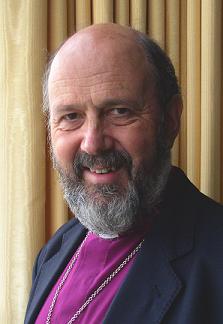
Evil consists not in being created but in the rebellious idolatry by which humans worship and honor elements of the natural world rather than the God who made them. The result is that the cosmos is out of joint. Instead of humans being God’s vice-regents over creation, they ignore the creator and try to worship something less demanding, something that will give them a short-term fix of power or pleasure. N.T. Wright

Idolatry-

1. Is anything that is put in place of God - We use idols to avoid God and his holiness.


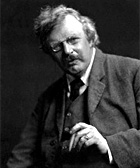
For when we cease to worship God, we do not worship nothing, we worship anything. G.K. Chesterton


2. Comes in pairs - Dominion and trust are replaced with domination and overdependence. The nearby god results from the need of dominion corrupted into domination and the faraway god results from the need for trust corrupted into overdependence. Jeremiah 23:23-24
Examples of nearby gods are technique, expertise, money, health, and law/legalism.
Examples of faraway gods are chance, fate, self-esteem, financial security, and our own idea of God.

3. Deceives - Enslaves and overpowers us. Tolkien’s literary portrayal of Smeagol being transformed into Gollum is an excellent image of what happens to us when we turn to idols. He can no longer say “I” and can only say,“we”. It is the psychology of damnation. Whatever we worship, we become. 

 Psalm 115:4-8
Their idols are silver and gold,
the work of human hands.
They have mouths, but do not speak;
eyes, but do not see.
They have ears, but do not hear;
noses, but do not smell.
They have hands, but do not feel;
feet, but do not walk;
and they do not make a sound in their throat.
Those who make them become like them;
so do all who trust in them.


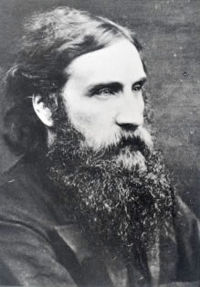
A man is in bondage to whatever he cannot part with that is less than himself.  George MacDonald


4. Fails us,  which we see happen to Baal's prophets in I Kings 18:20-29.
20 So Ahab sent to all the people of Israel and gathered the prophets together at Mount Carmel. 21 And Elijah came near to all the people and said, “How long will you go limping between two different opinions? If the Lord is God, follow him; but if Baal, then follow him.” And the people did not answer him a word. 22 Then Elijah said to the people, “I, even I only, am left a prophet of the Lord, but Baal's prophets are 450 men. 23 Let two bulls be given to us, and let them choose one bull for themselves and cut it in pieces and lay it on the wood, but put no fire to it. And I will prepare the other bull and lay it on the wood and put no fire to it. 24 And you call upon the name of your god, and I will call upon the name of the Lord, and the God who answers by fire, he is God.” And all the people answered, “It is well spoken.” 25 Then Elijah said to the prophets of Baal, “Choose for yourselves one bull and prepare it first, for you are many, and call upon the name of your god, but put no fire to it.” 26 And they took the bull that was given them, and they prepared it and called upon the name of Baal from morning until noon, saying, “O Baal, answer us!” But there was no voice, and no one answered. And they limped around the altar that they had made. 27 And at noon Elijah mocked them, saying, “Cry aloud, for he is a god. Either he is musing, or he is relieving himself, or he is on a journey, or perhaps he is asleep and must be awakened.” 28 And they cried aloud and cut themselves after their custom with swords and lances, until the blood gushed out upon them. 29 And as midday passed, they raved on until the time of the offering of the oblation, but there was no voice. No one answered; no one paid attention.
You can’t get second things by putting them first; you get the second things only by putting first things first.  C.S. Lewis, First Things, in God in the Dock
The scriptures teach that idolatry is taken into the heart by the learned (Ezekiel 14:1-5), associated with sexual immorality and covetousness (Ephesians 5:5), associated with sexual immorality , impurity, passion, evil desire, and covetousness. (Colossians 3:5), and participation with demons (I Corinthians 10:14-33).

In the temptations of Jesus  in Matthew 4:1-11, the first temptation is to put trust in the nearby god of physical security, the second temptation is to put trust in a god of a different character than Yahweh and the third temptation is to put trust in the nearby god of personal dominion/domination.  All the temptations are to go about attaining the Kingdom without the cross, and giving in to them would be idolatrous.  (See my earlier post, Stones To Bread, for more thoughts on Christ's temptations.)

Sacrifice as much as you please, cajole and flatter as you please, beat your disobedient idol with a big stick if you please-the thing still won't give you what you want. In consequence, all idolatrous cultures tend to get nastier and nastier. If a small bribe doesn't succeed, they offer more. The idol will not respond to a dance of virgins with flowers? Very well, let's try a dance of warriors mutilating themselves with knives. You have cut off a lock of your hair and laid it before the idol, yet life is still dark? Try cutting your first-born's throat and offering him. Nor does the idol's continued silence teach you better sense, if you're a natural-born idolater. For if Mumbo-Jumbo is so bard to please, what a very great Mumbo-Jumbo he must be !
Joy Davidman from Smoke on the Mountain.

What kind of idols does our society worship?  What sacrifices do these idols demand?  What kind of culture does this create?

Monday, April 19, 2010

I'm Happy To

This was my conversation tonight with Olivia as I was preparing dinner.

Olivia:  If I wash my hands, can I help with dinner?
Me:  Sure sweetheart.  You can tear the ham into pieces for the casserole.

Later, as she's helping.

Me:  Thank you for helping.
Olivia:  Oh, I'm happy to.

If only I were always so happy to be helpful. 

Antony Flew, R.I.P.

I found out today that Antony Flew died on April 8.  Flew created a few waves in 2004 when he publicly announced that after years of atheism, the scientific evidence, particularly in the area of biology, led him to believe in a creator of some kind.  This led to overreactions by atheists who claimed that he had become senile, but one can see from these videos of a forum held at Westminster Chapel with Flew, N.T. Wright and Gary Habermas that his mind was still sharp and full of good humor. Rest in peace, Dr. Flew.

Saturday, April 17, 2010

Christianity And Culture: Living In The Image Of God Part 1

This is from a series on Christianity and culture which I developed and taught last summer.

What is culture?

Culture is all around us. It’s the books we read, the type of food we eat and how we produce it, the songs we sing and listen to, the clothes we wear, the entertainment in which we partake, educational institutions, the technology we use, governing systems, the economy, the philosophies we believe, religion and faith, the words we speak, not to mention art and architecture. None of these exist in a vacuum from the other, nor can we exist in a vacuum from culture.

Here are a few definitions of culture:

1. The totality of socially transmitted behaviour patterns, arts, beliefs, institutions, and other products of human work and thought.

2. The act of, or any labor or means employed for, training, disciplining, or refining the moral and intellectual nature of man; as, the culture of the mind.

3. Comes from the word cultivate. (Think of the garden in Genesis 2)

4. James Davison Hunter defines it as; “The power to name reality”. The idea behind this is that when we name something, it defines that something and determines how we think about that something.

Culture is important for it is the nature of our humanity to create and participate in culture because God creates and we are made in His image. It helps shape our thoughts, attractions, morals and behaviours, even as we help to shape it.  As Dorothy Day said, A good society is one that makes it easy to be good.

We can evaluate culture by asking if it corresponds to what is true, good and beautiful and whether it is being made or used to the glory of God or as a substitute for God.

Before we look any closer at culture, lets look at what it means to be human, and why it is important?  Let's begin at the beginning.

Genesis 1
1:1 In the beginning, God created the heavens and the earth. The earth was without form and void, and darkness was over the face of the deep. And the Spirit of God was hovering over the face of the waters.
And God said, “Let there be light,” and there was light. And God saw that the light was good. And God separated the light from the darkness. God called the light Day, and the darkness he called Night. And there was evening and there was morning, the first day.
And God said, “Let there be an expanse  in the midst of the waters, and let it separate the waters from the waters.” And God made  the expanse and separated the waters that were under the expanse from the waters that were above the expanse. And it was so. And God called the expanse Heaven.  And there was evening and there was morning, the second day.
And God said, “Let the waters under the heavens be gathered together into one place, and let the dry land appear.” And it was so. 10 God called the dry land Earth,  and the waters that were gathered together he called Seas. And God saw that it was good.
11 And God said, “Let the earth sprout vegetation, plants  yielding seed, and fruit trees bearing fruit in which is their seed, each according to its kind, on the earth.” And it was so. 12 The earth brought forth vegetation, plants yielding seed according to their own kinds, and trees bearing fruit in which is their seed, each according to its kind. And God saw that it was good. 13 And there was evening and there was morning, the third day.
14 And God said, “Let there be lights in the expanse of the heavens to separate the day from the night. And let them be for signs and for seasons,  and for days and years, 15 and let them be lights in the expanse of the heavens to give light upon the earth.” And it was so. 16 And God made the two great lights—the greater light to rule the day and the lesser light to rule the night—and the stars. 17 And God set them in the expanse of the heavens to give light on the earth, 18 to rule over the day and over the night, and to separate the light from the darkness. And God saw that it was good. 19 And there was evening and there was morning, the fourth day.
20 And God said, “Let the waters swarm with swarms of living creatures, and let birds  fly above the earth across the expanse of the heavens.” 21 So God created the great sea creatures and every living creature that moves, with which the waters swarm, according to their kinds, and every winged bird according to its kind. And God saw that it was good. 22 And God blessed them, saying, “Be fruitful and multiply and fill the waters in the seas, and let birds multiply on the earth.” 23 And there was evening and there was morning, the fifth day.
24 And God said, “Let the earth bring forth living creatures according to their kinds—livestock and creeping things and beasts of the earth according to their kinds.” And it was so. 25 And God made the beasts of the earth according to their kinds and the livestock according to their kinds, and everything that creeps on the ground according to its kind. And God saw that it was good.
26 Then God said, “Let us make man  in our image, after our likeness. And let them have dominion over the fish of the sea and over the birds of the heavens and over the livestock and over all the earth and over every creeping thing that creeps on the earth.”
27 So God created man in his own image,
in the image of God he created him;
male and female he created them.
28 And God blessed them. And God said to them, “Be fruitful and multiply and fill the earth and subdue it and have dominion over the fish of the sea and over the birds of the heavens and over every living thing that moves on the earth.” 29 And God said, “Behold, I have given you every plant yielding seed that is on the face of all the earth, and every tree with seed in its fruit. You shall have them for food. 30 And to every beast of the earth and to every bird of the heavens and to everything that creeps on the earth, everything that has the breath of life, I have given every green plant for food.” And it was so. 31 And God saw everything that he had made, and behold, it was very good. And there was evening and there was morning, the sixth day.
In Genesis 1: 1, 21, 27, the Hebrew word bara is used for create. It means to create something totally new, something which does not flow out of what came before and is only attributable to God. Bara is used three times in reference to man, underscoring his uniqueness.

In Genesis 1:26 we have the first hint of the Trinity. The complete Godhead was involved in the creation of man, adam (male and female).

We are made in the image and likeness of God. Imago Dei.  This is what it means to be human.

An image is a  material representation, as in a statue or on a coin, or a likeness or similarity, pattern, picture, semblance.  Humans are commanded to have no graven images because we are the icons/eikons.  To worship anything else leads us to become less than what we were made to be.

Note also, in Genesis 1:10,18,21and 25, God describes creation as good. In vs 31, after man has been created, God describes His creation as very good. 
As Augustine noted, whatever is, must be good. (God is the ultimate being, The Great I Am.) Thus, whatever loses it’s goodness loses it’s being. Whenever we fail to conform to the image of Christ we fail to become fully human.  We lose our I am-ness.

The significance of being made in the image of God is:

1. We are made to be in personal, obedient relationship with God.
2. We are made to be in personal, cooperative relationship with man.
3. We are given moral freedom
4. We have the ability to think, reason, communicate through language
5. We are given dominion over the earth, plants and animals.
6. We are to be fruitful and to recreate.

The consequences of the fall on our humanity are:

1. We are alienated from God, man being inclined toward idolatry.
2. Our relationships with fellow man is strained and inclined toward brokenness.
3. We no longer use our moral freedom rightly being inclined to sin.
4. We lose integrity. Reason, thought, communication are broken.
5. Ineffective dominion, often resorting to domination and misuse.
6. View children as burdens, sometimes less than human.

Adam and Eve turned from God, fearing Him and no longer trusting in His love for them. They then turned their focus and trust on themselves.  While still made in the image of God, now we are twisted, distorted and broken. Once created good, we now through the sin of adam, choose death over life, fear over love as explained in the epistle to the Romans.

Romans 1:21-25
21 For although they knew God, they did not honor him as God or give thanks to him, but they became futile in their thinking, and their foolish hearts were darkened. 22 Claiming to be wise, they became fools, 23 and exchanged the glory of the immortal God for images resembling mortal man and birds and animals and creeping things.
24 Therefore God gave them up in the lusts of their hearts to impurity, to the dishonoring of their bodies among themselves, 25 because they exchanged the truth about God for a lie and worshiped and served the creature rather than the Creator, who is blessed forever! Amen.
Here is a passage from, True Heroism in a World of Celebrity Counterfeits,  by Dick Keyes.  It helps to explain the true extent of not living in the image of God.
Sin is not only violating moral rules. It is described by the apostle Paul as falling “short of the glory of God” (Romans 3:23). Note that he does not say falling short of the “law” of God but of the “glory” of God–that is, short of the excellence of God in every area of his existence. It is certainly moral failure, but God’s moral excellence does not exhaust his nature. The seriousness of our sin is that we use our God-imaging capabilities to think, say and do things that oppose, defy and misrepresent God himself. As we misrepresent God’s image, we also misrepresent the selves we were created to be.
In Christ, however, the image is restored.  Christ emptied himself, kenosis, to make us like him.

Philippians 2:5-11
Have this mind among yourselves, which is yours in Christ Jesus,  who, though he was in the form of God, did not count equality with God a thing to be grasped, but made himself nothing, taking the form of a servant,  being born in the likeness of men. And being found in human form, he humbled himself by becoming obedient to the point of death, even death on a cross. Therefore God has highly exalted him and bestowed on him the name that is above every name, 10 so that at the name of Jesus every knee should bow, in heaven and on earth and under the earth, 11 and every tongue confess that Jesus Christ is Lord, to the glory of God the Father.
See also, Romans 8:3-4

He is the true image of God.

Colossians 1:15-23
15 He is the image of the invisible God, the firstborn of all creation. 16 For by  him all things were created, in heaven and on earth, visible and invisible, whether thrones or dominions or rulers or authorities—all things were created through him and for him. 17 And he is before all things, and in him all things hold together. 18 And he is the head of the body, the church. He is the beginning, the firstborn from the dead, that in everything he might be preeminent. 19 For in him all the fullness of God was pleased to dwell, 20 and through him to reconcile to himself all things, whether on earth or in heaven, making peace by the blood of his cross.
21 And you, who once were alienated and hostile in mind, doing evil deeds, 22 he has now reconciled in his body of flesh by his death, in order to present you holy and blameless and above reproach before him, 23 if indeed you continue in the faith, stable and steadfast, not shifting from the hope of the gospel that you heard, which has been proclaimed in all creation  under heaven, and of which I, Paul, became a minister.
See also, II Corinthians 4:3-6

Christ transforms us into his image and restores creation.

Romans 8:12-30
12So then, brothers, we are debtors, not to the flesh, to live according to the flesh. 13For if you live according to the flesh you will die, but if by the Spirit you put to death the deeds of the body, you will live. 14For all who are led by the Spirit of God are sons of God. 15For you did not receive the spirit of slavery to fall back into fear, but you have received the Spirit of adoption as sons, by whom we cry, "Abba! Father!" 16 The Spirit himself bears witness with our spirit that we are children of God, 17and if children, then heirs—heirs of God and fellow heirs with Christ, provided we suffer with him in order that we may also be glorified with him.
 18For I consider that the sufferings of this present time are not worth comparing with the glory that is to be revealed to us. 19For the creation waits with eager longing for the revealing of the sons of God. 20For the creation was subjected to futility, not willingly, but because of him who subjected it, in hope 21that the creation itself will be set free from its bondage to corruption and obtain the freedom of the glory of the children of God. 22For we know that the whole creation has been groaning together in the pains of childbirth until now. 23And not only the creation, but we ourselves, who have the firstfruits of the Spirit, groan inwardly as we wait eagerly for adoption as sons, the redemption of our bodies. 24For in this hope we were saved. Now hope that is seen is not hope. For who hopes for what he sees? 25But if we hope for what we do not see, we wait for it with patience. 26Likewise the Spirit helps us in our weakness. For we do not know what to pray for as we ought, but the Spirit himself intercedes for us with groanings too deep for words. 27And he who searches hearts knows what is the mind of the Spirit, because the Spirit intercedes for the saints according to the will of God. 28And we know that for those who love God all things work together for good, for those who are called according to his purpose. 29For those whom he foreknew he also predestined to be conformed to the image of his Son, in order that he might be the firstborn among many brothers. 30And those whom he predestined he also called, and those whom he called he also justified, and those whom he justified he also glorified.

It is in Christ that we become truly human.

Friday, April 16, 2010

Firefly

I didn't see Firefly when it was first broadcast.  I have Netflix to thank for catching it on dvd.  What a great television show, (space cowboys, essentially), and at the end a good movie to tie up the loose ends.  While I lament it only lasting one season, so much better that than for it to die out with weak writing and characters.

Here's a fun quiz about the show.  I didn't do too badly for having seen it only once, but I partly attribute that to the show being so good itself, that the story and characters kept my attention.

Your result for The Firefly / Serenity Test...

Nicely Done!!!

You scored 86%!
Here's a link to the quiz.

Monday, April 12, 2010

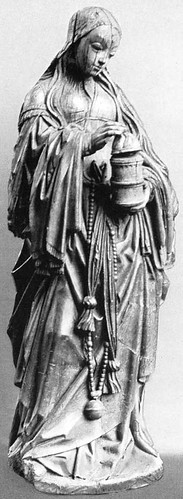
She Has Done A Beautiful Thing To Me

A few weeks ago I taught a Sunday school class while the scheduled teacher was out of town.  One of the passages of scripture I covered was Mark 14:3-9.
 3 And while he was at Bethany in the house of Simon the leper, as he was reclining at table, a woman came with an alabaster flask of ointment of pure nard, very costly, and she broke the flask and poured it over his head. 4There were some who said to themselves indignantly, "Why was the ointment wasted like that? 5For this ointment could have been sold for more than three hundred denarii and given to the poor." And they scolded her. 6But Jesus said, "Leave her alone. Why do you trouble her? She has done a beautiful thing to me. 7For you always have the poor with you, and whenever you want, you can do good for them. But you will not always have me. 8 She has done what she could; she has anointed my body beforehand for burial. 9And truly, I say to you, wherever the gospel is proclaimed in the whole world, what she has done will be told in memory of her."
 While I was preparing for the class, verse six caught my attention.  So many times  the emphasis is placed on how costly the nard was - a whole year's wages and how extravagant was the act.  One can easily begin to sympathize with the disciples for their consternation.  Notice though, Jesus says what she has done is beautiful.  One of the elements of beauty is proportion, to have harmonious relationships of parts within a whole, to have balance and symmetry.  In reality, in the Kingdom of God, what this woman did was not extravagant at all.  It was in perfect proportion, both in time and space, for she was preparing the Messiah's body for burial and anointing her king.  How carefully she must have listened to her rabbi!

Another aspect of beauty is that it points to the good and what is good points to what is true.  The Greek word used in verse six for beautiful is καλὸν, which means beautiful, commendable and good.  What the woman has done is not only in proportion, but is commendable, so much so that we continue to  praise her act to this day,  just as Jesus said we would.

I pray that God gives me a heart to see what is truly beautiful.

Thursday, April 1, 2010

The Witness Of Luke

I've always loved that we have four Gospels, four witnesses who tell of the life of our Lord from their perspectives. I love that the Holy Spirit in guiding them did not take away their personalities or points of view. The witness whom I most appreciate is Luke. The details which he shares seem so tender and compassionate, like Mary's Magnificat, the angels and the shepherds, twelve year old Jesus sitting among the teachers at the temple, Mary choosing the better, Zacchaeus's repentance, and many more. During Holy week, one detail stands out particularly to me. It is in Luke 22, specifically vs. 43.
39 And he came out and went, as was his custom, to the Mount of Olives, and the disciples followed him. 40 And when he came to the place, he said to them, “Pray that you may not enter into temptation.” 41 And he withdrew from them about a stone's throw, and knelt down and prayed, 42 saying, “Father, if you are willing, remove this cup from me. Nevertheless, not my will, but yours, be done.” 43 And there appeared to him an angel from heaven, strengthening him. 44 And being in an agony he prayed more earnestly; and his sweat became like great drops of blood falling down to the ground. 45 And when he rose from prayer, he came to the disciples and found them sleeping for sorrow, 46 and he said to them, “Why are you sleeping? Rise and pray that you may not enter into temptation.”

As Jesus prayed in agony, an angel was sent to strengthen him. We don't hear about this very often in sermons, books, etc.   It is such a compassionate scene and is good to know. When Jesus was praying for the cup to be removed, when his friends had failed him, the Father did not abandon him, he gave him the strength to follow through.

There is so much of Christ's death that is a mystery, that theologians will argue about until Christ returns. (Let's hope they end the arguing there!), but there seem to be some things that are clear. That the Father and the Son are one and before the world was created, they knew this day would come. (It's very hard to talk about the actions of God, knowing he is the creator of time and not bound by it!) Mankind did not shock God when it sinned; God did not have to go to plan B with the law of Moses or plan C when the law could not be kept. God worked his plan in time leading to the perfect time when he would reconcile to world to himself.  This self sacrificial love is God's nature. As he transforms us into his likeness, it is also becoming ours.

I am so thankful to Luke, for reminding us that the Father loves the Son and did not abandon him in his weakness and grief.

There is a hymn which first clued me in to this part of the story. In fact, until I determined at some point in my childhood to see if the fourth stanza was even scriptural, I had thought it may have simply been made up. I'm very glad I was wrong. Here are the lyrics.
'Tis midnight, and on Olive's brow
The star is dimmed that lately shone;
'Tis midnight in the garden now,
The suff'ring Savior prays alone.

'Tis midnight, and from all removed,
The Savior wrestles lone with fears-
E'en that disciple whom He loved
Heeds not his Master's grief and tears.

'Tis midnight, and for other's guilt
The Man of Sorrows weeps in blood;
Yet He that hath in anguish knelt
Is not forsaken by His God.

'Tis midnight, and from ether-plains
Is borne the song that angels know
Unheard by mortals are the strains
That sweetly soothe the Savior's woe.

Monday, March 29, 2010

But I Wanted Something Different

Yesterday was Palm Sunday, when we remember Jesus riding into Jerusalem, rightly honoured by the crowds as conquering King.  They did receive their King, just not the King they wanted and a few days later in their confusion and dismay, would shout, "Crucify him!".

I've always been grateful to have been born on this side of the resurrection, to have an understanding that God had plans other than defeating our worldly enemies in order to relieve our oppression,  that the real oppressor was sin that led to separation from him who gives us life.  How many times, when we ask God for something that we think we need, we end up with something totally different than what we thought we should have received.  This invariably brings us to a test of faith.  Do we really trust our Heavenly Father to give us, his children, good gifts when it appears so differently from what we'd hoped?  We meet this challenge differently at different times, sometime weakly and other times with strong resolution, but in the end, it is the same decision the crowds had to make on Good Friday, to accept or reject Jesus as King.   To say, "Yes, Lord.", or to say, "I must have been mistaken, you can't be the one I had hoped for.".

How I do sympathize with the crowds.  Jesus is different than what we thought we wanted as he goes about breaking  our stereotypes, even our archetypes.  He is the suffering servant who shows us the Father, who empties himself to give us life - who is life, who says we must take up our cross.  He may be different from what we thought we wanted, but he is just what we need.  He is the true King.

Friday, March 26, 2010

A Life Redeemed

I am continually amazed at Christ's work of redemption. He not only redeems us, but our past, our future, our mistakes. This work can be seen so clearly in the life of Anne Rice. I've linked to an interview with her before. Here she is in her own words from the website, I Am Second, simply sharing about her life and the life Christ has brought to her. Really lovely. Please, do watch.

H/T to my cousin Jane who shared the link on FB. 

Saturday, March 20, 2010

Happy Spring

I wish we still celebrated the new year in March.  It seems more appropriate to celebrate a new year when wild fauna and flora spring to life. Here's Vivaldi's Spring from The Four Seasons

Friday, March 19, 2010

Paul Ryan on Health Care

Here's an interview with Congressman Paul Ryan on the current healthcare bill, looming deficits and the obfuscated legislative process.

Also, to bring the numbers into better perspective as to what this will mean for the future of our country, here's the U.S.'s fiscal ranking by the C.I.A., and it is dead last. We carry the most debt and it will only get worse with the passing of the current Senate health care bill and be even worse than that once the House of Representatives add on their amendments.

Here is a short summary of Ryan's proposed, Patient's Choice Act, which is both fiscally sound and better protects citizen's rights.

Wednesday, March 17, 2010

Saint Patrick

Along with a strong affinity to all things Irish, is my great admiration for Saint Patrick.  Enslaved as a boy by the Irish, he escapes as a young man to return to his family, is called by the Holy Spirit to become a missionary for Christ to the very people who had enslaved him.  He returned to Ireland as a bishop and converted a nation without destroying their culture, but allowing Christ to transform it.


Here is The Breastplate of Saint Patrick.


I arise today through a mighty strength, the invocation of the
Trinity, through belief in the Threeness, through confession
of the Oneness of the Creator of creation.

I arise today through the strength of Christ with His Baptism,
through the strength of His Crucifixion with His Burial
through the strength of His Resurrection with His Ascension,
through the strength of His descent for the Judgment of Doom.

I arise today through the strength of the love of Cherubim
in obedience of Angels, in the service of the Archangels,
in hope of resurrection to meet with reward,
in prayers of Patriarchs, in predictions of Prophets,
in preachings of Apostles, in faiths of Confessors,
in innocence of Holy Virgins, in deeds of righteous men.

I arise today, through the strength of Heaven:
light of Sun, brilliance of Moon, splendour of Fire,
speed of Lightning, swiftness of Wind, depth of Sea,
stability of Earth, firmness of Rock.

I arise today, through God's strength to pilot me:
God's might to uphold me, God's wisdom to guide me,
God's eye to look before me, God's ear to hear me,
God's word to speak for me, God's hand to guard me,
God's way to lie before me, God's shield to protect me,
God's host to secure me:
against snares of devils, against temptations of vices,
against inclinations of nature, against everyone who
shall wish me ill, afar and anear, alone and in a crowd.

I summon today all these powers between me (and these evils):
against every cruel and merciless power that may oppose
my body and my soul,
against incantations of false prophets,
against black laws of heathenry,
against false laws of heretics, against craft of idolatry,
against spells of witches and smiths and wizards,
against every knowledge that endangers man's body and soul.
Christ to protect me today
against poison, against burning, against drowning,
against wounding, so that there may come abundance of reward.

Christ with me, Christ before me, Christ behind me, Christ in me,
Christ beneath me, Christ above me, Christ on my right,
Christ on my left, Christ in breadth, Christ in length,
Christ in height, Christ in the heart of every man who thinks of me,
Christ in the mouth of every man who speaks of me,
Christ in every eye that sees me, Christ in every ear that hears me.

I arise today through a mighty strength, the invocation of the
Trinity, through belief in the Threeness, through confession of the
Oneness of the Creator of creation.
Salvation is of the Lord. Salvation is of the Lord.
Salvation is of Christ. May Thy Salvation, O Lord, be ever with us.

Thursday, March 11, 2010

The Morality Of Music

I continue to think about music and art, the objectiveness of beauty and how this affects the way we think and live.  See here, here and here for my previous thoughts on the matter.

Roger Scruton has written an article titled Soul Music.  In this piece, Scruton presents the idea that music itself, not just lyrics, carries with it morality.  He begins with referring to Plato's Republic, and then says this:
We know of music that is good-humoured, lascivious, gentle, bold, chaste, self-indulgent, sentimental, reserved, and generous: and all those words describe moral virtues and vices, which we are as little surprised to find in music as in human beings. Our ways of describing music give incontrovertible proof that we find moral significance in music—and it would be surprising if this were so and we did not also believe that people should be encouraged to listen to some things and discouraged from listening to others. For our characters are shaped by the company we keep, and those who rejoice in the company of crooks and creeps are likely to become crooks or creeps themselves. It is difficult, therefore, to disagree with Plato’s view that music has a central role in education, and that musical education can go badly wrong in ways that impact on the moral development and social responses of young people.
And even if we don’t forbid musical idioms by law, we should remember that people with musical tastes make our laws; and Plato may be right, even in relation to a modern democracy, that changes in musical culture go hand in hand with changes in the laws, since changes in the laws so often reflect pressures from culture. 
 He goes on to contrast music that triggers a response to music which provides a proper object of that response, natural and unnatural rhythms,( the latter which leads automatic and autonomous movements, dancing at rather than with), the melodic and amelodic.  There is much more to the article and I highly recommend it.

Perhaps we should be more thoughtful about art and music. Can we really expect to listen to music and not be changed in some way?  We have become very timid in our society about making judgments.  If music has a moral element, if it is soul and character shaping, we would be negligent in not evaluating it.

Monday, March 8, 2010

The Great Theologians

Scot McKnight has linked to and says good things about Gerry McDermott's new book, The Great Theologians:  A Brief Guide.  It's interesting knowing the author, reading the book and then reading the comments after Scot's post, (especially those who know nothing of the book or its author).

While there are a few of us who have enough of an interest in theology to have searched out classes, lectures, books and articles on the subject, there are many who are interested or would be interested but don't know where to go to get started.  While many of the 'great theologians' are not as inaccessible as many think, this book will ease fears of delving into further study and whet the appetite for those who yearn to understand theology and how we've gotten to the various theologies taught today.

Gerry has formatted this book with questions at the end of each chapter which would serve well for a group study and he also gives suggestions for further reading.

Tuesday, March 2, 2010

Happy 9th Birthday, Olivia!

My daughter Olivia turns nine years old today. How very quickly the years have gone by!

Olivia has a very tender way with animals and young children, loves horseback riding, playing piano, pleasing people and her big sister.

Happy Birthday, dear Olivia. Your daddy and I are very proud of you!

My daughter, Emma, Olivia's elder sister, took this picture on a train ride in W.Va.

Saturday, February 20, 2010

Modern Sacred Families

As our society becomes more secular and the church often more shaped by society than helping shape society, it can be difficult to help develop a depth of spiritual life in our children. A wonderful way of doing this is to intentionally follow the church calendar as a family.

Over at the Jesus Creed blog, Scot McKnight shared a link to a wonderful website called Modern Sacred Family. It has many ideas and resources for just this purpose. I hope it will be a blessing to you.

Wednesday, February 17, 2010

Ash Wednesday

Today, Ash Wednesday, is the beginning of Lent in the church calendar, the season for repentance and reflection. The older I get, the more I am grateful for this day. What if there were no opportunity to repent and no chance of grace? Much of the world seems happy enough to live without it, but I can't, wretched sinner that I am.

I was thinking of what I could write about this day and remembered a quote from Bono that really captures the goodness of repentance and the blessedness of grace. He was interviewed by Michka Assayas for a book after the Madrid train bombings. Here is part of that interview.
Assayas: I think I am beginning to understand religion because I have started acting and thinking like a father. What do you make of that?

Bono: Yes, I think that's normal. It's a mind-blowing concept that the God who created the universe might be looking for company, a real relationship with people, but the thing that keeps me on my knees is the difference between Grace and Karma.

Assayas: I haven't heard you talk about that.

Bono I really believe we've moved out of the realm of Karma into one of Grace.

Assayas: Well, that doesn't make it clearer for me.

Bono: You see, at the center of all religions is the idea of Karma. You know, what you put out comes back to you: an eye for an eye, a tooth for a tooth, or in physics—in physical laws—every action is met by an equal or an opposite one. It's clear to me that Karma is at the very heart of the universe. I'm absolutely sure of it. And yet, along comes this idea called Grace to upend all that "as you reap, so you will sow" stuff. Grace defies reason and logic. Love interrupts, if you like, the consequences of your actions, which in my case is very good news indeed, because I've done a lot of stupid stuff.

Assayas: I'd be interested to hear that.

Bono: That's between me and God. But I'd be in big trouble if Karma was going to finally be my judge. I'd be in deep s---. It doesn't excuse my mistakes, but I'm holding out for Grace. I'm holding out that Jesus took my sins onto the Cross, because I know who I am, and I hope I don't have to depend on my own religiosity.

Assayas: The Son of God who takes away the sins of the world. I wish I could believe in that.

Bono: But I love the idea of the Sacrificial Lamb. I love the idea that God says: Look, you cretins, there are certain results to the way we are, to selfishness, and there's a mortality as part of your very sinful nature, and, let's face it, you're not living a very good life, are you? There are consequences to actions. The point of the death of Christ is that Christ took on the sins of the world, so that what we put out did not come back to us, and that our sinful nature does not reap the obvious death. That's the point. It should keep us humbled… . It's not our own good works that get us through the gates of heaven.
Kyrie eleison

Sunday, February 14, 2010

Saint Valentine's Day And Romance

Today is Saint Valentine's Day as you must know from all the advertisements that have been coming at you for at least a month. You can read a bit of the history of Saint Valentine through a link from last year's blog post here.

Much is said about romance during this time, but it's not usually the kind of romance of history and literature, (and no, I don't count Harlequin's as literature). The romance I look to is in the heroic tales of adventure and sacrifice like Beowulf, the King Arthur legends, The Faerie Queen, ancient myths, fairy tales and more modern works such as The Lord of the Rings. It is an easy thing to seduce, but an altogether other thing to woo, to have love and honour expressed through bravery and sacrifice. This is not reserved for men either, it is universal. Though often portrayed differently, females in romantic stories must also be brave and sacrifice. Can anyone doubt Penelope's courage in the midst of the hoards of suitors

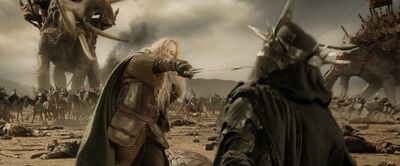
or Eowyn's courage and righteous anger in doing battle with the Witch-King of Angmar?
Once again these all point to the One who woos and gives and sacrifices. Saint Valentine, who was martyred for his faith, for his love for Christ, is a perfect person to hold up in celebration of true romance.

Saturday, February 6, 2010

Winter

Not for the first time in my life, I find myself in the minority. We've had abundant snowfall this winter here in the Roanoke Valley, and while others are busy grousing and wishing spring were here, I am reveling in my good fortune to experience such a winter wonderland.

There is great romance in winter, or as Lewis might put it, a Northernness which brings forth severe beauty and requires a hardiness to survive such a season or climate, both mystery and danger. Lewis put it thus as he described the longing or sehnsucht which such Northernness brought about:
I knew nothing about Balder; but instantly I was uplifted into huge regions of northern sky. I desired with almost sickening intensity something never to be described (except that it is cold, spacious, severe, pale and remote) and then . . . found myself at the very same moment already falling out of that desire and wishing I were back in it.
There is a wildness and a demand from winter and snow. It must be paid attention even as it blankets the ground, absorbing noise and lighting up the night. One must either stop and wait or exert great effort to proceed. Is it any wonder most of nature stops or slows down, and aren't we silly creatures to demand that life should go on just as if there were no winter?

Friday, February 5, 2010

True Myth

In Letters of C.S. Lewis, Lewis writing to Arthur Greeves recounts his discussion of Christianity with Tolkien and Hugo Dyson as they strolled along Addison's Walk.
Now what Tolkien and Dyson showed me was this: that if I met the idea of sacrifice in a Pagan story I didn't mind it at all: again, if I met the idea of a god sacrificing himself to himself...I liked it very much and was strangely moved by it: again, that the idea of a dying and reviving god (Balder, Adonis, Bacchus)similarly moved me provided I met it anywhere except in the Gospels. The reason was that in Pagan stories I was prepared to feel the myth as profound and suggestive of meanings beyond my grasp even tho' I could not say in cold prose "what it meant".

Now the story of Christ is simply a true myth: a myth working on us the same way as the others, but with this tremendous difference that it really happened: and one must be content to accept it in the same way, remembering that it is God’s myth where the others are men’s myths: i.e., the Pagan stories are God expressing Himself through the minds of poets, using such images as He found there, while Christianity is God expressing Himself through what we call "real things".
One of the difficulties or stumbling blocks in modern day Christianity is that we have failed to see God's story as true myth. We have been so "enlightened" that we look only for facts or laws and lose the sense of awe and deeper meaning. What seems to be left is either a shallow belief now being coined as 'Moralistic Therapeutic Deism", or else a system of rules to be followed in order to obtain God's approval. With MTD, God becomes our buddy and sidekick and with a rules system God ironically becomes someone we can manipulate with our behaviour.

In the following video, N.T. Wright gives the example of how this plays out in the first three chapters of Genesis. The arguments between strict six day creationists and evolutionary atheists are in many ways the different sides of the same coin. They are missing the forest for the trees, or in other words, the truth for the possible facts.


To get the story, to see the truth, including the facts but also taking in their meaning will bring us closer to God, because he is of course the author. We yearn for the story. Why else fairy tales, or Valhalla, or even Harry Potter? They are pointers to what really is and what shall be.

Here's another Lewis quote from his sermon, The Weight of Glory.
We do not want merely to see beauty, though, God knows, even that is bounty enough. We want something else which can hardly be put into words — to be united with the beauty we see, to pass into it, to receive it into ourselves, to bathe in it, to become part of it. That is why we have peopled air and earth and water with gods and goddesses and nymphs and elves — that, though we cannot, yet these projections can, enjoy in themselves that beauty, grace, and power of which Nature is the image. That is why the poets tell us such lovely falsehoods. They talk as if the west wind could really sweep into a human soul; but it can't. They tell us that "beauty born of murmuring sound" will pass into human face; but it won't. Or not yet.

For if we take the imagery of Scripture seriously, if we believe that God will one day give us the Morning Star and cause us to put on the splendour of the sun, then we may surmise that both the ancient myths and the modern poetry, so false as history, may be very near the truth as prophecy. At present we are on the outside of the world, the wrong side of the door. We discern the freshness and purity of morning, but they do not make us fresh and pure. We cannot mingle with the splendours we see. But all the leaves of the New Testament are rustling with the rumour that it will not always be so. Some day, God willing, we shall get in.
If we do not have this sense, maybe we should go back to the scriptures and read them afresh, anticipating and looking for the God who surprises, who creates and who has written us into the greatest story.

H/T to Scot McKnight at Jesus Creed for the N.T. Wright video.

Sunday, January 31, 2010

Mending Broken Hearts

C.S. Lewis writes of grief feeling like fear in A Grief Observed. I have found this to be a very accurate description and there is the temptation to avoid it if possible. What I am learning is that once one accepts it, on the other side is a sadness, but it is a softened and almost sweet sadness.

I was thinking tonight that it is not just sorrows that break our hearts, but also being in the presence of great beauty or receiving an undeserved kindness. I think this must happen so that God can mend them back correctly.

How precious is your lovingkindness, O God! And the children of men take refuge in the shadow of your wings. Psalm 36:7

Wednesday, January 27, 2010

A Communication Problem

There are many articles circulating in newspapers, magazines and the blogosphere regarding President Obama's maiden State of the Union speech tonight.  Most are detailing what he should say to recover from his low approval ratings and gain back the independent and middle class voters that have recently repudiated the Democratic agenda by voting in two new Republican governors in Virginia and New Jersey and a Republican senator from Massachusetts.  In the wake of Scott Brown's election President Obama told George Stephanopoulis that he needs 'to speak directly to the American people', an amazing statement coming from the most communicative President in U.S. history.

But the President does have a communication problem, and it is that he is no longer believed.  Almost every campaign promise has been broken, whether it is his promise of transparency in writing laws, keeping lobbyists out of his administration, a modest healthcare proposal that would cover all children, no spending freezes, immediate removal of troops from Iraq, the end of earmarks, the posting of non emergency laws five days before they are signed and the closing of Gitmo.  These are just the ones I can come up with off the top of my head!

This is a problem, that if he wants fixed, (and all indications are that he doesn't), will take time.  Rebuilding credibility is a difficult task which takes real humility, and won't be mended by one more speech.  We live in a society built around marketing and smoke and mirrors.  Many want to be sold on something, and have been.  Right now many are suffering from buyer's remorse.

Tuesday, January 26, 2010

Boom and Bust

Are cycles of boom and bust really necessary?  Here's a video that begins to explain the phenomenon.  Check out this website for more economic information.  As for myself, I'm with Hayek.


H/T The Corner

Sunday, January 10, 2010

Ubi Caritas Et Amor

Most of us are familiar with the Greek terms for different kinds of love: storge or affection, philia or friendship, eros or ‘in love’ love, and agape or charity.  This post is about agape.


In I Corinthians 13 we are told that we can speak in tongues, prophecy, have all knowledge and all faith, move mountains and be martyred, and it is nothing if it is not motivated by love.

+Love is not tolerance. Tolerance is passive, often to the point of indifference and that is the opposite of love. We want what is best for those we love. If we simply tolerate others, we ignore their sins and suffering. God is not tolerant. Hebrews 12:6 says,
For the Lord disciplines the one he loves, and chastises every son whom he receives.
Or as professor and author, Peter Kreeft says, God is a father, not an uncle.

+Love is not feeling based.  God has commanded us to love, both himself and each other.  Feelings are fickle.  It is with the will that we can obey this command.  Feeling can play a part, but they often follow an act of love.

+Love is action, an act of the will. In describing love, the apostle Paul uses words of action:  patience, bears all things, kindness, rejoices in truth.  It looks out for the good of others.  Jesus tells what love is in the parables of the lost sheep, the good Samaritan, the prodigal son. He shows what love is in his life and death.

+Love is specific.  We are to love God with all our heart, mind, soul and strength and our neighbor as ourselves.  We are not called to love the church, a civilization, a society, that would be too easy and not real.  We are called to love one another, and to love one another deeply.  I Peter 4:8

+Love makes us vulnerable. Because love is self giving, putting others ahead of ourselves, and trusting, we lay ourselves open to being terribly wounded. C.S. Lewis says in The Four Loves,
Christ did not teach and suffer that we might become, even in the natural loves, more careful of our own happiness. If a man is not uncalculating towards the earthly beloveds whom he has seen, he is none the more likely to be so towards God whom he has not. We shall draw nearer to God , not by trying to avoid the sufferings inherent in all loves, but by accepting them and offering them to Him; throwing away all defensive armour. If our hearts need to be broken, and if He chooses this as the way in which they should break, so be it.
 Who, but God in Christ has shown themselves to be more vulnerable?

+Love is a witness.  
A new commandment I give to you, that you love one another; just as I have loved you, you also are to love one another.  By this all people will know that you are my disciples, if you have love for one another. John 13:34&35

+Love is eternal.  
Love never ends. As for prophecies, they will pass away; as for tongues, they will cease; as for knowledge, it will pass away.  For we know in part and we prophesy in part, but when the perfect comes, the partial will pass away.  When I was a child, I spoke like a child, I thought like a child, I reasoned like a child. When I became a man, I gave up childish ways.  For now we see in a mirror dimly, but then face to face. Now I know in part; then I shall know fully, even as I have been fully known.
So now faith, hope, and love abide, these three; but the greatest of these is love.
I Corinthians 13:8-13
Love is eternal because God is love.

This has been a tough season for many of us.  We have each had our burdens to bear; the downturn in the economy, professional difficulties, ill health and the loss of loved ones. 

The world presents us with two ways of dealing with suffering.  One is stoicism or the teaching of Budda, which is to deny desire and accept pain, to expect nothing and to therefore not be disappointed.  To hope only for an end of existence.  The other way is hedonism, to live for oneself.  To gain all the pleasure one can, no matter the cost to others or self.

God has another way of dealing with suffering, and it is love.  It is love that stoops to lift us up.  It is love that is compassion, to suffer with.  It is love to teach the truth, to let reality break into our self deceit.  And it is love to which we are called.

Below is a hymn, Ubi Caritas.  It has been sung by the church for centuries.  The first line is Ubi caritas et amor, Deus ibi est, which translated means, Where charity and love are, God is there.  It is a lovely hymn with a real depth of meaning.  I wonder if it inspired Tolstoy's short story, Where Love Is, God Is.

Wednesday, January 6, 2010

Arise, Shine For Your Light Has Come


From the Gospel of John
 In him was life, and the life was the light of men.  The light shines in the darkness and the darkness has not overcome it.

Again Jesus spoke to them, saying, "I am the light of the world.  Whoever follows me will not walk in darkness but will have the light of life.
From the Gospel of Matthew
Now after Jesus was born in Bethlehem of Judea in the days of Herod the king, behold, wise men  from the east came to Jerusalem, saying, “Where is he who has been born king of the Jews? For we saw his star when it rose  and have come to worship him.”  When Herod the king heard this, he was troubled, and all Jerusalem with him;  and assembling all the chief priests and scribes of the people, he inquired of them where the Christ was to be born.  They told him, “In Bethlehem of Judea, for so it is written by the prophet:
 “‘And you, O Bethlehem, in the land of Judah,
are by no means least among the rulers of Judah;
for from you shall come a ruler
who will shepherd my people Israel.’”
Then Herod summoned the wise men secretly and ascertained from them what time the star had appeared.  And he sent them to Bethlehem, saying, “Go and search diligently for the child, and when you have found him, bring me word, that I too may come and worship him.”  After listening to the king, they went on their way. And behold, the star that they had seen when it rose went before them until it came to rest over the place where the child was.  When they saw the star, they rejoiced exceedingly with great joy.  And going into the house they saw the child with Mary his mother, and they fell down and worshiped him. Then, opening their treasures, they offered him gifts, gold and frankincense and myrrh.  And being warned in a dream not to return to Herod, they departed to their own country by another way.


Tuesday, January 5, 2010

On The Last Day Of Christmas My True Love Gave To Me.....

No, it isn't twelve lords a'leaping. It is the man of sorrows.

Here is Jesus, true God from true God, who tells us to take up our cross and follow him, that to gain our life we must lose it, that those who mourn are blessed because they will be comforted. This all just seems like theory until that cross becomes heavier than we can imagine, that the life we thought we were living gets turned upside down, that the comfort in grief is delayed and all we can do is hang on to the promise.

In all the messiness and sin and sorrow of this life, God didn't just wipe the slate clean. He didn't make us all automatons. He became one of us, to live, to suffer, to die and to rise again raising all of life and creation with him. It seems absurd, too much even, but that is love, isn't it? Love is absurd, self giving, lowering oneself to raise the other up, causing suffering to now have meaning, even becoming redemptive.

This is the mystery of the incarnation...the mystery of Christmas.

Thursday, December 31, 2009

Once In A Blue Moon

This is the last day of the year and it will end with a blue moon. Blue moons used to be known as the third of four full moons in a season, but now describe the second full moon in a month, a phenomena that occurs every 33 months. The next one will take place in August 2012.

Here is a fun poem from the perspective of the moon and her annoyance with how poets describe her. I just love the word,'botheration' and how Coleridge doesn't let himself off the hook!

A Soliloquy Of The Full Moon, She Being In A Mad Passion

by Samuel Coleridge
Now as Heaven is my Lot, they're the Pests of the Nation!
Wherever they can come
With clankum and blankum
'Tis all Botheration, & Hell & Damnation,
With fun, jeering
Conjuring
Sky-staring,
Loungering,
And still to the tune of Transmogrification--
Those muttering
Spluttering
Ventriloquogusty
Poets
With no Hats
Or Hats that are rusty.
They're my Torment and Curse
And harass me worse
And bait me and bay me, far sorer I vow
Than the Screech of the Owl
Or the witch-wolf's long howl,
Or sheep-killing Butcher-dog's inward Bow wow
For me they all spite--an unfortunate Wight.
And the very first moment that I came to Light
A Rascal call'd Voss the more to his scandal,
Turn'd me into a sickle with never a handle.
A Night or two after a worse Rogue there came,
The head of the Gang, one Wordsworth by name--
`Ho! What's in the wind?' 'Tis the voice of a Wizzard!
I saw him look at me most terribly blue !
He was hunting for witch-rhymes from great A to Izzard,
And soon as he'd found them made no more ado
But chang'd me at once to a little Canoe.
From this strange Enchantment uncharm'd by degrees
I began to take courage & hop'd for some Ease,
When one Coleridge, a Raff of the self-same Banditti
Past by--& intending no doubt to be witty,
Because I'd th' ill-fortune his taste to displease,
He turn'd up his nose,
And in pitiful Prose
Made me into the half of a small Cheshire Cheese.
Well, a night or two past--it was wind, rain & hail--
And I ventur'd abroad in a thick Cloak & veil--
But the very first Evening he saw me again
The last mentioned Ruffian popp'd out of his Den--
I was resting a moment on the bare edge of Naddle
I fancy the sight of me turn'd his Brains addle--
For what was I now?
A complete Barley-mow
And when I climb'd higher he made a long leg,
And chang'd me at once to an Ostrich's Egg--
But now Heaven be praised in contempt of the Loon,
I am I myself I, the jolly full Moon.
Yet my heart is still fluttering--
For I heard the Rogue muttering--
He was hulking and skulking at the skirt of a Wood
When lightly & brightly on tip-toe I stood
On the long level Line of a motionless Cloud
And ho! what a Skittle-ground! quoth he aloud
And wish'd from his heart nine Nine-pins to see
In brightness & size just proportion'd to me.
So I fear'd from my soul,
That he'd make me a Bowl,
But in spite of his spite
This was more than his might
And still Heaven be prais'd! in contempt of the Loon
I am I myself I, the jolly full Moon.

And here's a sweet, sad song from Nanci Griffith about a lost love.

Wednesday, December 30, 2009

Truth At Any Price

In today's Wall Street Journal opinion page, Shelby Steele has an insightful article on both President Obama and the result of political correctness in our society. I've been following Steele's writngs and thoughts for a while now, having bought his book, The Content of Our Character in the early ninety's. Ironically, his most recent book is titled, A Bound Man: Why We Are Excited About Obama and Why He Can't Win.

The point of the article is that the President has rejected any firm principles in order to maintain his bargaining position. Unlike Ronald Reagan who throughout his life made choices that put his popularity at risk and grew a core set of beliefs that in the end made him a decisive and overall beloved leader, President Obama has cultivated a politically correct core which leaves it empty in order to maintain popularity. This in turn has led him to be a weak leader because he has no core principles. Steele's criticism is aimed at our society as much as it is aimed toward our President. We, in our desire to be seen as politically correct, never demanded any explanations from this man when he was a candidate.

We are left with a rudderless leader, because we would not face any inconvenient truths about him. C.S. Lewis wrote of his wife, Joy Davidman, that she wanted "Truth at any price". I am in complete sympathy with her desire. When we will not face up to truth for whatever reason, to seem sophisticated, to avoid conflict, or simply to take the easier path, we end up with more problems and pain than can usually be imagined. As painful as it may be, it is at truth where real love, forgiveness and good will must begin. Otherwise, our personal relationships and our society are based on a sham and cannot continue in any healthy functional way.

Friday, December 25, 2009

An Ambivalent Christmas

Though I love Christmas, it always holds a bit of ambivalence for me. Jesus is born and worshiped, yet the prophecies even before his birth tell of wretched, horrible things to come, that he will be a man of sorrows and acquainted with grief.

This Christmas the ambivalence is even greater. I am to be celebrating the Christ child while still mourning the death of my own. I'm afraid there isn't much room in my heart for the celebrating this year. My Christmas wish list changed from nursing dresses and diaper covers to that new book by Scot McKnight and maybe some paint for the bathroom. This just isn't how it was supposed to be, and yet, it is.

So here we are at Christmas, twelve days of it in fact. A child is born to die so that others might live, even those who who never had to chance to take a breath. It is deserving of both joy and sorrow. I wonder if these paradoxes are obvious those in the heavenlies, or only to those of us on this side of the veil.

Wednesday, December 23, 2009

Our Dear Santa

We've been visiting this Santa for eleven years, since Emma was two. He's become a dear old friend who always remembers the girls.


Gotta love a Santa that explains to the children that it takes becoming a Saint and going to Heaven to have the power to deliver all those gifts to all the children. How different our Christmases would be without Saint Nicholas!

Sunday, December 20, 2009

Magnificat

Today is the fourth Sunday in Advent. The Gospel reading is from Luke 1:46-55.

height="265">

Note: This song was written by Hildegard of Bingen.

Friday, December 18, 2009

Welcome

Quiddity readers. I hope you find something on this blog either helpful, interesting, or both. A big thank you to Andrew for the hat tip!

Tuesday, December 15, 2009

Stones To Bread


The Sunday school class which I attend has been studying the book of Matthew. In reading the book as a whole, rather than in snippets and pieces, I noticed something which I hadn't seen before. In chapter three, John the Baptizer warns the Pharisees that they cannot entrust their salvation to the fact that they are children of Abraham, for God can raise up children of Abraham from stones. He was basically telling them that they aren't necessary for God's work to be fulfilled, and if they wanted salvation they'd better stop thinking that they are.

Then, in chapter four, Jesus is led by the Holy Spirit into the wilderness for 40 days of fasting to be tempted by the Devil. The first temptation as recorded by Matthew and Luke is the temptation to turn the stones into bread. Is there a connection between John's reference to stones and the Devil's? Not being a believer in coincidence, I think there must be.

In all three of Satan's temptations, there is the enticement to take the easier way, which was not God's way. There is also the temptation of Jesus to prove he is God. So, in these temptations the virtues of courage and faith are attacked and the vice of pride is appealed to. A return to Eden in a way.

Returning to the first temptation. "If you are the Son of God, command these stones to become loaves of bread." On the surface, it seems innocuous. What could it hurt to make some bread, after all the hunger was great, and Jesus had the power. But giving into this temptation would have circumvented God's plan and also made Jesus weaker to resist the following temptations. I can just hear the taunting, behind the command. "Come on Jesus, If God can raise up sons of Abraham and if you are God, surely this can't be too hard for you. Why continue suffering as you are? In fact why should anyone suffer from hunger if in fact you are God and can do such miraculous feats?"

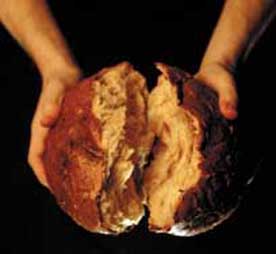
In all the temptations is the temptation to avoid the cross and suffering. Christ is the bread broken for us. He is the son of Abraham and of God. Those in Christ are also his body, children of Abraham and of God, to be broken for others. In a very real way, Christ's temptations are ours.

There is a song I remember singing in various Christian youth settings. The lyrics go:

Would you be poured out like wine upon the altar for Me?
Would you be broken like bread to feed the hungry?
Would you be so one with Me that you would do just as I will?
Would you be light and life and love My Word fulfilled?

Yes, I’ll be poured out like wine upon the altar for You.
Yes, I’ll be broken like bread to feed the hungry.
Yes, I’ll be so one with You that I would do just as You will.
Yes, I’ll be light and life and love Your Word fulfilled.

I don't think any of us had a clue what those words really meant. I think I'm just starting to grasp the meaning in part.

Sunday, December 13, 2009

Gaudete Sunday 2009

Today is Gaudete Sunday, when in the middle of the traditional Advent season of repentance and reflection, this day is set aside for rejoicing. The rose candle on the Advent wreath is lit as we look forward to the Saviour's coming. So it is reflective of our lives. A time of mourning is interrupted by a moment of joy and yet in the joyous season to come, which we know as Christmas, we are reminded of mourning and sorrow as Simeon prophecies of the infant Jesus and his mother, then later as the infants in Bethlehem are slaughtered on King Herod's orders.

Nothing is simple. The birth of a child is bloody and painful and begins the road to death which often is also bloody and painful. Yet, we are called to rejoice because ultimately death has been defeated, though in our eyes and experience we won't see this until Christ's return. So it is by faith that we say both, "How long?" and "I praise you.".


Gaudete, gaudete
Christus est natus
Ex Maria virginae, gaudete.
Tempus ad est gratiae hoc quod optabamus
Carmina laetitiae devote redamus.
Deus homo factus est natarum erante,
Mundus renovatus est a Christo regnante.
Ezecheelis porta clausa per transitor
Unde lux est orta sallus invenitor.
Ergo nostra contio psallat jam in lustro,
Benedict domino sallus regi nostro.

Update: I previously had a video embedded which is no longer available. I hope you enjoy the new one. 

Saturday, December 5, 2009

Snow


Loreena McKennitt Snow lyrics

White are the far-off fields,
And white the fading forests grow;
The wind dies out along the height
And denser still the snow,
A gathering weight on roof and tree
Falls down scarce audibly.
The meadows and far-sheeted streams
Lie still without a sound;
Like some soft minister of dreams
The snowfall hoods me around;
In wood and water, earth and air,
A silence is everywhere.
Save when at lonely spells
Some farmer's sleigh is urged on,
With rustling runner and sharp bells,
Swings by me and is gone;
Or from the empty waste I hear
A sound remote and clear;
The barking of a dog,
To cattle, is sharply pealed,
Borne, echoing from some wayside stall
Or barnyard far afield;
Then all is silent and the snow
Falls settling soft and slow
The evening deepens and the grey
Folds closer Earth to sky
The world seems shrouded, so far away.
Its noises sleep, and I
As secret as yon buried stream
Plod dumbly on and dream.
I dream
I dream
I dream
I dream

Thursday, November 26, 2009

Happy Thanksgiving

A very odd symptom of anemia is insomnia. One might say it is ironic.

Anyway, thought I'd put my sleeplessness to some use and post some songs and articles for Thanksgiving. I hope they are a blessing to you.


I can particularly relate to the first part of John Mark Reynolds' article.

Read here of the economics behind the Plymouth colony.

Update: Here's an article which debunks many modern day myths regarding the Pilgrims.

O Lord that lends me life,
Lend me a heart replete with thankfulness.
~William Shakespeare

Wednesday, November 25, 2009

Can God Be Trusted?

That in the end was the question David and I were asking ourselves as I lie in the hospital the day after my miscarriage. We had been told a couple of days before that our baby had probably died, but there was still a sliver of hope, and now the hope had vanished.

The miscarriage itself had not gone well, if one can say a miscarriage ever goes well. After five hours of struggling through it at home, I was still hemorrhaging and could hardly stand so we went to the emergency room where I was immediately attended to. After many pokes and sticks it was discovered that I was also in septic shock and had surgery late in the evening.

It is an odd thing, grief. It keeps getting interrupted, whether by hope or illness or just the mundane issues of life, though it's always in the background, taking a bit of the color,energy and taste out of things, but in the quiet it comes on in full force with all it's pain and emptiness. How much I wanted and loved this child. How much I feel cheated to not hold it in my arms and nurse it, to not know the color of it's eyes, or to not inhale that sweet smell from our newborn's head.

I am assured by scripture that I will one day meet our child, and I firmly believe that I will. I believe in the resurrection. Like Job, though, I want to know why. Why did our baby die? I realize I probably will never know the answer this side of the veil. As to the question, "Can God be trusted?". I think I am a bit like Peter when he said, "Lord, to whom shall we go? You have the words of eternal life."

The Lord is near to the brokenhearted, and saves those who are crushed in spirit. Psalm 34:18

Monday, November 9, 2009

Twenty Years Ago Today

the Berlin Wall was brought down. I think the time that has passed has caused us forget the horror that occurred behind that wall. Here is a video of some trying to keep the memory.


It might me a good time to make a purchase from Amazon or rental from Netflix, so that we don't forget.

I Am David

Night Crossing

The Lives of Others

Both Night Crossing and The Lives of Others are based on true stories.