14And as Moses lifted up the serpent in the wilderness, so must the Son of Man be lifted up, 15that whoever believes in him may have eternal life. 16"For God so loved the world, that he gave his only Son, that whoever believes in him should not perish but have eternal life. 17For God did not send his Son into the world to condemn the world, but in order that the world might be saved through him. 18Whoever believes in him is not condemned, but whoever does not believe is condemned already, because he has not believed in the name of the only Son of God. 19And this is the judgment: the light has come into the world, and people loved the darkness rather than the light because their works were evil. 20For everyone who does wicked things hates the light and does not come to the light, lest his works should be exposed. 21But whoever does what is true comes to the light, so that it may be clearly seen that his works have been carried out in God."
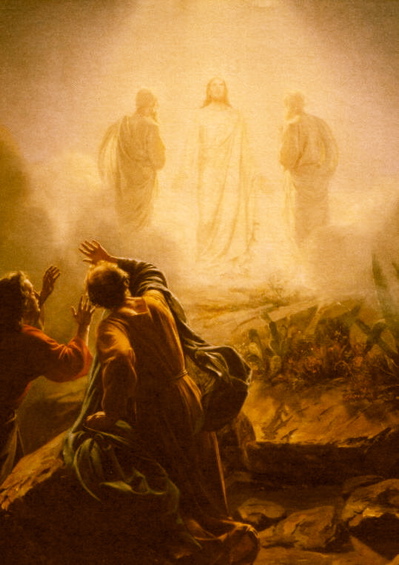
The light of God, Jesus Himself….. Uncreated God, uncreated light…. He existed with the Father and the Spirit, in radiant splendor, before the foundations of the cosmos. Scripture promises that, when the Sun is long dead and extinct, God’s children will walk in the New Jerusalem which will be illuminated by God Himself. What an extraordinary thought! How beautiful that light will be, beautiful beyond our ability to imagine….. But then we will be His pure and spotless bride, without sin. How awesome it will be, when we are holy, like Jesus, formed perfectly into His image. Now to say that we are simply blemished is an extreme understatement. We are consumed by sin, body, mind and soul…. We are comprised of darkness and shadows. It is on our skin, in our eyes, in our bones…. It is enmeshed in our souls… Our hearts are desperately wicked and hideously deformed. The fall has shattered the image of God within us. We are not as God intended for us to be.
How very painful it is to walk into the light of Christ in this condition…. Even God’s children keep to the bushes, like Adam & Eve, desperately trying to hide from the light that reveals our darkness and shame. Yet the light draws us out and beckons to us, just as the voice of the Father called to Adam & Eve in the garden. We were created to walk in that beautiful light that reveals just how infused with death and decay we are.
There was only one possible cure for our desperate circumstances, only one chance to walk once again with the Living God… The light of the world, Jesus Christ, descended into our darkness. In another garden, thousands of years after Adam and Eve, our beautiful light surrendered with His whole heart and soul to the darkness of the world. He emptied Himself and surrendered to wicked men and the demonic forces empowering them. He became darkness on the cross as He took all of our sins upon Himself, so hideous and deformed and black with death that the Father turned His face away. No human being has ever endured darkness so black and such desperate despair. Even in the thickest darkness of the world, there is always some light of God, yet Jesus entered into a perfect darkness on our behalf. And then, the sun’s light failed and Jesus died. He was so empty of Himself, devoid of the light, that satan thought that he had won.
And we can only imagine the deeper darkness that Jesus descended to, after the sun’s light failed and He died on the cross, for He journeyed into hell. God’s love and light even pierced that profound and impenetrable darkness. And there, just like in the world, those who belonged to the light recognized Him and were set free from the darkness as they rushed into His embrace.
And this is the judgment, the light has come into the world and people loved the darkness rather than the light because their works were evil. This is truly the point of judgment and eternal decision for every human being. Do we love the light and allow ourselves to be drawn to it, like a moth to the flame, knowing that we will burn in its brightness and die a thousand deaths, or, do we turn from the light and embrace the darkness and our sin?
On Easter morning, the Son of Man was lifted up in radiant brightness and light. He was restored fully to His divine position in the Godhead. Brighter than the sun, He blazed a victorious trail for every human being to follow in His footsteps from deepest darkness into eternal light. And people still love the darkness rather than the light. The agony that He suffered as He opened Himself fully to the darkness of the world and hell must be a small pain compared to the agony that He continues to suffer in watching those that He bought with so dear a price walk away from Him for all eternity. How He must grieve, even in the perfect light and fellowship of the trinity, as He watches people turn away from Him and immerse themselves in eternal darkness.
Janine
Monday, March 23, 2009


Sunday, March 22, 2009
Thursday, March 19, 2009
Tuesday, March 17, 2009
Saturday, March 14, 2009
How To Bore A Church
Over at Quiddity, Andrew Kern writes,
"How to bore a child: Try to entertain him.".
I would say the same applies to the church.
How to bore a congregation with God's word: Try to entertain them.
From my childhood I've heard many sermons, from Sunday mornings and evenings, to special speakers brought into the church for special evangelistic efforts. I've also spent most of my years attending Sunday School. What I've invariably found is that those who try to be funny throughout the sermon, or to make Sunday School "fun", end up being remembered as being entertaining, but not for the message from God's word they are trying to convey. Humor can be a tool to convey a point or put an audience at ease, but a constant stream of cleverness often just puts the focus on the speaker or teacher rather than on God.
Really, the Bible is truly fascinating enough if its message is clear and not clouded. Preached in love, intelligence, good will and good humor it will result in something real to hold onto - and a congregation engaged in real, exciting thought and action.
Friday, March 13, 2009
Morally Unserious
Do you remember when candidate Obama was asked by Rick Warren when life begins? His answer was that it was "above his pay grade". That was indeed a morally unserious answer and a foreshadowing of what was to follow. Charles Krauthammer writes about his continued unseriousness in today's Washington Post article.
He says:
And:
And:
Pragmatism is a dangerous philosophy. With it we move from general principles of truth to only what we can experience. So, it's okay to create human embryos only to destroy them, because it may one day cure this disease or solve this problem. We won't really be bothered with the question of the sanctity of human life, when it deserves protection, or does it have a soul. That just wouldn't be practical.
The good is often impractical and requires sacrifice - otherwise more people would do it. Right now we need leadership that is humble, good and grounded in reason.
He says:
President Bush had restricted federal funding for embryonic stem cell research to cells derived from embryos that had already been destroyed (as of his speech of Aug. 9, 2001). While I favor moving that moral line to additionally permit the use of spare fertility clinic embryos, President Obama replaced it with no line at all. He pointedly left open the creation of cloned -- and noncloned sperm-and-egg-derived -- human embryos solely for the purpose of dismemberment and use for parts.
And:
Moreover, given the protean power of embryonic manipulation, the temptation it presents to science and the well-recorded human propensity for evil even in the pursuit of good, lines must be drawn. I suggested the bright line prohibiting the deliberate creation of human embryos solely for the instrumental purpose of research -- a clear violation of the categorical imperative not to make a human life (even if only a potential human life) a means rather than an end.
On this, Obama has nothing to say. He leaves it entirely to the scientists. This is more than moral abdication. It is acquiescence to the mystique of "science" and its inherent moral benevolence. How anyone as sophisticated as Obama can believe this within living memory of Mengele and Tuskegee and the fake (and coercive) South Korean stem cell research is hard to fathom.
And:
Obama's address was morally unserious in the extreme. It was populated, as his didactic discourses always are, with a forest of straw men. Such as his admonition that we must resist the "false choice between sound science and moral values." Yet, exactly 2 minutes and 12 seconds later he went on to declare that he would never open the door to the "use of cloning for human reproduction."
Does he not think that a cloned human would be of extraordinary scientific interest? And yet he banned it.
Is he so obtuse as not to see that he had just made a choice of ethics over science? Yet, unlike Bush, who painstakingly explained the balance of ethical and scientific goods he was trying to achieve, Obama did not even pretend to make the case why some practices are morally permissible and others not.
This is not just intellectual laziness. It is the moral arrogance of a man who continuously dismisses his critics as ideological while he is guided exclusively by pragmatism (in economics, social policy, foreign policy) and science in medical ethics.
Pragmatism is a dangerous philosophy. With it we move from general principles of truth to only what we can experience. So, it's okay to create human embryos only to destroy them, because it may one day cure this disease or solve this problem. We won't really be bothered with the question of the sanctity of human life, when it deserves protection, or does it have a soul. That just wouldn't be practical.
The good is often impractical and requires sacrifice - otherwise more people would do it. Right now we need leadership that is humble, good and grounded in reason.
Thursday, March 12, 2009
An Explanation of the Current Economy
Randall Hoven has as concise an explanation for what has and is happening to the economy as I have seen, over at The American Thinker. He stays away from conspiracy theories and he stays away from the question of the run on the markets in September, but over all he puts the information on the surface together pretty well. See what you think.
Wednesday, March 11, 2009
Fragmented Evangelicalism
Alan Jacobs in First Things illustrates how fragmented Evangelicalism is in his article, Do-It-Yourself Tradition. He focuses on how one branch finds doctrine not to be enough, (Remember Thomas Howard's, Evangelicalism Is Not Enough?), and refers mainly to four authors, Halter, Smay, McLaren and Wilson-Hartgrove. What he finds is a desire to pick and choose traditions and disciplines. He even has a little fun with McLaren and Wilson-Hartgrove in their affinity for a sort of monastic life with out the authority of the Catholic Church. These authors are very different from others who have embraced tradition while embracing Catholic authority, such as Kreeft, Howard, Hahn, and more recently, Francis Beckwith, in this way.
I find it interesting that there are other traditional churches, Anglo-Catholic, Episcopal, and Lutheran, yet these are not embraced by the authors Jacob points out. Perhaps it is part of our post-modern world that we want to pick and choose. I would think this would make it more difficult to live in community, which these authors desire, rather than easier.
Back to Jacobs, he ends by agreeing that we must change and proposing two models. The first is Kierkegaard's Knight of Faith, whose life is so devoted to Christ that what those around him can detect is that he becomes more solid. He adds that this is much harder than it appears because of having to live it out in the world and then points to the monastic life for those who are too weak to be devoted to Christ in the world. Finally, he calls us to truly look to the ancients to give us guidance for the times we are facing.
All this is interesting to me for a number of reasons. Mainly because I find tradition almost irresistible. There have been times when I so wished I could honestly embrace the doctrines of the Roman Catholic or the Orthodox Church. Alas, I'd have to set aside my true beliefs and understanding which I could not do with integrity. So, I understand the appeal of picking and choosing that McLaren and others advocate, but I see a real danger in this, and that is wanting to have everything ones own way.
What Will the Holy Spirit Do Next?
The end of evangelicalism.... Intriguing, but unlikely...
Perhaps the author of this prediction is correct and evangelicalism is on it's last legs in the United States. That thought grieves me deeply. However, it also causes me to wonder what the Holy Spirit will do next-- and where.
With St. Patrick's Day coming up, my thoughts have been drifting to Ireland. The ancient faith of St. Patrick and St. Brigid and how the Lord overcame a violently pagan and cultic culture with love, light and truth has always captured my imagination.
The Bible says that the Holy Spirit is like a wind and that He blows where He will according to the will of the Father. Only Our Father has the perspective to understand the movements of the Spirit.
When the wind dies down in one place, we can rely upon the fact that it will turn up elsewhere. We can trust that the wind will not die down completely until the end of days.
Janine
Tuesday, March 10, 2009
Death or Change?
Michael Spencer has an article in the Christian Science Monitor, The Coming Evangelical Collapse. He says:
Part of the reason this will happen is because there is no longer a strict definition of what evangelicalism means. Some of that is because it has been caricatured in the media, (not always without reason), but also because the barriers between denominations are breaking down. This started many years ago after Vatican II, (Remember Charismatic Catholic churches?), and is continuing to blossom. We see this displayed in a return to traditionalism or a rejection of almost any tradition i.e. seeker services.
Has this not been occurring for a while? Whether it be the absurd Supreme Court interpretations of the Constitution's rejection of a state sponsored church, the taxpayer funding of abortions and now funding for embryonic stem cell research? Or how about how Christians are portrayed in television and movies and the latest anti-theist screeds published in the last few years. Public policy and popular culture have been hostile to Christianity for a while.
I will largely abbreviate why he thinks this will happen. Do go read the whole article when you have time.
Spencer goes on from there to explain what will be left and the good and the bad of that. It is well worth a longer look.
The one thing I always have trouble with in these types of prognostications is that they take God completely out of the mix. If it were up to the church alone to survive, it would have been over a long time ago. As it is, God is with us. He has sent the Paraklete to guide, convict and protect.
If we take his predictions as a warning and a well intentioned chastisement, then I think we would do well. I hope we do not take it with a sense of doom, because Christ is our hope.
We are on the verge – within 10 years – of a major collapse of evangelical Christianity. This breakdown will follow the deterioration of the mainline Protestant world and it will fundamentally alter the religious and cultural environment in the West.
Within two generations, evangelicalism will be a house deserted of half its occupants. (Between 25 and 35 percent of Americans today are Evangelicals.) In the "Protestant" 20th century, Evangelicals flourished. But they will soon be living in a very secular and religiously antagonistic 21st century.
Part of the reason this will happen is because there is no longer a strict definition of what evangelicalism means. Some of that is because it has been caricatured in the media, (not always without reason), but also because the barriers between denominations are breaking down. This started many years ago after Vatican II, (Remember Charismatic Catholic churches?), and is continuing to blossom. We see this displayed in a return to traditionalism or a rejection of almost any tradition i.e. seeker services.
This collapse will herald the arrival of an anti-Christian chapter of the post-Christian West. Intolerance of Christianity will rise to levels many of us have not believed possible in our lifetimes, and public policy will become hostile toward evangelical Christianity, seeing it as the opponent of the common good.
Has this not been occurring for a while? Whether it be the absurd Supreme Court interpretations of the Constitution's rejection of a state sponsored church, the taxpayer funding of abortions and now funding for embryonic stem cell research? Or how about how Christians are portrayed in television and movies and the latest anti-theist screeds published in the last few years. Public policy and popular culture have been hostile to Christianity for a while.
Millions of Evangelicals will quit. Thousands of ministries will end. Christian media will be reduced, if not eliminated. Many Christian schools will go into rapid decline. I'm convinced the grace and mission of God will reach to the ends of the earth. But the end of evangelicalism as we know it is close.
I will largely abbreviate why he thinks this will happen. Do go read the whole article when you have time.
1. Evangelicals have identified their movement with the culture war and with political conservatism. ....massive majorities of Evangelicals can't articulate the Gospel with any coherence. We fell for the trap of believing in a cause more than a faith.
2. Evangelicals have spent more time entertaining youth than teaching an orthodox form of faith that will take root and survive the secular onslaught they will face.
3. There are three kinds of evangelical churches today: consumer-driven megachurches, dying churches, and new churches whose future is fragile. Denominations will shrink, even vanish, while fewer and fewer evangelical churches will survive and thrive.
4. Despite some very successful developments in the past 25 years, Christian education has not produced a product that can withstand the rising tide of secularism. Evangelicalism has used its educational system primarily to staff its own needs and talk to itself.
5. The confrontation between cultural secularism and the faith at the core of evangelical efforts to "do good" is rapidly approaching.
6. Even in areas where Evangelicals imagine themselves strong (like the Bible Belt), we will find a great inability to pass on to our children a vital evangelical confidence in the Bible and the importance of the faith.
7. The money will dry up.
Spencer goes on from there to explain what will be left and the good and the bad of that. It is well worth a longer look.
The one thing I always have trouble with in these types of prognostications is that they take God completely out of the mix. If it were up to the church alone to survive, it would have been over a long time ago. As it is, God is with us. He has sent the Paraklete to guide, convict and protect.
If we take his predictions as a warning and a well intentioned chastisement, then I think we would do well. I hope we do not take it with a sense of doom, because Christ is our hope.
Monday, March 9, 2009
Cramer vs. ?
Here is an a good article by Jim Cramer. Interesting in how he explains his normally liberal leanings when it comes to taxes and regulation and how they will not work right now. Even more interesting is the difference between how the the Bush and Obama administrations and defenders react to his criticisms. Check it out.
Thursday, March 5, 2009
Titans of Finance
Where were the brilliant titans of finance who've destroyed our economy educated? Mostly at Harvard, but that's not the only school that has failed to teach basic economics. Deborah Barrow has the larger list here.
If either of my daughters ever decide to go into business, I will strongly encourage them to begin a small business and apprentice under someone who's ethical and successful in business. I certainly won't discourage a college education, but it's one thing to study theory, (it has it's place), but if someone wants to learn anything, they must do. This applies to business, cooking, art, music, driving, prayer....anything.
If either of my daughters ever decide to go into business, I will strongly encourage them to begin a small business and apprentice under someone who's ethical and successful in business. I certainly won't discourage a college education, but it's one thing to study theory, (it has it's place), but if someone wants to learn anything, they must do. This applies to business, cooking, art, music, driving, prayer....anything.
I'm Hip!
Well, according to Brett McCracken, I am. That is, I'm hip except for the smoking, goth part. Can one be hip at age 42?
Are you hip?
Are you hip?
Monday, March 2, 2009
Happy Birthday, Olivia

Today is Olivia's 8th birthday.
Olivia loves nature, especially animals. For her birthday party on Saturday, she and her guests enjoyed pony rides and she was in her element. She is now requesting riding lessons, of course! Her disposition is to be happy with what everyone else likes to do, so we're very happy when she voices a preference.
Happy birthday, sweet one.
Saturday, February 28, 2009
Plantinga vs. Dennett
Here is a blow by blow account of a quasi-philosophical debate on February 21, between Plantinga and Dennett over at The Prosblogion. Plantinga basically argues that naturalism and evolution are incompatible, and that theism and evolution are not. Dennett doesn't really disagree, but takes the opportunity to insult Christians. There's a surprise.
What struck me even more than Plantinga's argument, (which was well reasoned, by the way), was the anonymous writer's take on one of Plantinga's points. (Emphasis mine.)
If you read the whole post, you will see that Plantinga was always gracious, always logical and thoughtful, yet he didn't apologize for his beliefs and understanding. I think too many times in an effort to not offend or to ingratiate ourselves to those with whom we disagree, we Christians cede our beliefs, or at least couch them in such terms as to render them null and void. I thank God for true intellects in the academy and in the world of ideas who will take a stand for truth in all graciousness, and I hope the anonymous writer is correct, that, "Perhaps it signals an attitude to come.".
H/T Jonah Goldberg
What struck me even more than Plantinga's argument, (which was well reasoned, by the way), was the anonymous writer's take on one of Plantinga's points. (Emphasis mine.)
2:55 pm - The really good possible worlds all involve divine incarnation and atonement and so all the best worlds have sin and suffering - an old view that many Christian philosophers resist today. He even mentions that outrageous (to the naturalist) idea that the demons are part of the errors in human development. Dennett is clearly stunned and amused. He probably thinks Plantinga's claims are insane or at least silly. Plantinga's orthodoxy is completely unabashed. It is commendable that he is wholly without embarrassment, something rare for a modern Christian. Perhaps it signals an attitude to come.
If you read the whole post, you will see that Plantinga was always gracious, always logical and thoughtful, yet he didn't apologize for his beliefs and understanding. I think too many times in an effort to not offend or to ingratiate ourselves to those with whom we disagree, we Christians cede our beliefs, or at least couch them in such terms as to render them null and void. I thank God for true intellects in the academy and in the world of ideas who will take a stand for truth in all graciousness, and I hope the anonymous writer is correct, that, "Perhaps it signals an attitude to come.".
H/T Jonah Goldberg
Friday, February 27, 2009
If Your Hope is in the Stock Market....
There is a very interesting article, by Jason Zweig, on the Wall Street Journal website. You can access it at the folowing link:
For those unlucky enough to not have a defined pension plan, our 401k's and IRA's have long been invested in the stock market. Until October, Modern Portfolio Theory promised a relatively secure retirement, if one was well diversified and had an asset allocation appropriate to once's age and risk tolerance. Until October, that was the promise and the hope.
Until the 1970's, almost everyone who worked full time had a defined pension plan. This meant that they would receive a definite monthly payment, annually increased for the cost of living, as long as they lived, upon retirement. This was a normal part of compensation for one's work. Then companies became more interested in the concept of a 401k, where both employers and employees made contributions. Generally these contributions were invested in the stock market. Congress had originally intended the 401k plan to act as a supplment to defined benefit plans and social security. Gradually, they became the only retirement savings option for workers. Currently, the average Joe is probably down about 40-60% in his retirement savings. His hope for retirement security is also down, with those numbers.
Jason Zweig has some very worrying things to say about investing in the stock market. Generally speaking, these are things that your financial planner will not share with you. It is a very interesting article.
In this market, financial planners are as confused as the average Joe about investment strategy and what the future might hold. Just listen to CNBC & the evening news. Every expert seems to have a different idea about what the individual investor should do.
I have been spending alot of time lately, wondering what God is trying to teach us thru these circumstances. I cannot help but think that these current circumstances have something to do with where we have chosen to place our hope.
Is our hope for the future in our stock portfolios, or, in God's eternal Kingdom?
Janine
Tuesday, February 24, 2009
Ash Wednesday
I was not raised in a liturgical tradition, so the idea of church seasons was new to me as an adult. While those raised in such a tradition may take it for granted or even tire of it, I find it refreshing and helpful in keeping the whole of Christian life in proper perspective and balance. As the season of Lent is upon us, I look forward to this time of discipline and intentionality. It is sort of like recalibrating and becoming resensitised to the leading of the Holy Spirit.
Below is a video with a short explanation of Ash Wednesday and Lent. I particularly like the inclusion of the Orthodox tradition of Forgiveness Sunday.
Pax.
Below is a video with a short explanation of Ash Wednesday and Lent. I particularly like the inclusion of the Orthodox tradition of Forgiveness Sunday.
Pax.
Sunday, February 22, 2009
Tuesday, February 17, 2009
Enchanted April

Finally, Enchanted April will be released on DVD May 5, 2009. The movie was released in the U.S. in 1992. It then went to video, but not to a DVD format that would work with American players. This is a wonderful gem that was largely missed when showing at the theatres. Many of us have been hoping to get it on disc and a little confused as to why this was put on DVD and not this lovely, little masterpiece.
This would make a great Mothers Day gift, don't you think?
Monday, February 16, 2009
Trend Forecaster
Below is an interview with Gerald Celente from Trends Research Institute. H/T Rod Dreher. Right now, I am not listening to those in politics or the financial institutions for an idea of what is to come in the near future, or how to fix it. I find there is too much coloring of the facts to make what they say worthwhile. Nouriel Roubini was able to forecast the current mess we're in, in large part because of his willingness to look at all the facts available to him. When looking at his reasons, one has to ask why he was ever doubted, except for the wish that things would turn out all right.
While it appears as though things are going to get pretty rough, those of us who are Christians are not to despair. God is working in this, even if we can't see on this side of the veil how exactly he is working it out for good.
If you would, in the comments, tell us what possible good we might see coming out of this and how we might prepare for the continuing downturn in the economy so that we may be of help to ourselves and others.
Saturday, February 14, 2009
Conspiracy?
I am a skeptic when it comes to conspiracy theories. I figure most of the time when people have a master plan to commit a crime, someone in on the plan flubs it up, or circumstances cause it to go awry. I think usually when something dastardly occurs, it is because someone has taken advantage of circumstances, not caused them.
This story may be different, however. This from Representative Kanjorski on C-span in January.
So, who made a run on the money markets, and what was their purpose? This didn't happen out of the blue. It wasn't that investors got cold feet, because this wasn't even public news until after the fact, and even then hardly disseminated very widely.
Diana West reports on this further at Townhall.com
A friend of mine has a quote of Jefferson's on his Facebook wall. It says:
Timely, isn't it?
Watch Kanjorski's statement below.
This story may be different, however. This from Representative Kanjorski on C-span in January.
"I was there when the Secretary and the Chairman of the Federal Reserve came those days and talked to members of Congress about what was going on. It was about Sept. 15. Here's the facts, we don't even talk about these things.
On Thursday at about 11 o'clock in the morning, the Federal Reserve noticed a tremendous drawdown of money market accounts in the United States to the tune of $550 billion, as being drawn out in the matter of an hour or two.
The Treasury opened up its window to help. It pumped $105 billion into the system and quickly realized that they could not stem the tide. We were having an electronic run on the banks. They decided to close the operation, close down the money accounts and announce a guarantee of $250,000 per account so there wouldn't be further panic out there, and that's what actually happened.
So, who made a run on the money markets, and what was their purpose? This didn't happen out of the blue. It wasn't that investors got cold feet, because this wasn't even public news until after the fact, and even then hardly disseminated very widely.
Diana West reports on this further at Townhall.com
A friend of mine has a quote of Jefferson's on his Facebook wall. It says:
I believe that banking institutions are more dangerous to our liberties than standing armies. If the American people ever allow private banks to control the issue of their currency, first by inflation, then by deflation, the banks and corporations that will grow up around [the banks] will deprive the people of all property until their children wake-up homeless on the continent their fathers conquered. The issuing power should be taken from the banks and restored to the people, to whom it properly belongs.
Timely, isn't it?
Watch Kanjorski's statement below.
Friday, February 13, 2009

Monday, February 9, 2009
Is All Beauty Objective? Continued...
These posts on beauty began with me wondering why some are repelled by beauty and hypothesizing that it may be because it exposes the dreariness in some lives. (Dreariness that I believe could be relieved if one looked to where the beauty is pointing.) They have since focused on the question of whether beauty is objective, with Janine holding the view that some beauty is objective and other beauty is subjective. I maintain that beauty is objective because its source is God. I will try to explain better my thoughts, borrowing heavily from Edwards, Kreeft, and of course, Lewis.
Truth, goodness and beauty are the attributes of God, and therefore are objective. Truth is defined by being. God is. He is the great I AM. Goodness is defined by truth and right relation to truth. Beauty is defined by goodness, we recognize goodness by it's beauty.
When we are tempted to say that beauty is subjective, it is not really beauty that is subjective, but we ourselves that are subjective. We recognize beauty by our desires, or heart, we recognize goodness with our will and we recognize truth with our minds. We who are Christians understand that sin has corrupted our minds, wills and hearts, so when we are tempted to say that all or any of these attributes are relative or subjective, we know this cannot be true as these are attributes of God. We continue to see through a glass darkly because we are still being conformed to the likeness of Christ.
Jonathan Edwards speaks of beauty as the consent of being to being. He sees the beauty in the goodness of actively looking out for an other's welfare. He also sees this beauty reflected in what we understand as aesthetics - harmony, proportion, symmetry, et cetera.
I think Janine's discourse comes from the question of why we are attracted to different things. I think there are a few different reasons. One could simply be how our aesthetic sensibilities have been shaped. Someone raised on pop music and television may have different sensibilities than someone raised being taken to the symphony and theatre, or even of someone raised with fairy tales and simple folk music. Another may be sin. When one is attracted to pornography or drugs, it is a substitute for real beauty. As Anonymous wrote in the comments, it is a lie. The only way to break such an addiction is to exchange it for real beauty. There may also be some who experience different facets of beauty, differently. I recognize in myself this limitation when it comes to cheesecake. I understand that for most people it is a luxurious dessert, but I do not care for it. I see this as a flaw of my palate, not a flaw in the dessert itself. I can recognize the harmony and balance of the ingredients, yet I don't like it.
In his article , A Holy Longing, published in Christianity Today, David Taylor says,(referring to a list of beautiful things),
When we encounter beauty, it points to the All Beautiful, All Desirous. One day we will be united in beauty. As Lewis says in his sermon, The Weight of Glory,
Truth, goodness and beauty are the attributes of God, and therefore are objective. Truth is defined by being. God is. He is the great I AM. Goodness is defined by truth and right relation to truth. Beauty is defined by goodness, we recognize goodness by it's beauty.
When we are tempted to say that beauty is subjective, it is not really beauty that is subjective, but we ourselves that are subjective. We recognize beauty by our desires, or heart, we recognize goodness with our will and we recognize truth with our minds. We who are Christians understand that sin has corrupted our minds, wills and hearts, so when we are tempted to say that all or any of these attributes are relative or subjective, we know this cannot be true as these are attributes of God. We continue to see through a glass darkly because we are still being conformed to the likeness of Christ.
Jonathan Edwards speaks of beauty as the consent of being to being. He sees the beauty in the goodness of actively looking out for an other's welfare. He also sees this beauty reflected in what we understand as aesthetics - harmony, proportion, symmetry, et cetera.
I think Janine's discourse comes from the question of why we are attracted to different things. I think there are a few different reasons. One could simply be how our aesthetic sensibilities have been shaped. Someone raised on pop music and television may have different sensibilities than someone raised being taken to the symphony and theatre, or even of someone raised with fairy tales and simple folk music. Another may be sin. When one is attracted to pornography or drugs, it is a substitute for real beauty. As Anonymous wrote in the comments, it is a lie. The only way to break such an addiction is to exchange it for real beauty. There may also be some who experience different facets of beauty, differently. I recognize in myself this limitation when it comes to cheesecake. I understand that for most people it is a luxurious dessert, but I do not care for it. I see this as a flaw of my palate, not a flaw in the dessert itself. I can recognize the harmony and balance of the ingredients, yet I don't like it.
In his article , A Holy Longing, published in Christianity Today, David Taylor says,(referring to a list of beautiful things),
All these works are beautiful, though never merely subjectively. For in every case they reveal the objective pattern of unity, complexity, and richness, which collectively evoke longing. Differently for each of us, they stir an ache in our hearts. The longing for what? For starters, the longing for joy, for order, and for more beauty.
When we encounter beauty, it points to the All Beautiful, All Desirous. One day we will be united in beauty. As Lewis says in his sermon, The Weight of Glory,
At present we are on the outside of the world, the wrong side of the door. We discern the freshness and purity of morning, but they do not make us fresh and pure. We cannot mingle with the splendours we see. But all the leaves of the New Testament are rustling with the rumour that it will not always be so. Some day, God willing, we shall get in. When human souls have become as perfect in voluntary obedience as the inanimate creation is in its lifeless obedience, then they will put on its glory, or rather that greater glory of which Nature is only the first sketch.....
Thursday, February 5, 2009
Is All Beauty Objective?, The Friendly Debate Continues
I am very glad that we are fleshing out our thoughts regarding beauty. It is an important and profound subject. Now, I see more clearly the points at which Gina & I agree, and disagree. I love a good conversation!
The dictionary definition of beauty is as follows: 1) the quality attributed to whatever pleases or satisfies the senses or mind as by line, color, form, texture, proportion, rhythmic motion, tone, etc., or by behavior, attitude, etc. 2) a thing having this quality 3) good looks 4) any very attractive feature
I think I believe that some beauty is objective and some is subjective. I guess this is a philosophical distinction on the order of the Platonic question, “if a tree falls in the forest, and there is no one there to hear it fall, does it make a sound”? If an object, piece of music or natural wonder is intrinsically beautiful, does it’s categorization as beautiful depend upon it’s intrinsic beauty or the agreeable perceptions of human beings? I would argue that some things, like natural wonders, are intrinsically beautiful and that their beauty does not depend in any way on human perception. I would also argue that music can be either intrinsically beautiful or not intrinsically beautiful. For music that is not intrinsically beautiful, I think that human beings decide, as individuals, whether or not they find beauty in it.
This seems to be in keeping with the dictionary definition. “Whatever pleases or satisfies the senses or mind”…. I would submit that it is the mind of each individual person that determines whether or not the object of it’s perception is beautiful. The obvious exception to this would be those things that are beautiful from God's perspective.
Perhaps there is no one area in which this is more clear cut that the area of “good looks”. In large part what appears beautiful to one person does not appear beautiful to another. Determining an objective consensus of what the most attractive features of a person are can be perplexing. Some think long hair is beautiful, some think short hair is. Some prefer light skin, some dark. Some think blue eyes are beautiful, some prefer brown.
One can even see this principle illustrated on a cultural level. American men tend to think that Barbie is the ideal of feminine beauty. Primitive Hawaians tended to think that the more obese a person became, the more beautiful they were. A hundred years ago, Japanese men idealized the Geisha with their snow white makeup, buffant hairdos and tiny deformed feet. In the African Bush, women stretch the flesh of their ears around earrings the size of dinner plates. Men impale the flesh of their noses with foot long bones. These are the ideals of attractiveness. Again, I would submit that some beauty is objective & some is subjective. Other people’s subjective ideals of beauty can strike us as funny or nonsensical.
Gina’s example of classical music is also a good illustration of this point. Nine times out of ten, my own reaction to classical music is that it is profoundly boring. There are a few movements, in a few pieces, that move my soul. By in large though, I cannot escape it quickly enough, whenever I am exposed to it. I do not think that it is beautiful.
Perhaps this is because I am a lyrics person. I am deeply moved and pierced by the beauty of the words, when it comes to music. The actual music itself can be below average, if only the lyrics are pure poetry and deeply meaningful. That is where I find beauty.
At our church, I tend to go to the Contemporary Service. Gina mentioned, in her original posting on this subject, that there are 2 services at our church--- Traditional and Contemporary. The main difference between the 2, in my mind, is that the Traditional service uses a pipe organ to accompany the music and the Contemporary service uses a small band that includes guitars, keyboards, saxophones/trumpets, etc. I prefer the Contemporary service because I can really focus on the lyrics of the worship songs. While I also appreciate the Traditional Service, I tend to experience the organ music as an obstacle to worship.
The Traditional Service attendees are blessed by being allowed to worship in the beautiful sanctuary. We worship in a gymnasium. Being deprived of the undeniable aesthetic beauty of the sanctuary during worship is worth it to me though, because I often loose myself in the beauty of the contemporary worship music—with my eyes closed. I just can’t get lost that way, during worship, in most of the more traditional music.
Anyway, my Dear Friend Gina & I probably agree on 99.999999% of everything. It is interesting for me to learn that we disagree about, what I believe, is the subjective nature of beauty.
Gina’s final point, in her last posting, about Judaism & Christianity having perceived truth, goodness and beauty as objective for most of history was very interesting to me. I did not know that…. It is interesting that the western world now perceives these 3 as largely subjective.
I would agree that truth and goodness are purely objective. However, I do think that beauty contains both objective and subjective aspects.
Janine
Monday, February 2, 2009
Is All Beauty Objective? A Friendly Debate.
It appears that Janine and I have some fleshing out to do regarding the terms and meaning of beauty. I graciously accept her critique and present my defense. I also thank her for causing me think more deeply about the questions and thoughts I presented.
To begin, I believe beauty is objective, not subjective. When Janine speaks of the beauty of creation, I think she is quite correct. Where I think we may differ is in her assessment of everyone's reaction to it. Her belief that everyone's breath would be taken away shows how pure her spirit is, yet I don't think everyone's breath is taken away. There are those who would shun it, ignore it, be jealous of it, or fear it, which would explain why so many seem hellbent to destroy it. My question from my previous post is why this is? For those who followed the link and read the article to which I referred, why does Bach keep hooligans away from shops as well as ear piercing tones? Many's reaction would be attraction to the music, but that is obviously not a universal reaction. I think the problem in this instance is not with the music, but with the lives of the juvenile troublemakers. Why this repulsive reaction to such beauty?
I actually think Janine and I agree more than appears on the first reading of our posts. She sees what attracts us, mirrors our hearts, and I fully agree with that, though I would not say that a person views pornography because they see it as beautiful, but to feed a desire in a way God did not intend. My point is similar. Here is what I said in the post to which she responded. I may be wrong, but I have a suspicion that beauty takes us outside of ourselves to see the possibility of something greater, and that, in our current culture, makes us uncomfortable, because if what is reflected back exposes the dreariness of our lives, it is almost too much to bear. Is there not sometimes a similar reaction when someone is faced with an unwanted truth? Repulsion and denial?
Here is something to think about. For most of history, Judaism and Christianity thought of truth, goodness and beauty as objective. Isn't it interesting that all are now seen by the majority of the western world as subjective? If God is true, good and beautiful, then there must be an objective standard, and He is the standard. In the Garden of Eden, the fruit was eaten so that we could decide what was good and what was bad, and this appears to fully be our zeitgeist.
Is Beauty in the Eye of the Beholder?
I really liked the questions that my Dear Friend Gina asked about beauty and I loved the Vivaldi piece on Winter that she shared. The images and music together almost brought me to tears. I would absolutely agree that beauty can take us outside of ourselves to see the possibility of something greater. The evidence of God truly is painted on the tapestry of creation. However, I don't know that beauty reflected back necessarily makes us uncomfortable or exposes the dreariness of our lives.
I cannot conceive of the existence of a single human soul who's heart would not be stirred into longing for something greater than itself when gazing upon a vast field of crystalline stars, moonlight on snow covered trees or sunlight bouncing off of ocean waves. I think that the beauty of God's creation is commonly recognized and acknowledged by all human creatures, whether or not they actually believe in God.
I think that there are certain kinds of beauty though that are unique to the eyes of the beholder. Certain things in the world can act as mirrors of the individual human heart, when taken in by the eyes. Instead of one's own reflection in a mirror, the desires of one's heart can be revealed by visual images (or music, or literature, etc.) I guess my question would be, what does the individual find beautiful that the whole of humanity might disagree with?
Some men, and women, think there is nothing more beautiful than pornography. Much of their time is spent in pursuit of the visual images that they believe most satisfy their souls. If you could pry them away from their computer terminals, I do not think that they would argue about the relative majesty of an iridescent sunset. I imagine that they would want to return immediately to their other preoccupation though. Their hearts are fixated on their ideals of beauty.
Some people think that there is nothing more beautiful in all of creation than the mangled, mutilated, bleeding flesh of a man who was horrifically nailed to a cross and murdered over 2000 years ago. How could such a horrific visage appear beautiful to some? Those who find that countenance beautiful also find that their hearts become strangely fixated on that ideal of beauty.
To one human being, pornography may seem repulsive and disgusting. To another human being, the cross of Jesus Christ might seem repulsive and disgusting. I think that both examples of beauty can act as mirrors of the human heart. For if beauty is in the eye of the beholder, it is the human heart that judges what appears beautiful and what appears repulsive. It is the human heart that is revealed by the object of it's attraction.
Janine
Friday, January 30, 2009
If Our Lives Are Ugly
can we accept beauty?
A portion from Theodore Dalrymple in City Journal:
There's a grocery store I frequent that plays orchestral or chamber music, most often Vivaldi, while all the others in town play some sort of pop music. There are both contemporary and traditional liturgical worship services at the church in which I belong. Why is there only one grocery store that will play Vivaldi and why are there more folks in attendance at the 11 AM contemporary worship than at the 11 AM liturgical service? Is it that beauty makes us stop? Is it that it refuses to stay in the background, or is it that one must pay attention when there isn't the constant rhythm of popular music?
I may be wrong, but I have a suspicion that beauty takes us outside of ourselves to see the possibility of something greater, and that, in our current culture, makes us uncomfortable, because if what is reflected back exposes the dreariness of our lives, it is almost too much to bear.
Below is Winter from Vivaldi's Four Seasons. My heart always aches from 2:17 - 4:33. Take time to listen.
A portion from Theodore Dalrymple in City Journal:
Leys was sitting in a café where other customers were chatting, playing cards, or having a drink. The radio was on, tuned to a station that relayed idle chatter and banal popular music (you are lucky these days if popular music is banal only). But suddenly, and for no apparent reason, it played the first movement of Mozart’s clarinet quintet, transforming the café into what Leys called “the antechamber of paradise.” The customers stopped what they were doing, as if startled. Then one of them stood up, went over to the radio, and tuned it to another station, restoring the idle chatter and banal music.
There's a grocery store I frequent that plays orchestral or chamber music, most often Vivaldi, while all the others in town play some sort of pop music. There are both contemporary and traditional liturgical worship services at the church in which I belong. Why is there only one grocery store that will play Vivaldi and why are there more folks in attendance at the 11 AM contemporary worship than at the 11 AM liturgical service? Is it that beauty makes us stop? Is it that it refuses to stay in the background, or is it that one must pay attention when there isn't the constant rhythm of popular music?
I may be wrong, but I have a suspicion that beauty takes us outside of ourselves to see the possibility of something greater, and that, in our current culture, makes us uncomfortable, because if what is reflected back exposes the dreariness of our lives, it is almost too much to bear.
Below is Winter from Vivaldi's Four Seasons. My heart always aches from 2:17 - 4:33. Take time to listen.
Thursday, January 29, 2009
The Bi-Partisan Vote
was against the Fleecing of Future Generations Bill. All the Republicans and 11 Democrats voted against this bill, and for good reason. It is not a stimulus bill, it is a pork bill where future generations are funding pet projects of the majority party.
It is interesting that for all the post-partisan talk of President Obama, the bill was written without any input from the minority party. The President very kindly listened to them, but at one point ended up reminding them, "I won.". It seems that his idea of bi-partisan or post-partisan is "Vote with us whether you agree with us or not.".
Here is an alternative.
For more indepth reasons why this "stimulus bill" will not stimulate the economy, look here.
Sunday, January 25, 2009
Children: The New Scapegoat
From Drudge:
Here we have taxpayer dollars possibly going to pay for contraception so the government won't have to pay for a child that may be born. Is this appalling just to me? If one were being crass enough to simply look at children in terms of economics, I would think one would want as many children born as possible in order to add to the tax and social security base. Anyway, not all children are birthed, fed, educated and cared for at the taxpayers expense.
But, let's not be crass. Children are not commodities. Have we for so long looked at children as either financial burdens, or accessories that the Speaker of the House can regard children with such disdain? Are these contraceptions to be given to everyone, or to only the poor, and if only to the poor, is this not a form of temporary sterilization of the outcast? I find this all very disturbing.
PELOSI SAYS BIRTH CONTROL WILL HELP ECONOMY
Sun Jan 25 2009 22:13:43 ET
Speaker of the House Nancy Pelosi boldly defended a move to add birth control funding to the new economic "stimulus" package, claiming "contraception will reduce costs to the states and to the federal government."
Pelosi, the mother of 5 children and 6 grandchildren, who once said, "Nothing in my life will ever, ever compare to being a mom," seemed to imply babies are somehow a burden on the treasury.
The revelation came during an exchange Sunday morning on ABC's THIS WEEK.
STEPHANOPOULOS: Hundreds of millions of dollars to expand family planning services. How is that stimulus?
PELOSI: Well, the family planning services reduce cost. They reduce cost. The states are in terrible fiscal budget crises now and part of what we do for children's health, education and some of those elements are to help the states meet their financial needs. One of those - one of the initiatives you mentioned, the contraception, will reduce costs to the states and to the federal government.
STEPHANOPOULOS: So no apologies for that?
PELOSI: No apologies. No. we have to deal with the consequences of the downturn in our economy.
Developing...
Here we have taxpayer dollars possibly going to pay for contraception so the government won't have to pay for a child that may be born. Is this appalling just to me? If one were being crass enough to simply look at children in terms of economics, I would think one would want as many children born as possible in order to add to the tax and social security base. Anyway, not all children are birthed, fed, educated and cared for at the taxpayers expense.
But, let's not be crass. Children are not commodities. Have we for so long looked at children as either financial burdens, or accessories that the Speaker of the House can regard children with such disdain? Are these contraceptions to be given to everyone, or to only the poor, and if only to the poor, is this not a form of temporary sterilization of the outcast? I find this all very disturbing.
Friday, January 23, 2009
Psalm 23
This is my favorite musical arrangement for the 23rd Psalm. The music was written by Howard Goodall.
Thursday, January 22, 2009
On the Anniversary of Roe vs. Wade
Here are a couple of quotes from Camille Paglia from her Salon article in September.
Interesting that she sees nature as being fascistic. Is it not humans being created in the image of God that thwart, what Christians see as nature broken or gone awry? When we see disease, do we not try to heal? When we see catastrophe approaching, do we not try to stave it off or find protection for those in harms way? When humans do not do these things, don't we sense that something has gone very wrong with their humanity?
and
While I most strongly disagree with Ms. Paglia in her support of abortion, I appreciate her honesty. There is nothing much more frustrating to me than listening to someone speak as though abortion is the morally superior choice. There is nothing moral about that choice. It is a tragedy for all involved.
There are many pro-life groups out there if you'd like to learn more.
Feminists for Life
Libertarians for Life
Atheist and Agnostic Pro-Life League
Priests for Life
Consistent Life
Rachel's Vineyard
But the pro-life position, whether or not it is based on religious orthodoxy, is more ethically highly evolved than my own tenet of unconstrained access to abortion on demand. My argument (as in my first book, "Sexual Personae,") has always been that nature has a master plan pushing every species toward procreation and that it is our right and even obligation as rational human beings to defy nature's fascism. Nature herself is a mass murderer, making casual, cruel experiments and condemning 10,000 to die so that one more fit will live and thrive.
Interesting that she sees nature as being fascistic. Is it not humans being created in the image of God that thwart, what Christians see as nature broken or gone awry? When we see disease, do we not try to heal? When we see catastrophe approaching, do we not try to stave it off or find protection for those in harms way? When humans do not do these things, don't we sense that something has gone very wrong with their humanity?
and
Hence I have always frankly admitted that abortion is murder, the extermination of the powerless by the powerful. Liberals for the most part have shrunk from facing the ethical consequences of their embrace of abortion, which results in the annihilation of concrete individuals and not just clumps of insensate tissue. The state in my view has no authority whatever to intervene in the biological processes of any woman's body, which nature has implanted there before birth and hence before that woman's entrance into society and citizenship.
While I most strongly disagree with Ms. Paglia in her support of abortion, I appreciate her honesty. There is nothing much more frustrating to me than listening to someone speak as though abortion is the morally superior choice. There is nothing moral about that choice. It is a tragedy for all involved.
There are many pro-life groups out there if you'd like to learn more.
Feminists for Life
Libertarians for Life
Atheist and Agnostic Pro-Life League
Priests for Life
Consistent Life
Rachel's Vineyard
Sunday, January 18, 2009
Mr. Schiff is Making Sense
In a video over at The Wall Street Journal, Peter Schiff makes several good points, two of them being: people need to spend less rather than more, and government needs to stop bailing out companies run incompetently and let those companies that are doing well expand by picking up the gap left in the market.
Can you imagine Jesus telling the parable of the talents with the poor manager gaining the praise and greater responsibility? Can you imagine telling a family drowning in debt that the way out is to keep spending? That's just what our government is doing.
We are in so much trouble.
Can you imagine Jesus telling the parable of the talents with the poor manager gaining the praise and greater responsibility? Can you imagine telling a family drowning in debt that the way out is to keep spending? That's just what our government is doing.
We are in so much trouble.
Saturday, January 17, 2009
New Economic Blog
There's a new economic blog you may want to check out, called The Humane Economy. Here's a taste.
H/T to Rod Dreher over at Crunchy Con.
Which reminds me. In a post last month I wrote that I thought Madoff was probably a halfway decent chap who let pride in his acumen get in the way of good judgment. Turns out I was wrong. The Financial Times reports that he probably never made a trade. Unbelievable.
Foundational things, like human dignity, trust, independence, self-reliance, a moral sense . . . things which seem to be fast fading from today’s economic and social landscape, and whose absence, I believe, lies at the root of the current economic crisis we are now facing. Roepke’s proposal was that there is a definite and strong connection between culture and economic systems. As the culture goes, so goes the economy.
Roepke, who almost single-handedly rebuilt the postwar German economy, published A Humane Economy in 1960 - the same year that Bernard Madoff founded Wall Street firm Bernard L. Madoff Investment Securites LLC.
Clearly, ol’ Bernie didn’t read the book . . .
H/T to Rod Dreher over at Crunchy Con.
Which reminds me. In a post last month I wrote that I thought Madoff was probably a halfway decent chap who let pride in his acumen get in the way of good judgment. Turns out I was wrong. The Financial Times reports that he probably never made a trade. Unbelievable.
Since It's So Cold
I wish it would just go ahead and snow! Here's a fun quiz to take while you're waiting for the fun, flaky, white stuff.
Your Snow Test Says You're Independent |
 You feel like something good will happen to you eventually, but not soon. You don't really like to work, unless work feels like play. You only are successful when you are doing what you love. You are an independent, individualistic person. You thrive when you're doing your own thing. Your biggest worry in life is your family. You stay up at night thinking about them. When it comes time to relax, you always go the extra mile. You take relaxing as seriously as anything else in life. |
Thursday, January 15, 2009
The Quest for Freedom
Today is the birthday of Reverend Martin Luther King Jr.. It is a good time to think about what strides we as a country have made in the struggle for freedom and liberty for all people. I think in some areas we have done quite well, such as voting rights and the openness of the political process. In other areas, not so well, such as in education, economic freedom, health care and the right to life.
Reverend King's niece, Dr. Alveda King has taken up her uncle's mantle, especially in the area of the basic human right to life. Read her open letter here.
I don't believe any society can have true freedom without Judeo-Christian values, and I don't believe the Civil Rights movement, Sufferage movement, or the Abolitionist movement could have occurred without the knowledge that all humans are created in the image of God. It was the foundation of these movements, as it is the foundation of the Right to Life movement today.
Here is Rev. King's sermon on the National Mall.
Wednesday, January 14, 2009
Unsustainable Education
From Andrew Kern at Quiddity.
Would be a good, but discouraging exercise. What does it mean to be human? If we deprive our children of things which help make up our humanness, do they become less human? If we deprive ourselves of things which help make us human, do we ourselves become less human?
If you were to spend one hour writing notes about what makes us human and what makes life worth living, and then you examined what happens to a child in school, you would find considerable evidence that the developers of modern education hate human beings - hate the human soul, just as you would find evidence that the captains of industry hate the earth and the soil. As a mistress, sure; as a covenanted bride? Forget it.
Would be a good, but discouraging exercise. What does it mean to be human? If we deprive our children of things which help make up our humanness, do they become less human? If we deprive ourselves of things which help make us human, do we ourselves become less human?
Human Shields
H/T to Jonah Goldberg over at The Corner.
The god Moloch is still being appeased.
Golda Meir once said, “We will have peace with the Arabs when they love their children more than they hate us.” Let us pray for love to prevail, and not that mushy warm feeling kind of luv, but the real I will put your needs above mine kind of love.
The god Moloch is still being appeased.
Golda Meir once said, “We will have peace with the Arabs when they love their children more than they hate us.” Let us pray for love to prevail, and not that mushy warm feeling kind of luv, but the real I will put your needs above mine kind of love.
Tuesday, January 13, 2009
Another Refreshing Column
by Camille Paglia. Really, it's her answering a number of letters from her readers. You can tell when a writer is honest, and she is honest, which is part of the delight in reading her work. Of course, I found her answer to Sam sad, but I'll just keep praying. Click here to read this month's column in Salon.
Saturday, January 10, 2009
God's Economy
God’s Economy
God’s economy is so radically different from the world’s economy!
The world’s economy is based upon consumption and selfishness. Buy,
buy buy….. Spend money you do not have to purchase things that you do
not need has been the American philosophy for decades. People have
been tripping over themselves for decades to fulfill selfish desires
and procure what the world says that they “need” to live happy and
fulfilled lives. The entire world economy is collapsing as the fruits
of cheap credit have evolved into a black hole of debt that is pulling
the entire world into it’s gravitational vortex. Sin always has
consequences.
God’s economy is the opposite of the world’s economy. It is based upon
giving instead of consuming. Jesus Christ in His perfect love and
obedience gave everything for us, as He died on the cross. He lived
the only perfect life that has ever been lived. He died the only
perfect death that has ever been died. We are called to emulate Him.
We are called to empty ourselves of our own desires and agendas and
possessions. We are called to lay down our lives, pick up His cross,
and walk after Him. God’s economy commands that we give--- that we
give our time, our money, our love all in God’s service. God’s economy
commands that we not only give but that we give sacrificially as Jesus
gave sacrificially for us. If we are giving only what it is
comfortable to give, I would suggest that we are not emulating Jesus.
After all, we are called to share in His sufferings that we might also
share in His glory.
There are so many beautiful paradoxes in God’s Word and in Christian
practice! This is one of them. The paradox is this….. The more that
we give, the more that we have to give. This is true of love, of
talent/skill and of time. The more love that we give, the more that we
are filled with God’s love and overflow with His abundance. The more
of our talents & gifts we use in His service, the more talents and
gifts we find we have to use in His service. And time--- I do not know
how He does it but He always manages to multiply my time--- somehow
supernaturally it seems to me. I have discovered over and over again
that the more time that I spend serving others, the more time and
energy that I have to spend serving others.
God’s economy even works when it comes to money. When our tithe is the
first expense of the month, instead of the last, God does open the
floodgates of heaven and shower down blessings (not necessarily
financial blessings). God’s own word says that we can test Him
regarding this….. And, again I do not know how He does this but when I
spend above and beyond my monthly budget in seeking to financially help
others, my budget is balanced at the end of the month.
Please do not misunderstand me! I am NOT preaching prosperity gospel,
which I consider to be an awful misunderstanding/misapplication of
scripture. God does not take the $500.00 that you give to the shady
televangelist and multiply it into $10,000.00. That is NOT the way
that He works. His economy is far more perfect, compelling, mysterious and
beautiful.
Jesus praised the widow who gave her last penny to the church. She
gave her last penny knowing that it was everything she possessed in the
world and not knowing where her next meal would come from. And she
gave more than all of the wealthy who gave a tiny percentage of what
they owned….. God calls us to give everything to Him, both literally
and figuratively.
I wonder, how is this going to look in our lives in the year to come? When the world's economy tells us to hold onto every penny, for dear life, God's economy suggests that we trust Him completely and continue to give. God tells us to seek His kingdom first and that He will provide for our other needs. How much more difficult it is to take Him at His work when the sky is falling around us and our every instinct is self focus and self preservation....
God and the Economy
God & the Economy
Like many people, I have been greatly preoccupied with thoughts on the
economy for the last few months. Like almost everyone else, I have
been worried about the future. I received a 12 ½% pay cut and have
been worried about whether or not I can pay my bills. With the 40%+
hit my investments have taken, I have been worried about whether or not
I will be able to afford to retire—25 years from now. As always, my
mind drifts naturally towards seeking God’s perspective on such things.
As always, He loves it when we seek His perspective and is always
prepared to speak, through His Word.
Yesterday He really spoke to me thru Matthew 6:25-34.
25 "Therefore I tell you, do not worry about your life, what you will
eat or drink; or about your body, what you will wear. Is not life more
important than food, and the body more important than clothes? 26 Look
at the birds of the air; they do not sow or reap or store away in
barns, and yet your heavenly Father feeds them. Are you not much more
valuable than they? 27 Who of you by worrying can add a single hour to
his life[b]?
28 "And why do you worry about clothes? See how the lilies of the
field grow. They do not labor or spin. 29 Yet I tell you that not even
Solomon in all his splendor was dressed like one of these. 30 If that
is how God clothes the grass of the field,
which is here today and
tomorrow is thrown into the fire, will he not much more clothe you, O
you of little faith? 31 So do not worry, saying, 'What shall we eat?'
or 'What shall we drink?' or 'What shall we wear?' 32 For the pagans
run after all these things, and your heavenly Father knows that you
need them. 33 But seek first his kingdom and his righteousness, and all
these things will be given to you as well. 34 Therefore do not worry
about tomorrow, for tomorrow will worry about itself. Each day has
enough trouble of its own.
Reading this caused me to feel convicted over how much I have been
worrying. Also, my focus has begun to subtly shift from worrying to
wondering what it means to seek God’s Kingdom first, even within the
context of the current economic mess.
As always, I feel greatly comforted when my perspective begins to shift
from the temporal to the eternal. My sense that this life truly is a
“vapor” returns and my trust in God’s provision is reignited. (He has
never failed me yet.)
Our God is an all Sovereign King. The failure of the world economy,
and all of it’s repercussions for nations and individuals, is no
surprise to Him. I wonder if the way that God is pulling the strings,
behind the scenes, has everything to do with Jesus’ words in Matthew.
I am convinced beyond the shadow of a doubt that God is moving
powerfully in the most minute details of this economic storm. I know
that He is causing me to refocus my eyes on His beautiful Kingdom
instead of my retirement plan.
How woefully shortsighted and blind I have been! I have been trusting
so deeply in my retirement plan, for my provision. Yes, God absolutely
works to provide for us thru our good, or bad, stewardship over the
resources that He gives us. There is a big problem though when we come
to trust in those resources and our own abilities to manage them,
instead of trusting in the living God who both gives and takes away.
Friday, January 9, 2009
An Apologetics Lesson
from Ratty.
A couple of days ago I was reading our next portion of The Wind in the Willows, by Kenneth Grahame, to Olivia. She got the lesson immediately and we had a very good discussion of the law of cause and effect, although that is not how she would have phrased it. Here's that part of the story:
(Rat continues to look around as Mole becomes more impatient.)
Rat goes on to find a doormat, and a similar discussion between he and Mole occurs. Then...
Here's Olivia's interpretation of Michael Foreman's illustration.

So, what have you been finding lately?
A couple of days ago I was reading our next portion of The Wind in the Willows, by Kenneth Grahame, to Olivia. She got the lesson immediately and we had a very good discussion of the law of cause and effect, although that is not how she would have phrased it. Here's that part of the story:
Mole and Rat are lost in the woods where a deep snow has fallen.
Mole: I must have tripped over a hidden branch or a stump. O my! O my!
Rat: It's a very clean cut. That was never done by a branch or a stump. Looks as if it was made by a sharp edge of something in metal. Funny!
(Rat then inspects the surrounding area.)
Mole: Well, never mind what done it. It hurts just the same, whatever done it.
(Rat continues to look around as Mole becomes more impatient.)
Rat: Hooray! Hooray-oo-ray-oo-ray-oo-ray!
Mole: What have you found, Ratty?
Rat: Come and see!
Mole: Well, I see it right enough. Seen the same sort of thing before, lots of times. Familiar object, I call it. A door-scraper! Well, what of it? Why dance jigs round a door-scraper?
Rat: But don't you see what it means, you - you dull-witted animal?
Mole: Of course I see what it means. It simply means that some very careless forgetful person has left his door-scraper lying about in the middle of the Wild Wood, just where it's sure to trip everybody up. Very thoughtless of him, I call it. When I get home I shall go and complain about it to - to someone or other, see if I don't!
In despair at Mole's obtuseness, Rat: O dear! O dear! Here, stop arguing and come and scrape!
Rat goes on to find a doormat, and a similar discussion between he and Mole occurs. Then...
In the side of what seemed to be a snow-bank stood a solid looking little door, painted a dark green....
Mole: Rat!, You're a wonder! A real wonder, that's what you are. I see it all now! You argued it out, step by step, in that wise head of yours, from the very moment that I fell and cut my shin, and you looked at the cut, and at once your majestic mind said to itself, 'Door-scraper!'....
Here's Olivia's interpretation of Michael Foreman's illustration.

So, what have you been finding lately?
Thursday, January 8, 2009
Father Richard John Neuhaus, R.I.P.
Today, a little before 10 A.M. Father Neuhaus passed on to rest in Jesus. Read more here.
I learned of Father Neuhaus while still a college student at Harding University. He and Alan Bloom had two new books out that Professor Raymond Muncy kept going on about, The Naked Public Square, by Neuhaus and The Closing of the American Mind, by Bloom. Both were great and timely books. Later, Father Neuhaus would help start and become editor of First Things. I always loved to hear him speak, both because he was so logical, but also because he spoke out of love, Christ's love.
Well done, Father Neuhaus.
Tuesday, January 6, 2009
Epiphany
Ever had an epiphany? You know, one of those aha moments? I have had a few along the way.
The word epiphany comes from the Greek, epiphaneia and means that the divine is manifested or appears, or alternatively, a striking appearance. I wonder what it must have been like for those who encountered the Christ, Divinity manifested in a little child.
First of all to Mary, having God himself growing from a tiny zygote to a newborn babe needing to be nursed and dressed and cleaned and loved. Then Joseph, whose part in Christ's life was first and foremost a protector and adopted father. How humble, selfless and trusting were the two of them. Of course there were the shepherds. I guess when one of God's messengers brings you news of the Lord and Savior's birth, (complete with directions to the location), and a whole host of them begin praising God, the sheep can wait. The epiphany for them was so great, they couldn't keep quiet about it, and there was Mary again, "treasuring up all those things and pondering them in her heart".
How long the wait must have seemed to Simeon, having been promised by the Holy Spirit that he would see the Messiah, the Salvation of Israel before his death. So then, the promise fulfilled, he prophesied wonderful and disquieting words over the child, that the salvation will be for all people, even the Gentiles, many would rise an fall in Israel, hearts would be revealed and a sword would pierce Mary's heart. Dear Anna the prophetess was there also, 84 years old and long since a widow. Faithful in her devotion to the Lord and he rewarded her with this epiphany and she spread the word.
While all these manifestations of our Lord amaze us and cause us to wonder, today is set aside to remember the revelation to the Gentiles. Here is the scripture from the ESV, Matthew 2:1-12.
There has been a great deal of speculation regarding the wise men. How many were there, what was their profession, how did they know it was His star? There are even folk tales that have sprung up about their travels, one captured here in this children's book.

What we do know that they knew, was that the babe was a King whose arrival was foretold, to see him was worth a long and dangerous excursion, he was worthy of great and expensive gifts, and that he was to be worshiped. I hope I come to better understand what the Magi knew, whether they new it through the revelation of the stars, Holy Scriptures or direct Divine revelation. I, who am indwelt with the Holy Spirit, have several copies of the Holy Scriptures and receive Christ himself, manifested in the bread and wine, am a weak witness to such an Epiphany.
The word epiphany comes from the Greek, epiphaneia and means that the divine is manifested or appears, or alternatively, a striking appearance. I wonder what it must have been like for those who encountered the Christ, Divinity manifested in a little child.
First of all to Mary, having God himself growing from a tiny zygote to a newborn babe needing to be nursed and dressed and cleaned and loved. Then Joseph, whose part in Christ's life was first and foremost a protector and adopted father. How humble, selfless and trusting were the two of them. Of course there were the shepherds. I guess when one of God's messengers brings you news of the Lord and Savior's birth, (complete with directions to the location), and a whole host of them begin praising God, the sheep can wait. The epiphany for them was so great, they couldn't keep quiet about it, and there was Mary again, "treasuring up all those things and pondering them in her heart".
How long the wait must have seemed to Simeon, having been promised by the Holy Spirit that he would see the Messiah, the Salvation of Israel before his death. So then, the promise fulfilled, he prophesied wonderful and disquieting words over the child, that the salvation will be for all people, even the Gentiles, many would rise an fall in Israel, hearts would be revealed and a sword would pierce Mary's heart. Dear Anna the prophetess was there also, 84 years old and long since a widow. Faithful in her devotion to the Lord and he rewarded her with this epiphany and she spread the word.
While all these manifestations of our Lord amaze us and cause us to wonder, today is set aside to remember the revelation to the Gentiles. Here is the scripture from the ESV, Matthew 2:1-12.
Now after Jesus was born in Bethlehem of Judea in the days of Herod the king, behold, wise men from the east came to Jerusalem, saying, "Where is he who has been born king of the Jews? For we saw his star when it rose and have come to worship him." When Herod the king heard this, he was troubled, and all Jerusalem with him; and assembling all the chief priests and scribes of the people, he inquired of them where the Christ was to be born. They told him, "In Bethlehem of Judea, for so it is written by the prophet:
"'And you, O Bethlehem, in the land of Judah,
are by no means least among the rulers of Judah;
for from you shall come a ruler
who will shepherd my people Israel.'"
Then Herod summoned the wise men secretly and ascertained from them what time the star had appeared. And he sent them to Bethlehem, saying, "Go and search diligently for the child, and when you have found him, bring me word, that I too may come and worship him." After listening to the king, they went on their way. And behold, the star that they had seen when it rose went before them until it came to rest over the place where the child was. When they saw the star, they rejoiced exceedingly with great joy. And going into the house they saw the child with Mary his mother, and they fell down and worshiped him. Then, opening their treasures, they offered him gifts, gold and frankincense and myrrh. And being warned in a dream not to return to Herod, they departed to their own country by another way.
There has been a great deal of speculation regarding the wise men. How many were there, what was their profession, how did they know it was His star? There are even folk tales that have sprung up about their travels, one captured here in this children's book.

What we do know that they knew, was that the babe was a King whose arrival was foretold, to see him was worth a long and dangerous excursion, he was worthy of great and expensive gifts, and that he was to be worshiped. I hope I come to better understand what the Magi knew, whether they new it through the revelation of the stars, Holy Scriptures or direct Divine revelation. I, who am indwelt with the Holy Spirit, have several copies of the Holy Scriptures and receive Christ himself, manifested in the bread and wine, am a weak witness to such an Epiphany.
Monday, January 5, 2009
Twelfth Night
Tonight is Twelfth Night, the end of the Christmas season. Traditionally it is the night of taking down the greenery and decorations, but also of one last party. Christmas is such a joyous time. A time of recreation and rebirth. Yesterday's Gospel reading was from John 1:1-18.
There is something so exciting about Christmas for me which is not always easy to explain, but it has to do with things being put to rights, as Lewis or Wright would say. Christ has broken into our broken world, not to destroy it, but to recreate it - to save it! That is true for everyone, which means there is a purpose to every life and everything. Where we have gone wrong, God can make right, and will make right for those who trust in him. There is no reason to despair, no existential angst that we must bear if we are to face reality, because God the Father through God the Son is making all things new, and has given us a glimpse of what is the real reality. Even more amazing is that we, through the power of the Holy Spirit are a part of that work even now.
This is hard to remember as we plod on through our everyday activities, which is why I love Christmas. Christmas reminds us that God is, has been and will be at work in the world, even when things aren't so clear to us on this side of time.
So, make merry tonight. Fill a wassail bowl to share with friends, sing a song and say a prayer. May God bless your days this year and may you walk in His steps.
Gloucestershire Wassail
In the beginning was the Word, and the Word was with God, and the Word was God. He was in the beginning with God. All things were made through him, and without him was not any thing made that was made. In him was life, and the life was the light of men. The light shines in the darkness, and the darkness has not overcome it.
There was a man sent from God, whose name was John. He came as a witness, to bear witness about the light, that all might believe through him. He was not the light, but came to bear witness about the light.
The true light, which enlightens everyone, was coming into the world. He was in the world, and the world was made through him, yet the world did not know him. He came to his own, and his own people did not receive him. But to all who did receive him, who believed in his name, he gave the right to become children of God, who were born, not of blood nor of the will of the flesh nor of the will of man, but of God.
And the Word became flesh and dwelt among us, and we have seen his glory, glory as of the only Son from the Father, full of grace and truth. (John bore witness about him, and cried out, “This was he of whom I said, ‘He who comes after me ranks before me, because he was before me.’”) And from his fullness we have all received, grace upon grace. For the law was given through Moses; grace and truth came through Jesus Christ. No one has ever seen God; the only God, who is at the Father's side, he has made him known.
There is something so exciting about Christmas for me which is not always easy to explain, but it has to do with things being put to rights, as Lewis or Wright would say. Christ has broken into our broken world, not to destroy it, but to recreate it - to save it! That is true for everyone, which means there is a purpose to every life and everything. Where we have gone wrong, God can make right, and will make right for those who trust in him. There is no reason to despair, no existential angst that we must bear if we are to face reality, because God the Father through God the Son is making all things new, and has given us a glimpse of what is the real reality. Even more amazing is that we, through the power of the Holy Spirit are a part of that work even now.
This is hard to remember as we plod on through our everyday activities, which is why I love Christmas. Christmas reminds us that God is, has been and will be at work in the world, even when things aren't so clear to us on this side of time.
So, make merry tonight. Fill a wassail bowl to share with friends, sing a song and say a prayer. May God bless your days this year and may you walk in His steps.
Gloucestershire Wassail
Thursday, January 1, 2009
Please Pray

for Father Richard John Neuhaus. This from First Things
Update on Fr. Neuhaus’ Health
So many have asked after the health of our editor-in-chief, Richard John Neuhaus, that it seemed best to post this note on our website.
Fr. Neuhaus is in the hospital here in New York. Over Thanksgiving, he was diagnosed with a serious cancer. The long-term prognosis for this particular cancer is not good, but it is not hopeless, either, and there is a possibility that it will respond to the recommended out-patient chemotherapy treatment.
Unfortunately, over Christmas, he was taken dangerously ill with what seems to be a systemic infection that has left him very weak. Entering the hospital the day after Christmas, he was sedated to lower an elevated heart rate and treatment was begun for the infection. Over the last few days, he has shown some signs of improvement, and there is a reasonable expectation that he will recover from this present illness—sufficiently, we hope, that he will be able to begin the chemotherapy for the cancer.
Fr. Neuhaus is not able at the moment to receive visitors or speak on the telephone or answer his mail, and he has requested that no flowers, candy, or other get-well presents be sent—just your prayers for his quick recovery.
Wednesday, December 31, 2008
Crucifixion
is back in style this year in the Middle East.
This from Caroline Glick at The Jerusalem Post.
The whole article is frustrating, but important. I have never understood why so many don't seem to take the words of world players like Ahmadinejad or Kim Jong Il seriously. When found to lie, the Western governments intensify negotiations. When told of their desire to destroy the West, it's freedoms and faith, the West's leaders refuse to understand, even spoken with such clarity. Does this come from arrogance? I don't know, but I certainly do not understand it.
Right now, many dear friends from our congregation are touring Israel. Please pray for their safety, and for wisdom, justice and mercy to overwhelm the foolishness, corruption and treachery so often on display in this world.
On Tuesday, Hamas legislators marked the Christmas season by passing a Shari'a criminal code for the Palestinian Authority. Among other things, it legalizes crucifixion.
Hamas's endorsement of nailing enemies of Islam to crosses came at the same time it renewed its jihad. Here, too, Hamas wanted to make sure that Christians didn't feel neglected as its fighters launched missiles at Jewish day care centers and schools. So on Wednesday, Hamas lobbed a mortar shell at the Erez crossing point into Israel just as a group of Gazan Christians were standing on line waiting to travel to Bethlehem for Christmas.
This from Caroline Glick at The Jerusalem Post.
The whole article is frustrating, but important. I have never understood why so many don't seem to take the words of world players like Ahmadinejad or Kim Jong Il seriously. When found to lie, the Western governments intensify negotiations. When told of their desire to destroy the West, it's freedoms and faith, the West's leaders refuse to understand, even spoken with such clarity. Does this come from arrogance? I don't know, but I certainly do not understand it.
Right now, many dear friends from our congregation are touring Israel. Please pray for their safety, and for wisdom, justice and mercy to overwhelm the foolishness, corruption and treachery so often on display in this world.
Philokalia
-to love what is beautiful. It's been over a year since I've picked up my Mounce, so this new to me Greek word comes not through study, but through an attempt to deepen my prayer life. I've begun reading The Way of the Pilgrim, and for those of you who've read it, you'll know the book which is given the Pilgrim by the starets is titled Philokalia. I've not gotten far into TWotP yet, but this new word has been on my mind.
The "ancient triad" I try to keep before me when homeschooling is truth, goodness and beauty. Anyone who has studied philosophy or education has come across these ideas. Actually, anyone who has lived would know these ideas, even if in their current life they are in short supply. Oftentimes, when teaching or just going about with daily life, beauty is given the short end. We often see the value of truth, as much for utilitarian means if not for the truth itself, and we also often see the benefit of goodness. How else will society function if not some sort of goodness or morality guides our actions? Beauty seems more elusive. We desire it and often envy it. Some pursue it. Others try to ignore it, though I don't think they can. And, at least to me, unfathomably, some try to destroy it. God has placed in us a desire and attraction for beauty, for He is beautiful, and no matter how corrupted those desires may become, their purpose is to draw us to Him. Being created in His image, we are also able to create, or at least make the attempt, things of beauty, whether in art, music, architecture, design, or even an appealing meal.
Before Christmas break, I had decided that the girls and I would spend an afternoon when there was nothing pressing, (no dance or piano lessons, and no church meetings), to paint or draw. I hate that the busyness of our lives too often get in the way of these pursuits, which means perhaps we should reevaluate our priorities. Anyway here are some samples of what was accomplished, without formal lessons and just having fun. Unfortunately, I don't have anything of Emma's to show because she hasn't completed them.
Olivia's Cross

My two attempts


I leave this idea of philokalia for now with a quote from C.S. Lewis. from his sermon, The Weight of Glory.
If we take the imagery of Scripture seriously, if we believe that God will one day give us the Morning Star and cause us to put on the splendour of the sun, then we may surmise that both the ancient myths and the modern poetry, so false as history, may be very near the truth as prophecy. At present we are on the outside of the world, the wrong side of the door. We discern the freshness and purity of morning, but they do not make us fresh and pure. We cannot mingle with the splendours we see. But all the leaves of the New Testament are rustling with the rumour that it will not always be so. Some day, God willing, we shall get in. When human souls have become as perfect in voluntary obedience as the inanimate creation is in its lifeless obedience, then they will put on its glory, or rather that greater glory of which nature is only the first sketch.
Saturday, December 27, 2008
For To Preserve This Day
Today is the Feast of the Holy Innocents for much of Christendom. It is a time to remember the baby boys in Bethlehem under the age of two who were killed by order of King Herod the Great in his attempt to kill the new King, Jesus. (Matthew 2:1-18) These were not the first to be killed by this jealous tyrant. Herod was a man so consumed by jealousy and fear that he had several wives and sons killed. Augustus Caesar upon hearing of one of the prince's demise said, "It is better to be Herod's hog than his son.". If only King Herod had read the prophets, he might have known that this new King would be his salvation - if only.
It is difficult to think of today as a feast day, indeed we've already celebrated the first martyr after Christ's ascension, Stephen. How seemingly incongruous that within this season of the Holy Birth, we must look to those who have suffered for our Lord. Of course this is exactly what he has taught us, that perfect love is sacrifice, a pouring out of oneself. Christ is not called a Man of Sorrows for no reason. He has not told us to take up our cross for no reason. I think to remember these witnesses who have gone before us is so important, both as a reminder that evil is real so that we are not surprised when faced with it, but more importantly, so that we may learn how to face that evil with faith and love.
Let us also remember the innocents today who are martyred or maimed for Christ's sake, such as Namrata Nayak, a ten year old girl from Orissa where violence against Christians is great. Namrata was burned over 40% of her body which was also imbedded with shrapnel by a homemade bomb.
She says:
Probably the best answer I have heard as to why men and women do evil. They do not know the love of Jesus.
A carol to commemorate the day.
Coventry Carol
Lully, lulla, thou little tiny child
O sisters too, how may we do
For to preserve this day
This poor youngling
For whom we do sing
By by, lully lullay?
Lully, lullay, thou little tiny child
By by, lully lullay
Herod, the king
In his raging
Chargèd he hath this day
His men of might
In his own sight,
All young children to slay
Lully, lullay, thou little tiny child
By by, lully lullay
That woe is me
Poor child for thee!
And every morn and day,
For thy parting
Never say nor sing
By by, lully lullay!
It is difficult to think of today as a feast day, indeed we've already celebrated the first martyr after Christ's ascension, Stephen. How seemingly incongruous that within this season of the Holy Birth, we must look to those who have suffered for our Lord. Of course this is exactly what he has taught us, that perfect love is sacrifice, a pouring out of oneself. Christ is not called a Man of Sorrows for no reason. He has not told us to take up our cross for no reason. I think to remember these witnesses who have gone before us is so important, both as a reminder that evil is real so that we are not surprised when faced with it, but more importantly, so that we may learn how to face that evil with faith and love.
Let us also remember the innocents today who are martyred or maimed for Christ's sake, such as Namrata Nayak, a ten year old girl from Orissa where violence against Christians is great. Namrata was burned over 40% of her body which was also imbedded with shrapnel by a homemade bomb.
She says:
"[W]e forgive the Hindu radicals who attacked us, who burned our homes," she told Asia News. "They were out of their minds, they do not know the love of Jesus. For this reason, I now want to study so that when I am older I can tell everyone how much Jesus loves us. This is my future."
Probably the best answer I have heard as to why men and women do evil. They do not know the love of Jesus.
A carol to commemorate the day.
Coventry Carol
Lully, lulla, thou little tiny child
O sisters too, how may we do
For to preserve this day
This poor youngling
For whom we do sing
By by, lully lullay?
Lully, lullay, thou little tiny child
By by, lully lullay
Herod, the king
In his raging
Chargèd he hath this day
His men of might
In his own sight,
All young children to slay
Lully, lullay, thou little tiny child
By by, lully lullay
That woe is me
Poor child for thee!
And every morn and day,
For thy parting
Never say nor sing
By by, lully lullay!
Once in Royal David's City
Once in Royal David's City
Once in royal Davids city,
Stood a lowly cattle shed,
Where a mother laid her Baby,
In a manger for His bed:
Mary was that mother mild,
Jesus Christ, her little Child.
He came down to earth from heaven,
Who is God and Lord of all,
And His shelter was a stable,
And His cradle was a stall:
With the poor, and mean, and lowly,
Lived on earth our Saviour holy.
For He is our childhood's pattern;
Day by day, like us, He grew;
He was little, weak, and helpless,
Tears and smiles, like us He knew;
And He cares when we are sad,
And he shares when we are glad.
And our eyes at last shall see Him,
Through His own redeeming love;
For that Child so dear and gentle,
Is our Lord in heaven above:
And He leads His children on,
To the place where He is gone.
Subscribe to:
Posts (Atom)