Today is C.S. Lewis's birthday. Born 113 years ago, the impact he has had on the Christian world is immeasurable. From his ability to speak across denominational lines, to his facility to communicate to both the specialist and the commoner, and to his prolific writing across many genres, including fantasy, theology, scholarly criticism and poetry, his is a singular achievement.
Below are two recordings of his voice when giving his broadcast talks over the BBC during World War II. It is said that his voice was one of the most recognized voices in England at the time, second only to Winston Churchill.
There are very few recording of his voice remaining. There are a couple more, besides the following, one of a lecture he gave and another a modified version of his book, The Four Loves.
Tuesday, November 29, 2011


Monday, November 28, 2011
Advent In Two Minutes
A friend of mine posted this on Facebook. I especially like the line,
Thanks, Tresa.
Update:
Another good one.
H/T Barb
If you're sick of Christmas by December 25 then you're not doing Advent correctly.
Thanks, Tresa.
Update:
Another good one.
H/T Barb
Sunday, November 27, 2011
First Sunday In Advent 2011

The lectionary readings for the first Sunday in Advent are as follows:
Isaiah 64:1-9
Psalm 80:1-7, 17-19 (7)
1 Corinthians 1:3-9
Mark 13:24-37
The predominate focus of these scriptures is on the Parousia. What strikes me about the passage in Mark is Christ's analogy of a man leaving his servants with an assigned task. In all of Jesus' instructions about the final judgment, the criteria is not how correct are one's beliefs, but how one served. We in the church place a good amount of time concerning ourselves with correct doctrine, and that is important because how we believe informs how we live, spend our time and understand reality, but it is Christ who transforms. Truth that arrives not just in doctrines or statements or creeds, but truth in the flesh, God incarnate.
Today is the first Sunday in the church year. I gathered together with other Christians to be the Church in receiving Christ's body and blood in order to be transformed so that I may reflect Christ's light to the world. In this season of Advent, when we remember the prophets and their telling of the one who would come to save, even as we look for his return, I want to take more seriously how Christ is transforming me and be about the task he has given.
Thursday, November 24, 2011
Happy Thanksgiving 2011
Here's a lovely series of photos by photographer Jim Crotty set to the Shaker song, Simple Gifts, performed by Alison Krauss and Yo Yo Ma.
As the church year is ending, it is a good time to remember just how many blessings we have received. May the Lord continue to bless us with grace and goodness.
As the church year is ending, it is a good time to remember just how many blessings we have received. May the Lord continue to bless us with grace and goodness.
Wednesday, November 2, 2011
Pressure
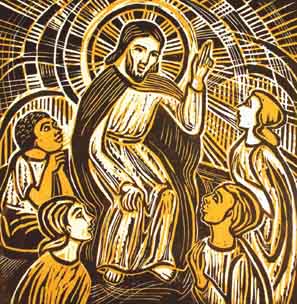 Saw this wonderful quote attributed to Archbishop Rowan Williams over on Ian Morgan Cron's blog in the comments:
Feeling pressured? I am. Perhaps it is the weight of glory, being conformed to Christ.The Church is what happens when a group of believers come under the pressure of Jesus.
Tuesday, November 1, 2011
All Saints' Day

How it thrills me when I hear the words of the Liturgy, "Therefore with the angels and archangels and all the company of Heaven," for I know that she is there with the company of Heaven, the Communion of Saints, with the Lord. The nearer I come to my Lord in Holy Communion, the nearer I come to the saints, to my own loved ones.....
Do learn to love the Altar as the meeting place with your beloved who have passed within the veil. Here again the Sacrament is the heart of our religion. The Blessed sacrament links us not merely to Bethlehem and Calvary, but to the whole world beyond the grave as well, for at the Altar, the infinite is shrined in the finite; Heaven stoops down to earth; and the seen and unseen meet.
Berthold Von Schenk
Tuesday, October 25, 2011
Lauren Winner

She will be speaking at Hollins University, November 9, at 7:00 PM.
Saturday, August 20, 2011
Dissatisfied And Not Loving It
I hope Dallas Willard it right. Over at IMonk on Monday, Chaplain Mike posted a quote of his:
There have been outside forces which have contributed to this of course, but trying to figure out where that ends and my part begins seems pretty impossible. So, here I am, with a loving husband, family, friends yet a continued sense that something is off. In part, this is why I haven't written much these last few months, and as many of you will know, once something is put off, it becomes larger and insecurities grow. I want to be able to share hopefulness, goodness and beauty, but all I have is spiritual, unresolvable dissatisfaction.
So, I've decided to just go ahead and write, spiritually unresolved and all. Thanks for sticking with me, and perhaps after this season is over, I can right something more encouraging, maybe even a little bit beautiful and good, Lord willing.
It is spiritually formative to be dissatisfied and unable to resolve it.If this is true, I think I'll should be pretty beautifully spiritually formed when this current funk ends. As of now I feel like a prepubescent with hands and feet too large as I clumsily try to move through life. Overall, the feeling is of being out of sync or off balance. A certain amount of this is normal for me. I've never fit any conventions very well, though after all the insecurities of adolescent and young adulthood, I've managed to deal with my oddities pretty well and am blessed to have a husband who actually loves them, well, most of the time anyway. This, however is not a matter of just being a little against the grain.
There have been outside forces which have contributed to this of course, but trying to figure out where that ends and my part begins seems pretty impossible. So, here I am, with a loving husband, family, friends yet a continued sense that something is off. In part, this is why I haven't written much these last few months, and as many of you will know, once something is put off, it becomes larger and insecurities grow. I want to be able to share hopefulness, goodness and beauty, but all I have is spiritual, unresolvable dissatisfaction.
So, I've decided to just go ahead and write, spiritually unresolved and all. Thanks for sticking with me, and perhaps after this season is over, I can right something more encouraging, maybe even a little bit beautiful and good, Lord willing.
Saturday, July 9, 2011
Happy 15th Birthday, Emma!
 |
| Olivia and Emma |
Happy birthday, lovely Emma! Here's to another wonderful year.
Monday, May 16, 2011
Dogma
I came across this cartoon years ago in an NPR catalog and thought it hilarious. I saw it again today and thought I'd share. Enjoy.


Sunday, April 24, 2011
Morning Has Broken
Most likely you're thinking of the song Cat Stevens recorded about now. It wasn't until I had children that I learned the song was originally a poem written by Eleanor Fargeon . She was a prolific writer of verse, and I remember reading in one of her compilations her lighthearted lament at not being a true poet, but simply a writer of children's verse. She viewed herself as not quite having the talent for which she yearned.
It is a common lament, to regret not reaching one's potential or experiencing one's dreams. It is the way of the world. We go about life knowing we will not do or be all that we wanted or hoped. In the middle of such ordinariness, Easter comes upon us, and I'm so appreciative of Jesus and how he revealed himself after the resurrection amidst the ordinariness of life. He met Mary in the garden, as she went about a task which was common in that society, the anointing of the dead. He met two disciples returning home from Jerusalem after Passover. Another ordinary time and ordinary task, along with a lot of confusion about what had happened to Jesus. They were walking and talking and Jesus walked and talked with them. He stood on the shore as a group fishermen, his friends, were trying to catch some fish and failing. In fact they had given up. He give instructions as to how to catch a boatload of fish and proceeded to make them breakfast. Every time, it was a chance for a new beginning, a new life. Morning had broken. The eighth day.
This year as we celebrate Easter, I want to remember this especially, that God calls us to be faithful, not fantastic. He accepts our everyday faithfulness, walks with us and will one day clothe us in splendor as we see him in glory. I want to remember a simple song which praises God our creator and gives us a glimpse of the new heavens and new earth, written by a woman who loved God enough to express it in a children's verse.
. She was a prolific writer of verse, and I remember reading in one of her compilations her lighthearted lament at not being a true poet, but simply a writer of children's verse. She viewed herself as not quite having the talent for which she yearned.It is a common lament, to regret not reaching one's potential or experiencing one's dreams. It is the way of the world. We go about life knowing we will not do or be all that we wanted or hoped. In the middle of such ordinariness, Easter comes upon us, and I'm so appreciative of Jesus and how he revealed himself after the resurrection amidst the ordinariness of life. He met Mary in the garden, as she went about a task which was common in that society, the anointing of the dead. He met two disciples returning home from Jerusalem after Passover. Another ordinary time and ordinary task, along with a lot of confusion about what had happened to Jesus. They were walking and talking and Jesus walked and talked with them. He stood on the shore as a group fishermen, his friends, were trying to catch some fish and failing. In fact they had given up. He give instructions as to how to catch a boatload of fish and proceeded to make them breakfast. Every time, it was a chance for a new beginning, a new life. Morning had broken. The eighth day.
This year as we celebrate Easter, I want to remember this especially, that God calls us to be faithful, not fantastic. He accepts our everyday faithfulness, walks with us and will one day clothe us in splendor as we see him in glory. I want to remember a simple song which praises God our creator and gives us a glimpse of the new heavens and new earth, written by a woman who loved God enough to express it in a children's verse.
Tuesday, April 5, 2011
I Will Follow
 Not only is this the title to an early U2 song, but what Jesus calls us to do. It is not easy. To follow requires listening, watching, trusting and obeying. In a very real sense there are no leaders in the church, only followers. There are those who want to be leaders, but the problem with taking on the label and position of leader, is that one receives the focus and the faith of those who should be looking to and putting their faith in Jesus. For those called to be teachers, evangelists, apostles, etc., the call is not to lead, but to point, to say, "Come and see", not, "Follow me and we'll do great things."
David Horn writes how taking on big visions, big schemes from "leaders" in the church is just the opposite of what Jesus called us to do. He uses a quote from Bonhoeffer's book, Life Together
 to illustrate the pitfalls of taking on the role of leader.
God hates visionary dreaming; it makes the dreamer proud and pretentious. The man who fashions a visionary ideal of community demands that it be realized by God, by others, and by himself. He enters the community of Christians with his demands, sets up his own law, and judges the brethren and God Himself accordingly. He stands adamant, a living reproach to all others in the circle of brethren. He acts as if he is the creator of the Christian community, as if his dream binds men together. When things do not go his way, he calls the effort a failure. When his ideal picture is destroyed, he sees the community going to smash. So he becomes first an accuser of his brethren, then an accuser of God, and finally the despairing accuser of himself.I titled this post, I Will Follow, not because I do it well, or even want it well, but because Jesus has called. He has instructed his disciples to proclaim the Kingdom, to feed, to heal, to instruct, to serve, to become like children, to die to self, to love. This idea of leading is our own invention and desire, and one which I am prone to buy into. I think we in the church have done this because what Jesus calls us to do is just so hard. How much we must rely on his grace.
Thursday, March 17, 2011
Lorica Of St. Patrick
I arise today
Through a mighty strength, the invocation of the Trinity,
Through a belief in the Threeness,
Through confession of the Oneness
Of the Creator of creation.
I arise today
Through the strength of Christ's birth and His baptism,
Through the strength of His crucifixion and His burial,
Through the strength of His resurrection and His ascension,
Through the strength of His descent for the judgment of doom.
I arise today
Through the strength of the love of cherubim,
In obedience of angels,
In service of archangels,
In the hope of resurrection to meet with reward,
In the prayers of patriarchs,
In preachings of the apostles,
In faiths of confessors,
In innocence of virgins,
In deeds of righteous men.
I arise today
Through the strength of heaven;
Light of the sun,
Splendor of fire,
Speed of lightning,
Swiftness of the wind,
Depth of the sea,
Stability of the earth,
Firmness of the rock.
I arise today
Through God's strength to pilot me;
God's might to uphold me,
God's wisdom to guide me,
God's eye to look before me,
God's ear to hear me,
God's word to speak for me,
God's hand to guard me,
God's way to lie before me,
God's shield to protect me,
God's hosts to save me
From snares of the devil,
From temptations of vices,
From every one who desires me ill,
Afar and anear,
Alone or in a mulitude.
I summon today all these powers between me and evil,
Against every cruel merciless power that opposes my body and soul,
Against incantations of false prophets,
Against black laws of pagandom,
Against false laws of heretics,
Against craft of idolatry,
Against spells of women and smiths and wizards,
Against every knowledge that corrupts man's body and soul.
Christ shield me today
Against poison, against burning,
Against drowning, against wounding,
So that reward may come to me in abundance.
Christ with me, Christ before me, Christ behind me,
Christ in me, Christ beneath me, Christ above me,
Christ on my right, Christ on my left,
Christ when I lie down, Christ when I sit down,
Christ in the heart of every man who thinks of me,
Christ in the mouth of every man who speaks of me,
Christ in the eye that sees me,
Christ in the ear that hears me.
I arise today
Through a mighty strength, the invocation of the Trinity,
Through a belief in the Threeness,
Through a confession of the Oneness
Of the Creator of creation
St. Patrick (ca. 377)
Monday, March 14, 2011
The Sea

Atlantis rediscovered
A legend; perhaps not
Tsunamis wreaking havoc
Eternal we are not
The sea it will take over
Envelop all we see
Waves wash all and carry all
Nevermore to be
The longing in me pulses
As though in labour pains
Creation seeks its freedom
Heaven to regain
Wednesday, March 9, 2011
Some Thoughts For Ash Wednesday

Today is Ash Wednesday, the beginning of Lent, which is a movable forty day fast which correlates to the preeminent season of Easter, the fifty day feast.
So, why the ashes and why the fasting? The ashes are a sign of mourning and repentance. We humans are destined to death. Everything in our short life here on earth is leading to the inevitable time when our bodies give out. No matter how well we eat, how much we exercise or meditate, we are dying. Our 21st century western society would have us deny this fact. Simply observing various health campaigns, the emphasis on youth culture, the prevalence of plastic surgery and anti aging creams and lotions, and the relegation of the elderly into institutions, it becomes clear that ours is a society in deep denial and avoidance of this very fact.
Ash Wednesday reminds us of our mortality, or our finiteness and of what has lead us to this inevitable destination. It places in the forefront, that it is sin which leads to death and is a call to repentance and in fact to new life. As the ashes are placed on our foreheads, we will be reminded that from dust we have come and to dust we will return. It is to shake us out of our daydream into reality. We wear the ashes as a reminder of our complicity with death and a sign of our repentance for that complicity. Job 42:3-6, Jeremiah 6:26, Daniel 9:3
The fasting during Lent reminds us of where our true desire lies and reorients our thoughts to where our true hunger is fulfilled, in God. To reorient is to repent, to accept God's forgiveness and to accept the Christ life that now lives within us.
C.S. Lewis wrote in Mere Christianity
 :
A live body is not one that never gets hurt, but one that can to some extent repair itself. In the same way a Christian is not a man who never goes wrong, but a man who is enabled to repent and pick himself up and begin over again after each stumble - because the Christ-life is inside him, repairing him all the time, enabling him to repeat (in some degree) the kind of voluntary death which Christ Himself carried out.We all are dying. The voluntary death to self leads to life. The grasping of life leads to death. Ash Wednesday and Lent makes us more aware of this choice and aids in orienting our lives to the only one who can give life.
For whoever would save his life will lose it, but whoever loses his life for my sake will find it. Matthew 16:25
Wednesday, March 2, 2011
Happy 10th Birthday, Olivia!

Happy birthday, dear, sweet daughter!
Monday, February 14, 2011
Saint Valentine's Day

While it would be easy to be cynical about the commercialism or possible legendary origins of the holiday, I want to focus on what good may come out of celebrating a day such as this. Though most of the stories revolving around Saint Valentine cannot be verified beyond a doubt, some stories ring true. One story goes that Claudius II outlawed marriage in order to fill the ranks of his army for his unpopular military campaigns. Just from viewing the coins from his reign, one can see that security was a top priority for the emperor. It is told that Valentine, or Valentinus, defied the order and married young couples anyway. Another story that rings true is that the emperor actually liked Valentinus, but ordered the priest executed after he tried to convert him. Still, one story that seems more legendary, but that I would not dismiss out of hand is how Valentinus performed the miracle of healing the daughter of one of his jailers. There is a lovely children's book which tells a story around this act, titled, Saint Valentine
 .
So, how can we best celebrate the life of this saint? I think we can celebrate this day by truly showing our love for one another. There is the idea of romantic love which is wonderful and exciting, but even this is but a shadow if it is not built upon acts of sacrifice and giving of oneself. In fact, if one were to go back to the roots of romantic love, and not just the shadow we see perpetuated in our culture today, it is built on placing the other above the self, or as Aristotle said of love, it is "to will the good to another for the other's sake". Is this not the very thing that makes a good marriage, or any good relationship? Of the characteristics I have found in common with good, strong marriages, that each spouse thinks the other is the self-giving partner in the relationship, seems to me the very best.
Monday, February 7, 2011
A Songless Sect
Patrick Mitchell, an Irish blogger, attended a lecture given by Daniel Dennett, well know anti-theist. He was struck by how the lecture was couched in religious terms, even to the point of introducing atheistic hymns. It would appear that all humans are creatures of faith and worship, or as Bob Dylan sang, you're gonna have to serve somebody. Here's what Mitchell writes about that portion of the lecture.
He even played a couple of secular gospel hymns, complete with lyrics like “Bowing to reason we stand together” and “We’ve turned the page, don’t be afraid of the world we’re creating, come on in …” [He said he played these in the States and the crowd was up singing and partying - not a person even twitched in Dublin. An atheist questioner afterwards pleaded with him to drop the 'brutal' music and try comedy as a route to joy].I guess Dennett hasn't heard yet that atheists don't have no songs.
Friday, January 14, 2011
Not Ranting And Raving, But Convicted
Over at IMonk, Jeff Dunn is doing a bit of ranting and raving, and really, I don't blame him. As I have been studying the Gospel of Luke, I have become more and more convicted that I don't really follow Christ as he calls me to, and more than that, I for the most part do not see the church, at least here in America following him as he calls us either.
One of the things that I see relates to what Dunn is preaching against is the substitute of technique for obedience to our Lord. It is the easy road and one that suits our society perfectly. We are a technique oriented people. It is how we live. It is how we control. It is also the opposite of faith.
Have issues with money? Well, my goodness, don't give it away and be overly generous out of love for God and man. Disregard the widow and her two mites. What a fool she was to not put at least 10% away in savings. Jesus only meant for the rich, young ruler to give everything away, not anyone else. He wouldn't ask that of you or me. Look at all the Old Testament writings that encourage savings and thrift. Just don't bother reading the prophets and of God's judgement because of not helping the poor and widows. We're not greedy like those Israelites. And don't get all excited about how the earliest church shared everything they had with one another. That would be too radical and was only for that time and place anyway. God wouldn't ask that of us. Instead, follow this formula and watch your money grow!
Having marriage problems? It has nothing to do with dying to self and submitting to one another out of love for Christ. Nooooo. It is really because the husband isn't being respected or the woman isn't being loved, or you just aren't having enough date nights, or you haven't set up the right boundaries, or you don't speak the other's love language, or, well you get the idea.
What if we really died to self and lived to Christ? What if we gave so generously that none of our brothers and sisters in Christ were in need? What if we sacrificed our comfort that the poorest in our community knew they didn't have to worry about their daily needs, because Christ's representatives lived near them and wouldn't let them be in want? What if instead of worrying about being taken advantage of, we simply said, "Come."?
What would our marriages and families look like if we consistently put the other first? What if we stopped worrying about our needs being met and instead sought out ways to serve the other?
 What if we stopped searching for a magic formula and simply said, "I surrender. I am a slave. I have no rights. My trust and my hope are entirely in the Lord."?
Do we take Jesus words seriously? Do we really believe them? I must not, because I do not follow them. I cannot, because I do not daily take up my cross. This is what Peter Kreeft calls moral insanity. It is what Jesus says leads to death. It is sin.
I am morally insane. Jesus, come heal me. I do not take up my cross. Jesus, help me bear the burden. I do not trust the one who gives life. Jesus, I believe, help my unbelief.
One of the things that I see relates to what Dunn is preaching against is the substitute of technique for obedience to our Lord. It is the easy road and one that suits our society perfectly. We are a technique oriented people. It is how we live. It is how we control. It is also the opposite of faith.
Have issues with money? Well, my goodness, don't give it away and be overly generous out of love for God and man. Disregard the widow and her two mites. What a fool she was to not put at least 10% away in savings. Jesus only meant for the rich, young ruler to give everything away, not anyone else. He wouldn't ask that of you or me. Look at all the Old Testament writings that encourage savings and thrift. Just don't bother reading the prophets and of God's judgement because of not helping the poor and widows. We're not greedy like those Israelites. And don't get all excited about how the earliest church shared everything they had with one another. That would be too radical and was only for that time and place anyway. God wouldn't ask that of us. Instead, follow this formula and watch your money grow!
Having marriage problems? It has nothing to do with dying to self and submitting to one another out of love for Christ. Nooooo. It is really because the husband isn't being respected or the woman isn't being loved, or you just aren't having enough date nights, or you haven't set up the right boundaries, or you don't speak the other's love language, or, well you get the idea.
What if we really died to self and lived to Christ? What if we gave so generously that none of our brothers and sisters in Christ were in need? What if we sacrificed our comfort that the poorest in our community knew they didn't have to worry about their daily needs, because Christ's representatives lived near them and wouldn't let them be in want? What if instead of worrying about being taken advantage of, we simply said, "Come."?
What would our marriages and families look like if we consistently put the other first? What if we stopped worrying about our needs being met and instead sought out ways to serve the other?

Do we take Jesus words seriously? Do we really believe them? I must not, because I do not follow them. I cannot, because I do not daily take up my cross. This is what Peter Kreeft calls moral insanity. It is what Jesus says leads to death. It is sin.
I am morally insane. Jesus, come heal me. I do not take up my cross. Jesus, help me bear the burden. I do not trust the one who gives life. Jesus, I believe, help my unbelief.
Wednesday, January 5, 2011
The Gospel Of Luke: Introduction and Preface
Authorship
Luke is widely held as the author of The Gospel of Luke and The Acts of the Apostles. Both tradition and internal evidence upholds this view. Though neither book names its author, the author places himself in the story in Acts as a companion to Paul, and three of Paul’s letters, Colossians, Philemon and II Timothy refer to him as his companion.
Dating
There is a wide range of thought as to when the Gospel of Luke was written, most within the range of 60 – 90 AD. I hold to a date around the early to mid 60’s for two reasons: Neither the death of Paul nor his letters, (they were more widely distributed in the latter years), are mentioned in Luke’s account. Luke also sees the need to give a defense of the gentiles place in God’s plan, which there would be little need for if it had been written at a later date.
Biography
Lucas, or Luke, is probably an abbreviation of the name Lucanus. From this name and the fact that he was a physician, it is thought by some that he may have been a slave. Slaves at this time in the Roman Empire were sometimes given a shortened or nickname of their master, and in wealthy families, a slave was often chosen to be educated in medicine to be the family doctor.
That Luke was educated is obvious from his writings. Both the Gospel of Luke and The Acts of the Apostles are written in a higher literary style than the other New Testament books. The allusions to the Septuagint in his gospel and the Hellenistic narrative form both of his books take testify to his intelligence and education.
His grasp of the Septuagint is so great, that it is assumed that he was either a Gentile proselyte or a God-fearer like Cornelius or the Centurion from Luke 7. He was not likely born a Jew, as Paul lists him among the uncircumcised in his letter to the Colossians.
Tradition holds that Luke was from Antioch in Syria. He enters the story in Acts when Paul, Silas and Timothy reach Troas, 50. From there he goes with them to Philippi, 50-57, and remains there. He then journeys with Paul to Jerusalem, 57-61, and then onto Rome, 61.
He is referred to in Acts 16:11-18, 17:1, 20:5-21:18, 27:1, 28:1, 12-16, and by Paul in Colossians 4:14, II Timothy 4:11, and Philemon vs.23&24.
Genre
History – Luke’s gospel is often viewed as historic narrative. His style, particularly in the preface of the gospel follows Hellenistic form for the historic narrative in this general time period, similar to Josephus.
Theology – Luke tells the story not only to be accurate and to convey facts, but to place them in an order to comprehend their meaning better. There are major strands woven throughout this gospel: God’s sovereignty and faithfulness, mission of Jesus as he comes against cosmic forces which are opposed to God, Christ as messiah, servant, prophet, king, son of man, and Lord, Holy Spirit, cross, etc.
Narrative theology - This is a term used by Michael Travers to describe the genre Luke uses.It is truth told. The reason to use the narrative, to tell the stories, is to bridge the head and the heart using the imagination. Luke’s writing style weaves history, prophecy, teachings, drama and parables in order to cause the reader to understand their meaning, not just to know the facts.
The purpose in understanding the genre is because it tells us what to expect.If we see Luke as simply a history book, we will look for facts, places, dates, etc. If we look at it as simply theology, we will likely look for doctrinal propositions and categories. If we look at it as a story, a true story, but a story none the less, we can then become part of it. A reader is always a part of the story. We can identify with characters, we can imagine the settings, we can be there, and in doing so, we can meet Jesus and let his words and actions change us.
The Uniqueness of Luke
Luke is considered one of the synoptic gospels because of its similarity to both Matthew and Mark, but it is also quite unique. It is the longest gospel, with twenty four chapters. Along with Acts, Luke’s writings are a full ¼ of the New Testament. There are at least nine parables, five teachings, and seventeen narrative accounts which are in Luke alone. He also emphasizes feasts/food, women, the poor, the outcast, children, gentiles, the Temple /Jerusalem, prayer and God’s sovereignty.
Luke also serves as a bridge, between Jews and Gentiles and Jesus ministry and the church.
It is the only gospel written by a gentile and the only gospel with a sequel.
Preface
Luke 1:1-4
Luke’s preface follows closely the form of a Hellenistic historic narrative.Accuracy was important in such endevours, but so was good writing and storytelling to keep the reader engaged and aid in understanding.The preface set the tone.
Luke begins with acknowledging that others have attempted writing narratives of the things that have happened, perhaps Mark or Matthew. He mentions eyewitnesses who have delivered the accounts to them. This need not be limited to written accounts. Luke spent a few years in Jerusalem, where there must have been many who had been with Jesus. It would make sense that he gained much from female witnesses since his later accounts of the Nativity and details of Herod’s household would likely have been informed by Mary and Joanna, the wife of Herod’s steward, Chuza. Most New Testament scholars have attempted to explain the differences between the synoptic gospels by suggesting a possible earlier source, Q (for quelle, or source), or for Matthew, another source called M, or for Luke, another source called L. These sources have often been thought of as written documents, but could very well have been the eyewitnesses or stories and traditions that had been relayed.
Luke sees it fitting that he should also make the attempt, perhaps one more orderly or for a wider audience.He addresses the letter to, most excellent Theophilus, a common name in that time, meaning God adorer or lover of God, who must have been of high rank or status by the way he is addressed and perhaps was Luke’s patron, commissioning this work. Luke states that his purpose in writing is to give an orderly, accurate account. This does not necessarily mean chronological order, but one that conveys the meaning and importance of the events which took place. He wants Theophilus and others who would hear or read what he has written to understand and be assured of the accuracy of what they have already been taught, so Theophilus must already be a believer.
References are: Luke by Darrel Bock, The Gospel of Luke,Sacra Pagina
 by Luke Timothy Johnson, The Gospel of Luke
 , Joel B. Green, and of course, the Gospel of Luke.
Luke is widely held as the author of The Gospel of Luke and The Acts of the Apostles. Both tradition and internal evidence upholds this view. Though neither book names its author, the author places himself in the story in Acts as a companion to Paul, and three of Paul’s letters, Colossians, Philemon and II Timothy refer to him as his companion.
Dating
There is a wide range of thought as to when the Gospel of Luke was written, most within the range of 60 – 90 AD. I hold to a date around the early to mid 60’s for two reasons: Neither the death of Paul nor his letters, (they were more widely distributed in the latter years), are mentioned in Luke’s account. Luke also sees the need to give a defense of the gentiles place in God’s plan, which there would be little need for if it had been written at a later date.
Biography
Lucas, or Luke, is probably an abbreviation of the name Lucanus. From this name and the fact that he was a physician, it is thought by some that he may have been a slave. Slaves at this time in the Roman Empire were sometimes given a shortened or nickname of their master, and in wealthy families, a slave was often chosen to be educated in medicine to be the family doctor.
That Luke was educated is obvious from his writings. Both the Gospel of Luke and The Acts of the Apostles are written in a higher literary style than the other New Testament books. The allusions to the Septuagint in his gospel and the Hellenistic narrative form both of his books take testify to his intelligence and education.
His grasp of the Septuagint is so great, that it is assumed that he was either a Gentile proselyte or a God-fearer like Cornelius or the Centurion from Luke 7. He was not likely born a Jew, as Paul lists him among the uncircumcised in his letter to the Colossians.
Tradition holds that Luke was from Antioch in Syria. He enters the story in Acts when Paul, Silas and Timothy reach Troas, 50. From there he goes with them to Philippi, 50-57, and remains there. He then journeys with Paul to Jerusalem, 57-61, and then onto Rome, 61.
He is referred to in Acts 16:11-18, 17:1, 20:5-21:18, 27:1, 28:1, 12-16, and by Paul in Colossians 4:14, II Timothy 4:11, and Philemon vs.23&24.
Genre
History – Luke’s gospel is often viewed as historic narrative. His style, particularly in the preface of the gospel follows Hellenistic form for the historic narrative in this general time period, similar to Josephus.
Theology – Luke tells the story not only to be accurate and to convey facts, but to place them in an order to comprehend their meaning better. There are major strands woven throughout this gospel: God’s sovereignty and faithfulness, mission of Jesus as he comes against cosmic forces which are opposed to God, Christ as messiah, servant, prophet, king, son of man, and Lord, Holy Spirit, cross, etc.
Narrative theology - This is a term used by Michael Travers to describe the genre Luke uses.It is truth told. The reason to use the narrative, to tell the stories, is to bridge the head and the heart using the imagination. Luke’s writing style weaves history, prophecy, teachings, drama and parables in order to cause the reader to understand their meaning, not just to know the facts.
The purpose in understanding the genre is because it tells us what to expect.If we see Luke as simply a history book, we will look for facts, places, dates, etc. If we look at it as simply theology, we will likely look for doctrinal propositions and categories. If we look at it as a story, a true story, but a story none the less, we can then become part of it. A reader is always a part of the story. We can identify with characters, we can imagine the settings, we can be there, and in doing so, we can meet Jesus and let his words and actions change us.
The Uniqueness of Luke
Luke is considered one of the synoptic gospels because of its similarity to both Matthew and Mark, but it is also quite unique. It is the longest gospel, with twenty four chapters. Along with Acts, Luke’s writings are a full ¼ of the New Testament. There are at least nine parables, five teachings, and seventeen narrative accounts which are in Luke alone. He also emphasizes feasts/food, women, the poor, the outcast, children, gentiles, the Temple /Jerusalem, prayer and God’s sovereignty.
Luke also serves as a bridge, between Jews and Gentiles and Jesus ministry and the church.
It is the only gospel written by a gentile and the only gospel with a sequel.
Preface
Luke 1:1-4
Luke’s preface follows closely the form of a Hellenistic historic narrative.Accuracy was important in such endevours, but so was good writing and storytelling to keep the reader engaged and aid in understanding.The preface set the tone.
Luke begins with acknowledging that others have attempted writing narratives of the things that have happened, perhaps Mark or Matthew. He mentions eyewitnesses who have delivered the accounts to them. This need not be limited to written accounts. Luke spent a few years in Jerusalem, where there must have been many who had been with Jesus. It would make sense that he gained much from female witnesses since his later accounts of the Nativity and details of Herod’s household would likely have been informed by Mary and Joanna, the wife of Herod’s steward, Chuza. Most New Testament scholars have attempted to explain the differences between the synoptic gospels by suggesting a possible earlier source, Q (for quelle, or source), or for Matthew, another source called M, or for Luke, another source called L. These sources have often been thought of as written documents, but could very well have been the eyewitnesses or stories and traditions that had been relayed.
Luke sees it fitting that he should also make the attempt, perhaps one more orderly or for a wider audience.He addresses the letter to, most excellent Theophilus, a common name in that time, meaning God adorer or lover of God, who must have been of high rank or status by the way he is addressed and perhaps was Luke’s patron, commissioning this work. Luke states that his purpose in writing is to give an orderly, accurate account. This does not necessarily mean chronological order, but one that conveys the meaning and importance of the events which took place. He wants Theophilus and others who would hear or read what he has written to understand and be assured of the accuracy of what they have already been taught, so Theophilus must already be a believer.
References are: Luke
by Darrel Bock, The Gospel of Luke,Sacra Pagina by Luke Timothy Johnson, The Gospel of Luke, Joel B. Green, and of course, the Gospel of Luke.
Subscribe to:
Posts (Atom)